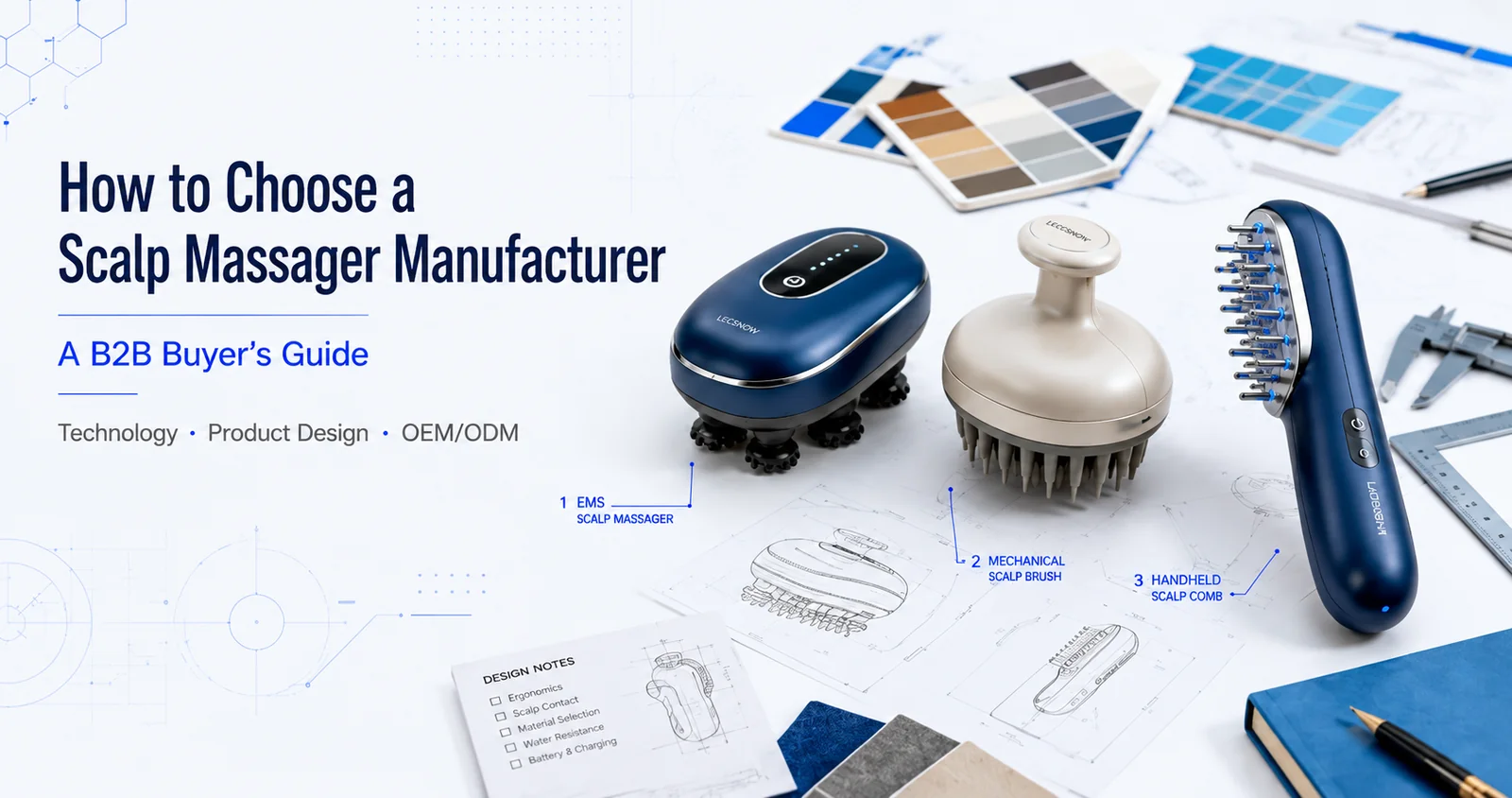
A B2B buyer's guide to choosing between private label, semi-ODM, and full ODM for a first home-use beauty device. Decision framework, cost/risk tradeoffs, and platform thinking.

For brands entering the home-use beauty device market for the first time, choosing the right beauty device OEM/ODM strategy can matter just as much as choosing the product itself. Should you launch quickly with a private label beauty device, modify a proven platform through semi-ODM, or invest in a fully customized ODM beauty device?
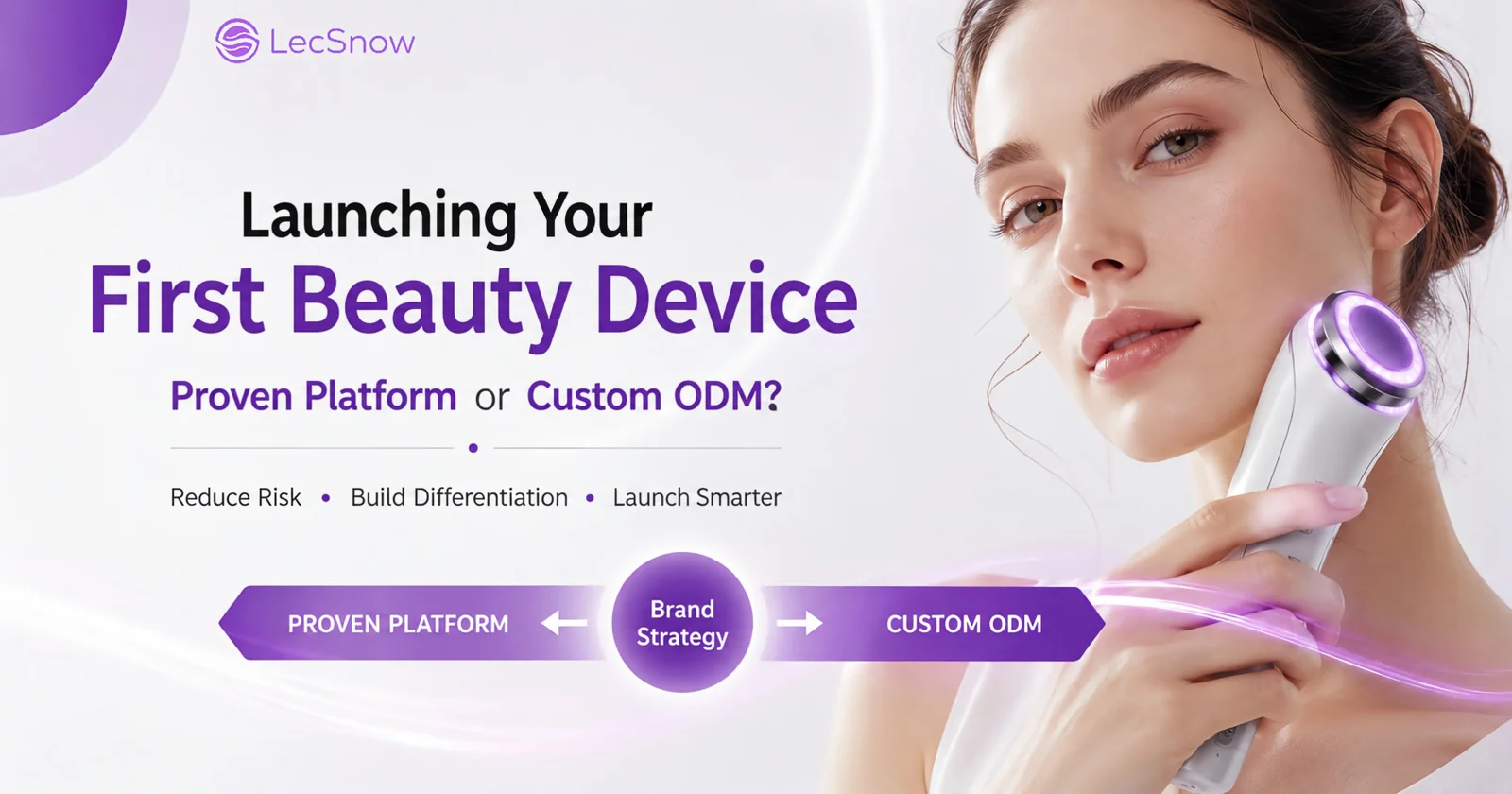
Our practical answer is: If the market is still not so unproven and you are new into this area, start with private label. If demand is clearer but differentiation matters, semi-ODM often offers the best balance. Full ODM makes sense when the brand has a validated market, a clear product strategy, and enough commercial potential to justify the additional investment.
This became particularly clear during one of our project with a beauty brand serving European and North American markets as it prepared for its first home-use beauty device launch. The project initially involved discussions around different product platforms, technical configurations and customization possibilities. But as the brand evaluated the opportunity internally, one priority became increasingly important: for a first launch, reducing risk could be more valuable than maximizing customization.
That changed the development question.Instead of asking:
“How much can we customize?”we began asking: “What level of customization actually makes commercial sense for this launch?” This is a question we believe more brands should ask before starting a beauty device project. The objective is not to maximize customization. It is to choose the development level that creates enough competitive advantage without taking unnecessary risk.
A common mistake when sourcing from a beauty device manufacturer is starting with technology: RF? EMS? LED? Microcurrent? Electroporation? Ultrasound? Technology should come later. Before selecting a technical platform, define the business case:
These answers should determine whether private label, semi-ODM or full ODM is the right route. Not the other way around.
This is only the starting framework. A premium skincare brand with a large existing customer base may justify semi-ODM even for its first device. A new startup with no validated audience may be taking unnecessary risk by developing a completely new structure simply to appear different.
The decision should always be commercial before it becomes technical.
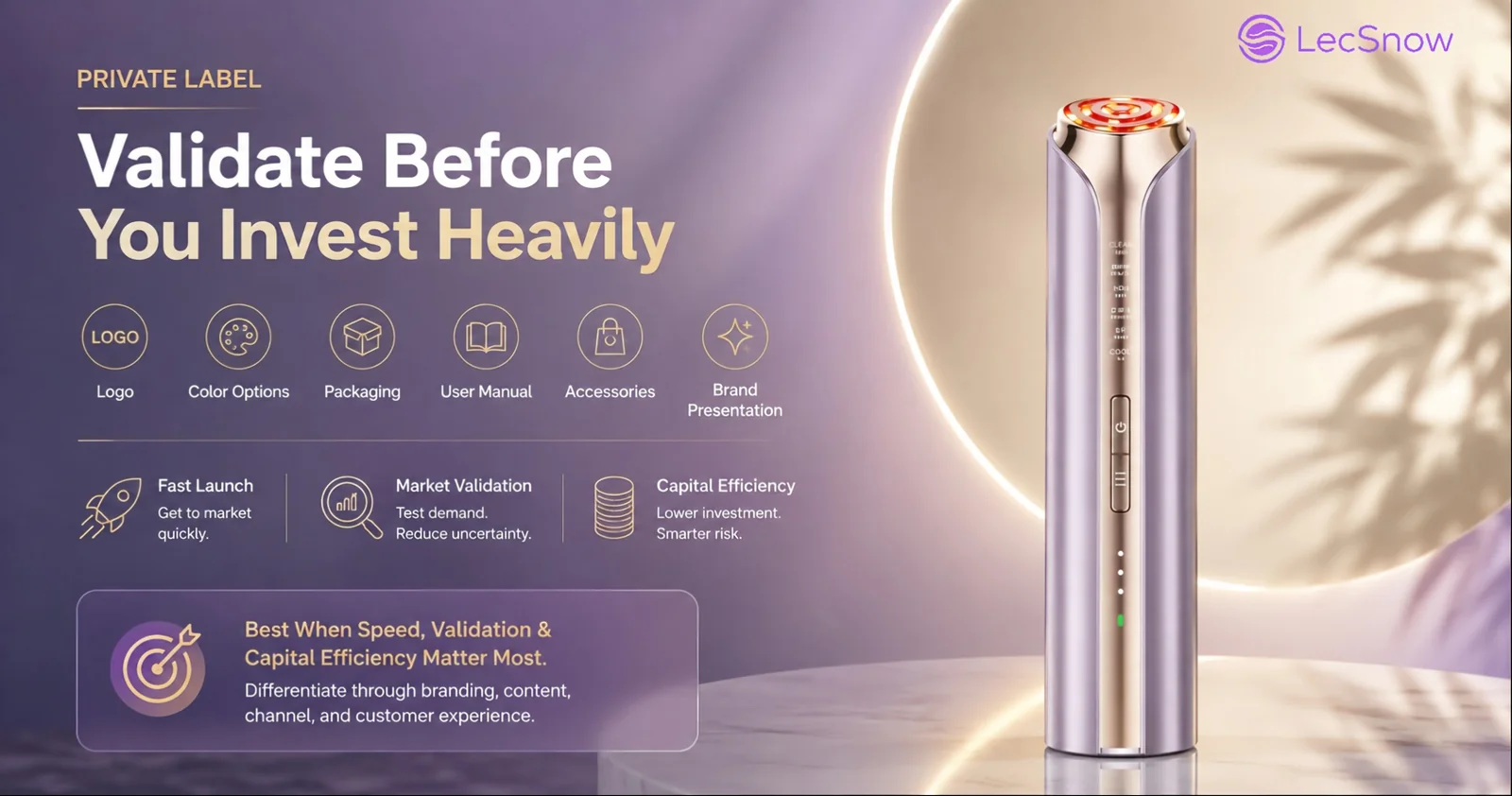
With a private label beauty device, the core product, structure and electronics remain unchanged. Customization normally focuses on elements such as:
This route is particularly useful when the biggest unknown is not the technology, but whether your customers will actually buy the product.
For a first launch, that matters.
You still need to validate:
Speed + market validation + capital efficiency matter more than exclusivity.
Its weakness is equally clear: if competitors can access a similar product, differentiation must come primarily from branding, content, channel, formula-device integration or customer experience.
There is a large middle ground between putting a logo on an existing device and developing everything from scratch. We call this semi-ODM or strategic customization. The idea is simple: Keep the engineering that has already been proven. Customize the parts that create meaningful brand or consumer value. This may include:
Instead of redesigning 100% of the product, the question becomes:
Which 10–30% creates the greatest perceived or functional differentiation?
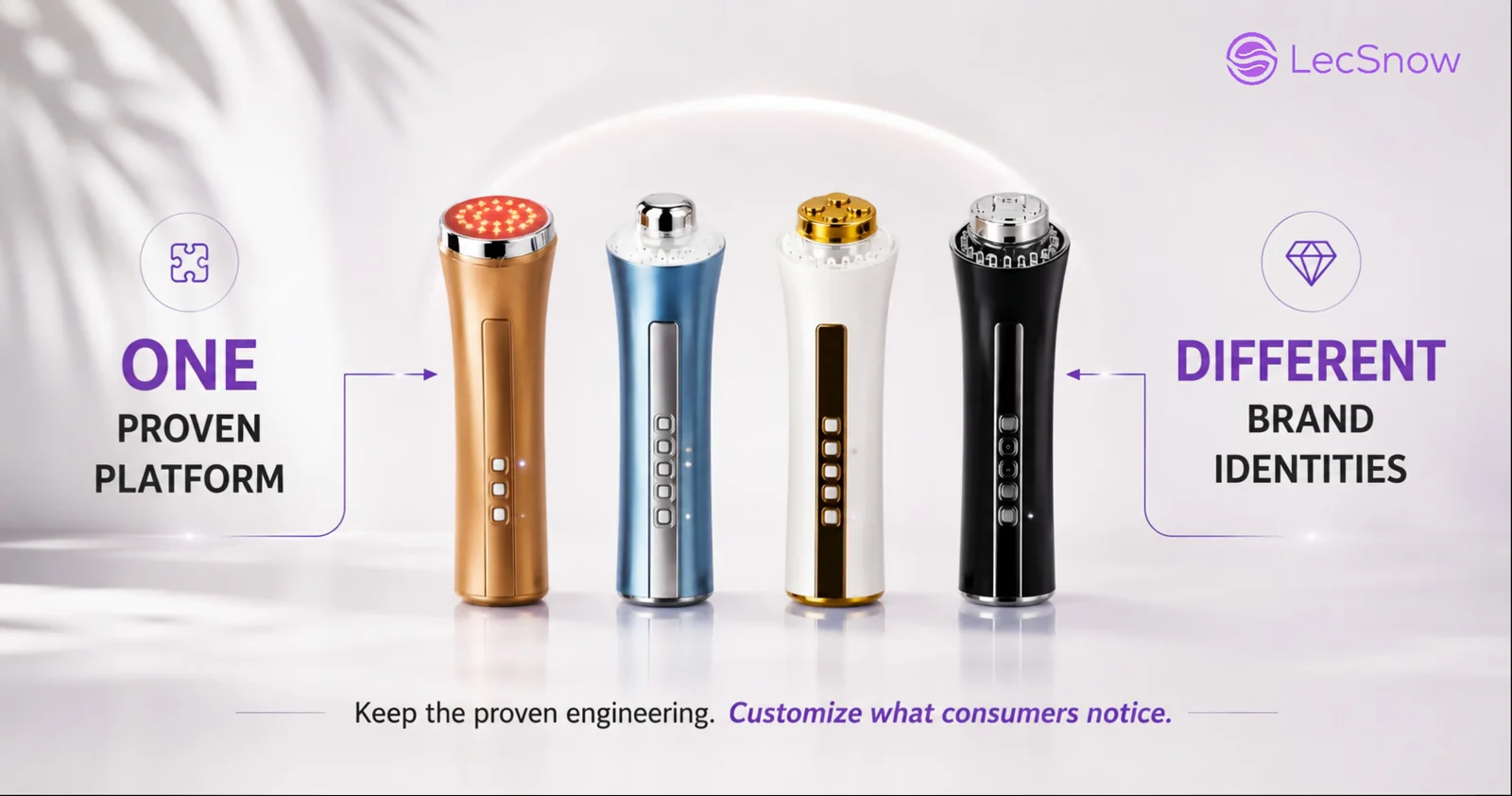
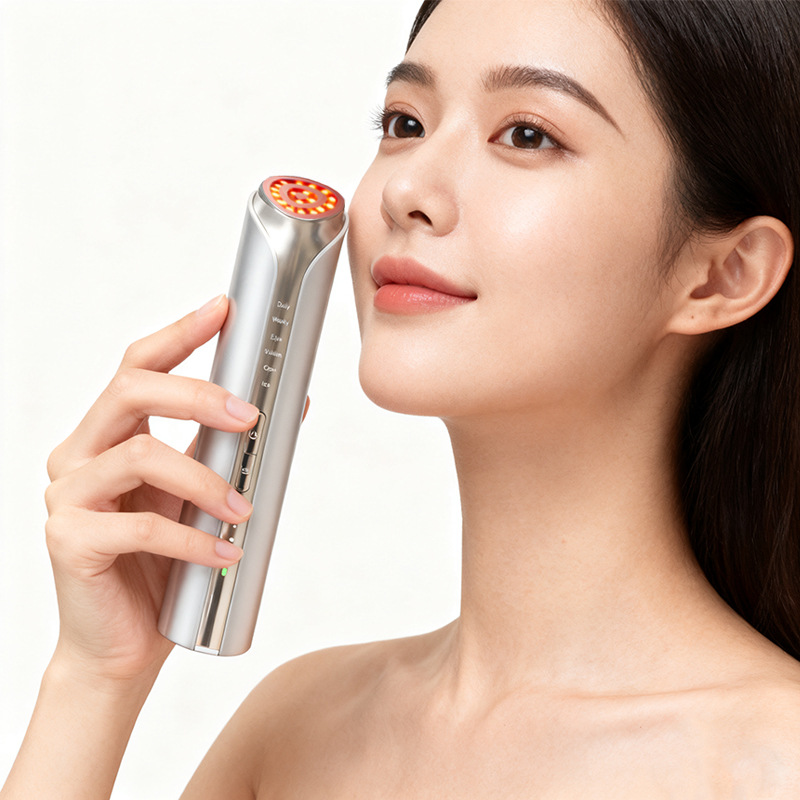
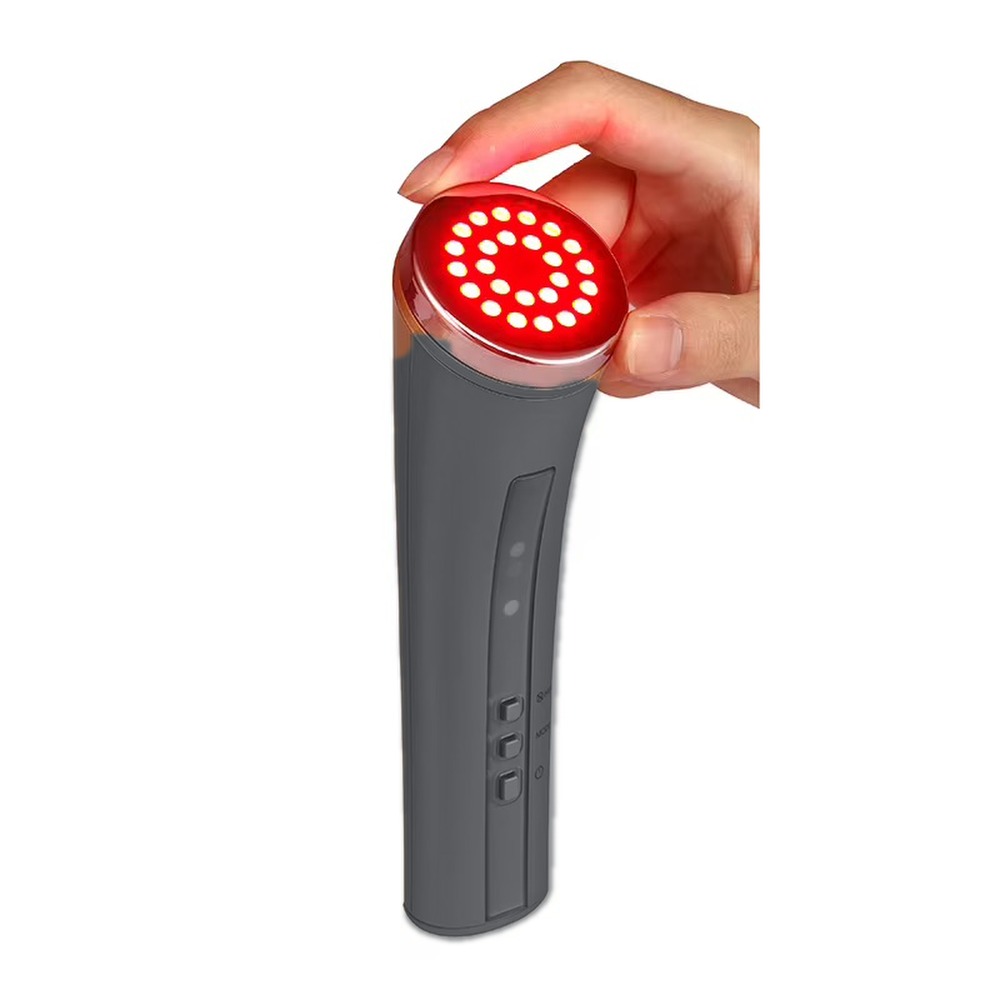
A mature facial beauty device platform, for example, can support several different product directions. Depending on the brand strategy, the same fundamental architecture can evolve into different configurations such as:
Treatment heads, surface finishes, colors and selected structural details can also be changed. From an engineering perspective, these products retain significant proven architecture. From a consumer perspective, however, their positioning, treatment experience and perceived value can be substantially different.
This is one reason semi-ODM can offer a strong return on development investment. The brand does not pay to reinvent components that create little competitive value. Investment is concentrated where differentiation is visible, marketable or functionally meaningful.
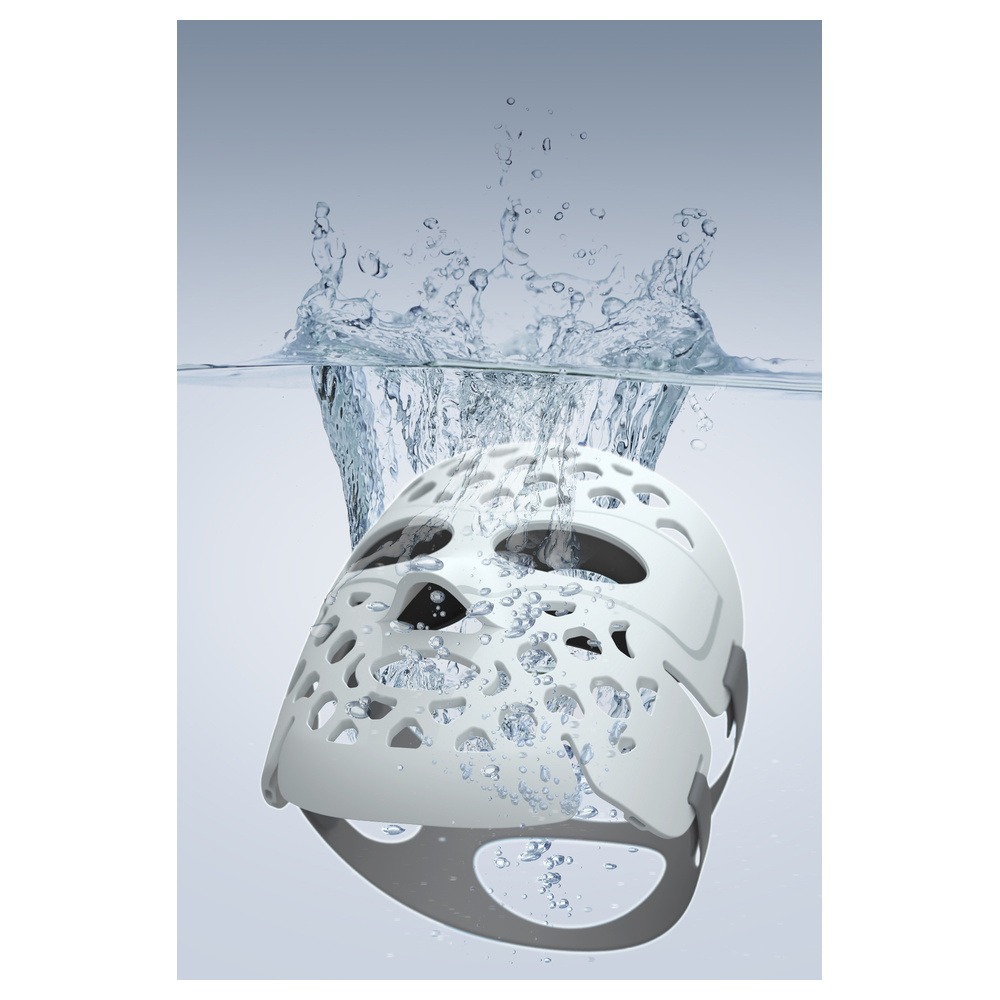
Platform development is not limited to facial devices. For example, one wearable body-care architecture can be developed into different product strategies by changing technology combinations, treatment positioning and selected external elements. One version might focus on muscle stimulation and body toning. Another may integrate light or thermal functions more focus on body recovery. A third can combine several technologies for a more premium body-care positioning.
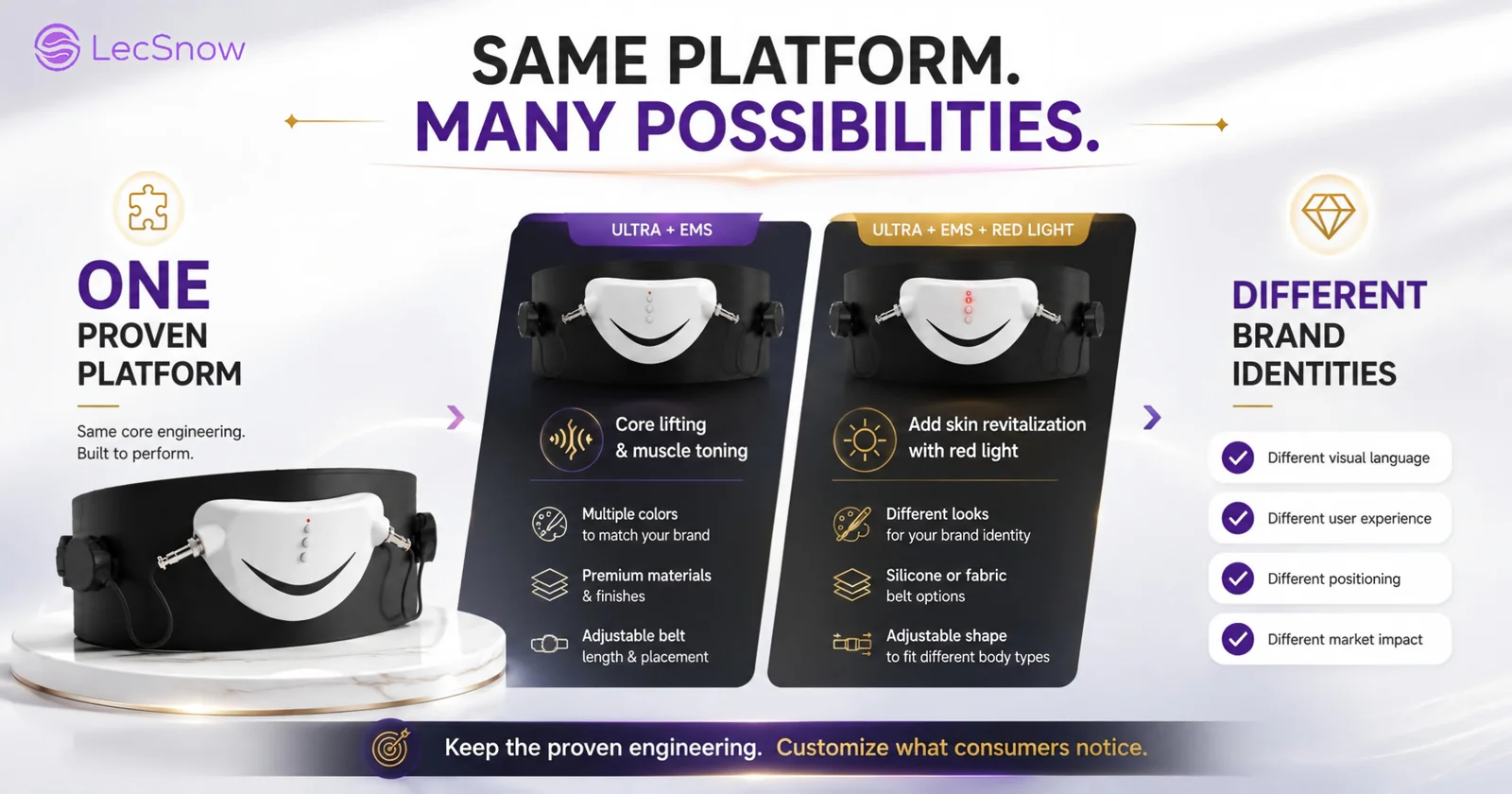
For brands building a product family, this approach can also create longer-term leverage: one engineering platform can support multiple SKUs, price tiers or market positions.
You need meaningful differentiation, but full proprietary development is not yet commercially justified. For many established skincare, beauty and wellness brands entering devices for the first time, this can be the most rational starting point.
A full ODM beauty device project becomes appropriate when differentiation cannot be achieved sufficiently through an existing platform. This could involve:
The advantage is obvious: the brand gains much greater control over product identity, performance and potential exclusivity. But so are the risks. Full ODM normally means higher NRE and tooling costs, longer development cycles, more engineering uncertainty and more validation before mass production. Therefore, “we want something completely unique” is not enough reason to choose full ODM.
The better question is:
Will this uniqueness create enough consumer preference, pricing power, IP value or competitive protection to justify the additional investment?
If the answer is unclear, the project may be over-engineered.
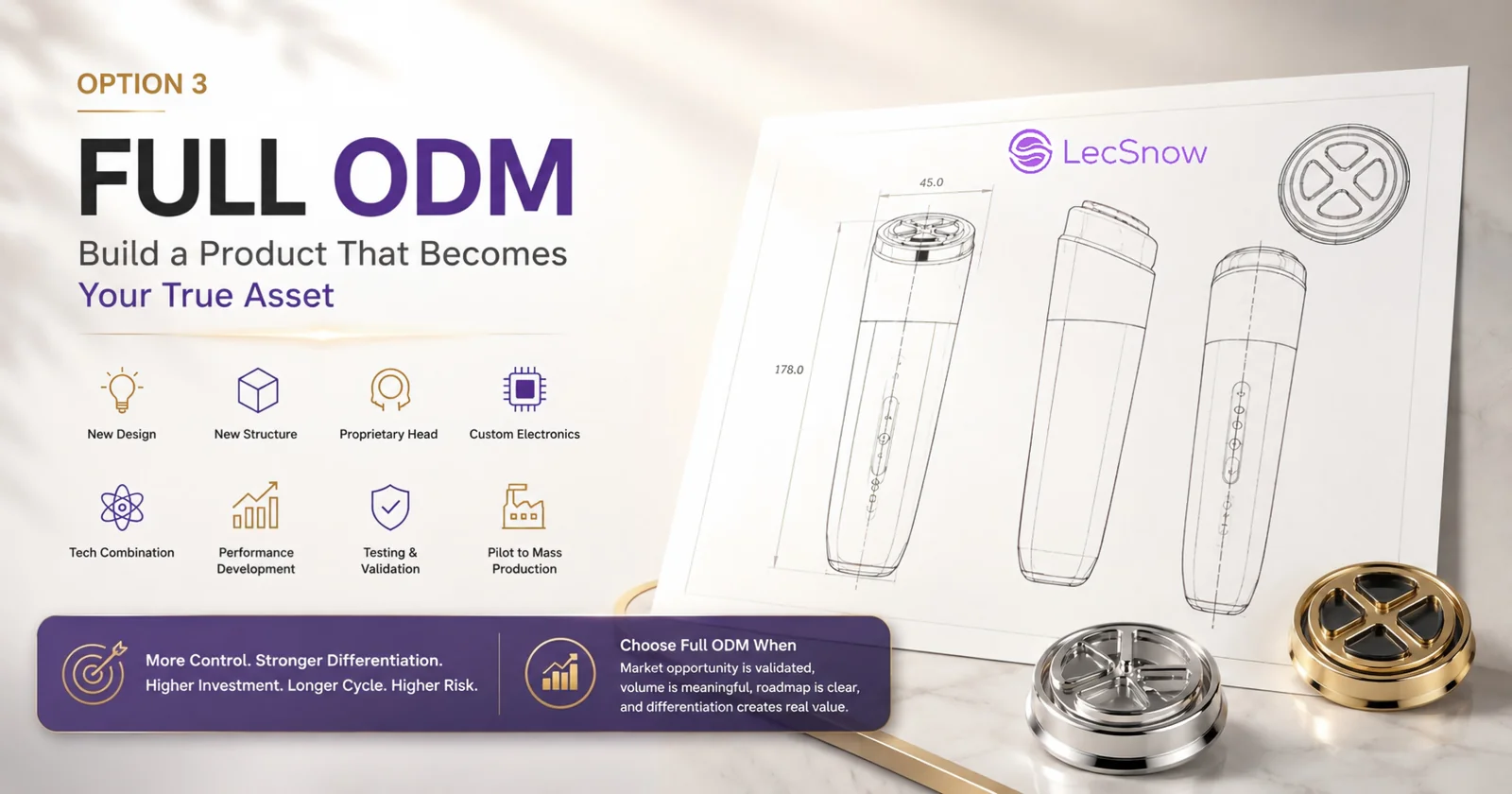
The market opportunity is validated, projected volume is meaningful, the product roadmap is clear, and proprietary differentiation can create measurable commercial value.
Before choosing private label, semi-ODM or full ODM, score the project across these six dimensions:
A brand with an established skincare customer base, strong distribution or substantial DTC traffic can absorb more product-development risk than a newly launched brand without validated demand.
Ask what customers will actually notice and value. A completely redesigned internal structure may mean very little to consumers. A better treatment experience, distinctive applicator, stronger usability, unique technology combination or more recognizable industrial design may matter considerably more.
A higher retail price does not automatically justify full ODM, but premium positioning generally creates more room for product differentiation and development investment. The product's perceived value must support the additional cost.
Tooling and engineering costs become easier to justify as projected volume increases. For low or uncertain volumes, retaining proven components can protect margins and reduce sunk-cost risk.
Every structural, electronic or performance change may introduce additional validation work. The right beauty device OEM/ODM strategy should therefore consider not only what can be customized, but also what actually needs to be changed.
Another factor is often overlooked. Brands should not evaluate only the first device. Ask: Can this platform support updated to the second and third product as well? A strong platform may allow different technologies, treatment heads, CMF directions or price tiers to be developed without rebuilding the entire engineering architecture each time. This can turn one product project into a scalable product family. For a beauty brand, that creates leverage across:
This is why we often evaluate a beauty device platform not only by what it can launch today, but by how far it can evolve tomorrow.
When a brand approaches a beauty device OEM/ODM manufacturer the supplier's job should not be to maximize tooling, engineering fees or customization. Sometimes full ODM is the right answer. Sometimes modifying one treatment head or technology configuration creates enough differentiation. And sometimes the smartest decision is to leave the product unchanged, validate the market and invest more deeply in generation two.
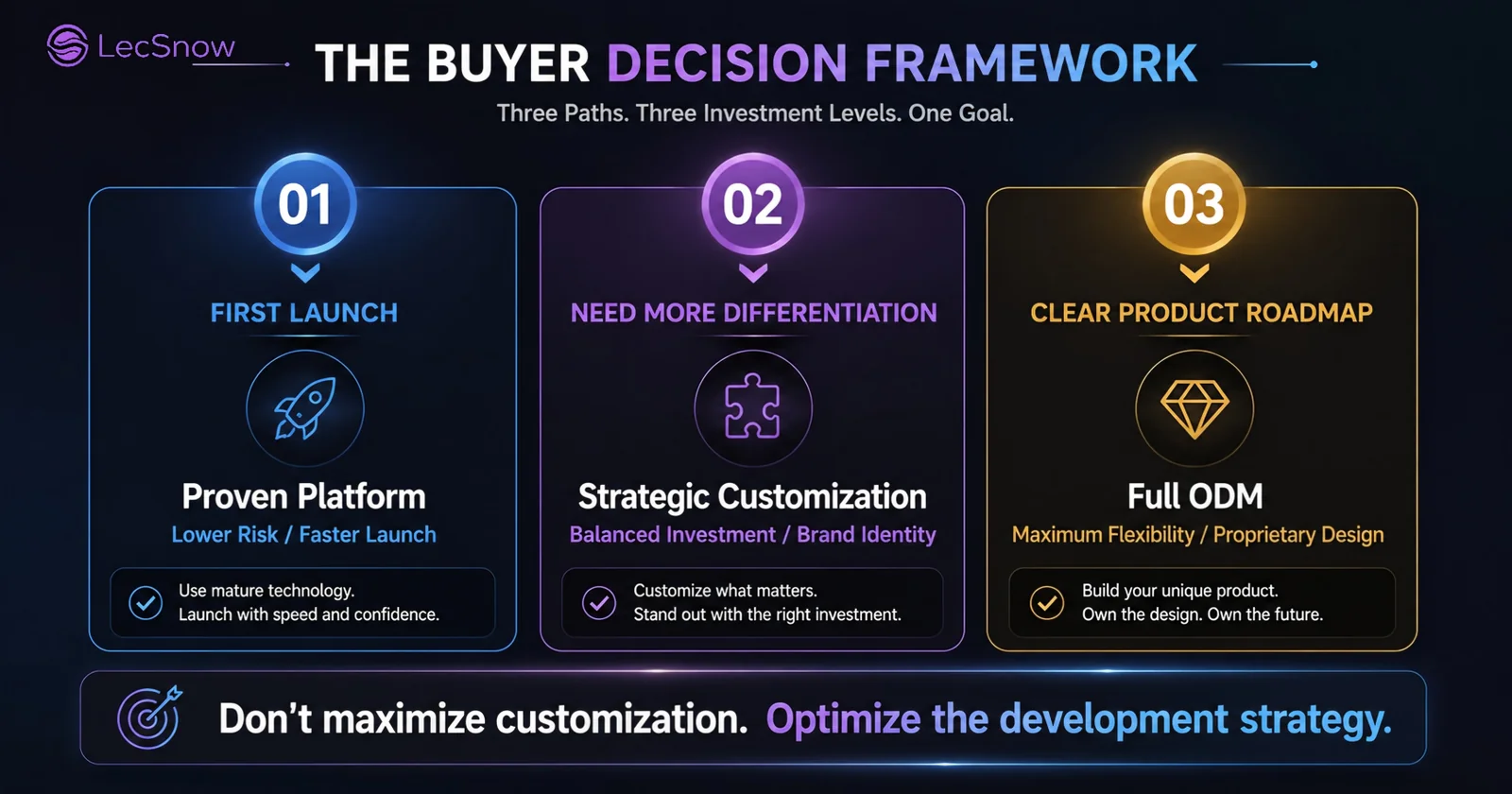
At LecSnow, we support brands across all three routes:
Private Label → Semi-ODM → Full ODM
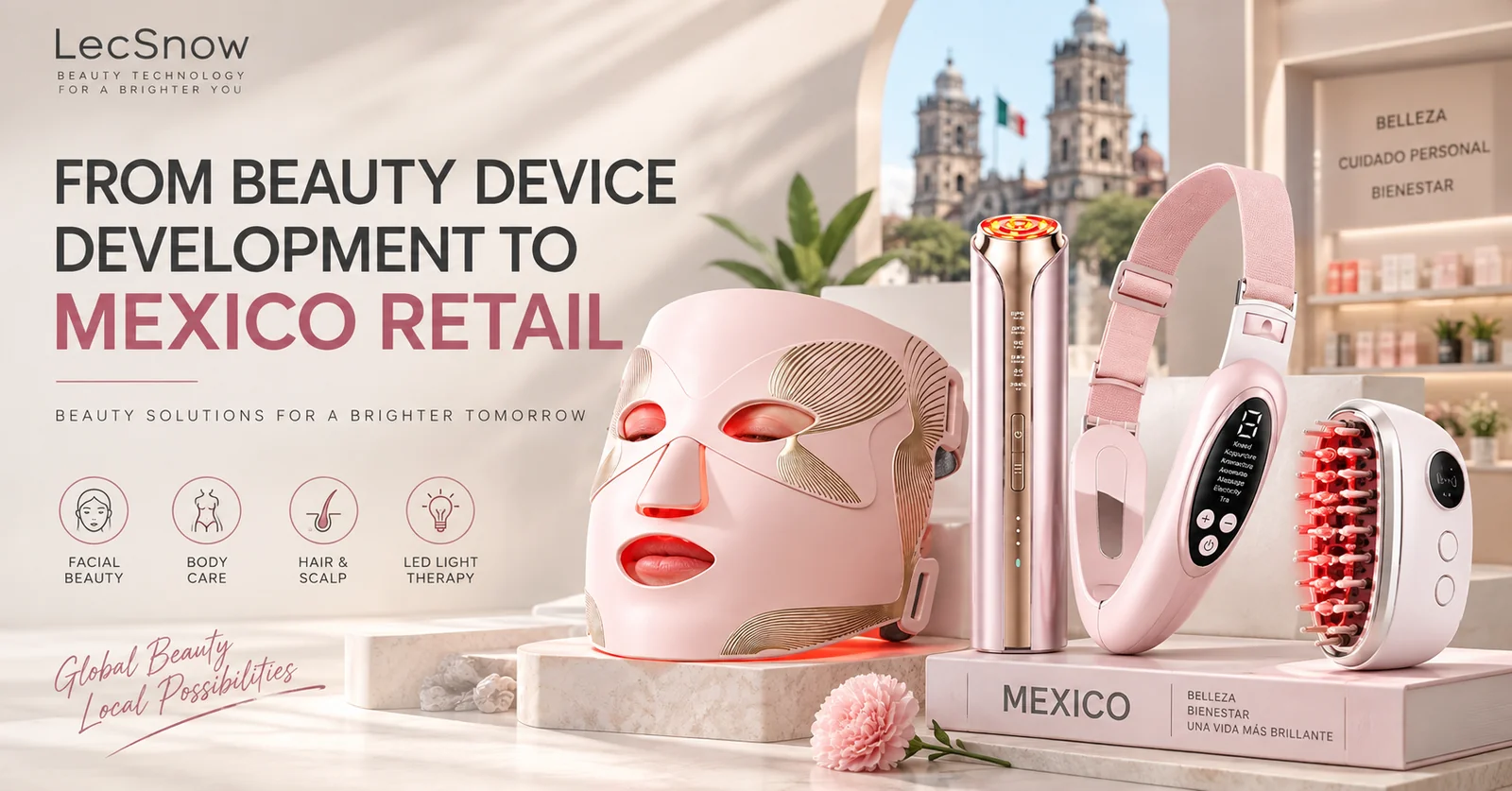
Our facial, body-care, scalp-care and wellness platforms can support different technologies and configurations, while our engineering team can also develop new structures and customized solutions when the commercial case justifies it. The starting point is not:
“How much can we customize?” It is: “What development strategy gives this brand the strongest product with the most reasonable risk?”
Before requesting tooling or choosing a product from a catalogue, define your brand positioning, target consumer, market, price point, competitive advantage, expected volume and acceptable development risk. Then choose the development route. If you already have a product brief—or even if you are still deciding between private label, semi-ODM and full ODM—share your target market, product positioning and expected price range with our team.
We can help you evaluate which route makes commercial sense before you invest in development.
Discuss Your Beauty Device Project →
Whether launching your first product or scaling your next bestseller, LecSnow is here to bring your vision to life faster, smarter, and without compromise.