How documentation, testing, and regulatory readiness turned a Thai OEM/ODM beauty-device project into a Thai FDA-approved product, and why Southeast Asia is six separate regulatory markets.

“Finding a beauty device is not the hardest part. Finding a factory that can provide the documentation required for local registration is.”
A Thai buyer shared this challenge with us earlier this May. For beauty brands and distributors entering Southeast Asia, it is increasingly relevant.
A product may perform well, look premium and offer a competitive price. But if the manufacturer cannot provide the required technical documentation, testing records or regulatory support, the project can still stop before reaching the market.
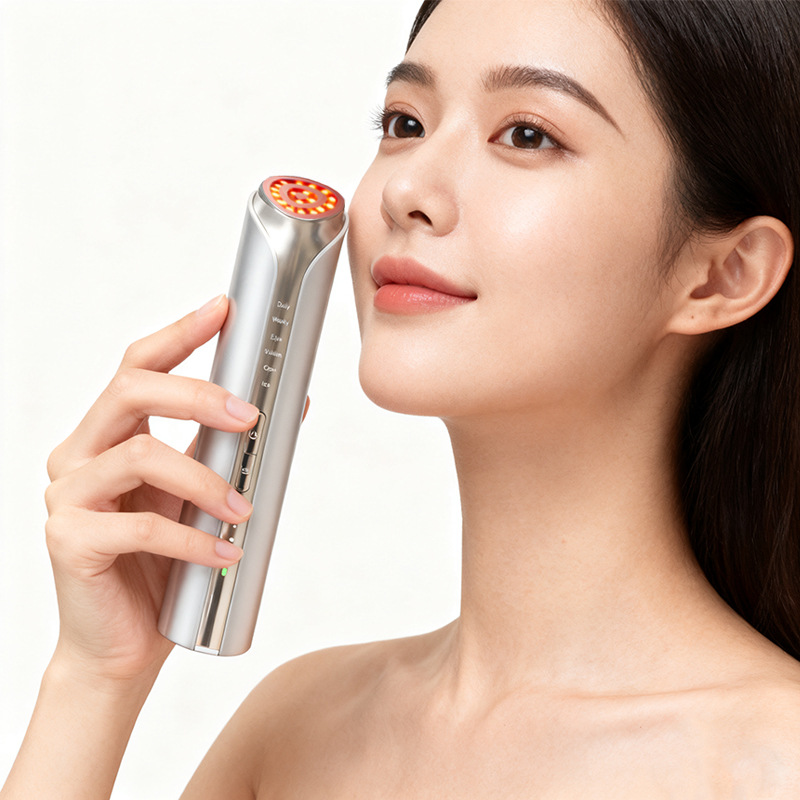
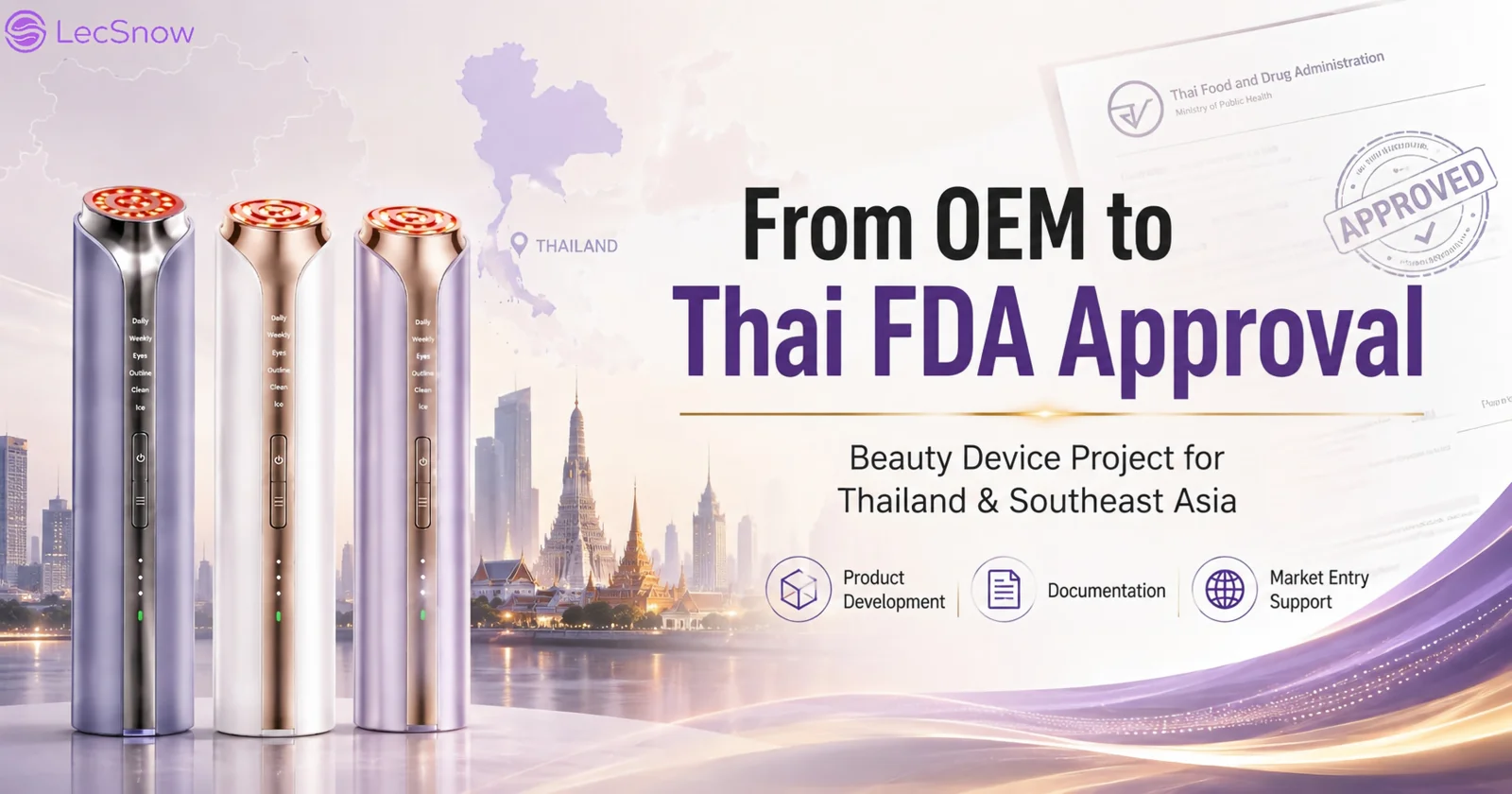
Recently, after more than a year of cooperation, one of our Thai customers received Thai FDA approval for a LecSnow multi-function facial beauty device.
Their message to us was simple:
“Good news today! We've finally received Thai FDA approval. Thank you so much for all your support and for providing all the necessary documents.”
For us, the approval represented more than one successful project. It showed what beauty device sourcing increasingly requires in Thailand and across Southeast Asia: product capability and market-entry capability need to work together.
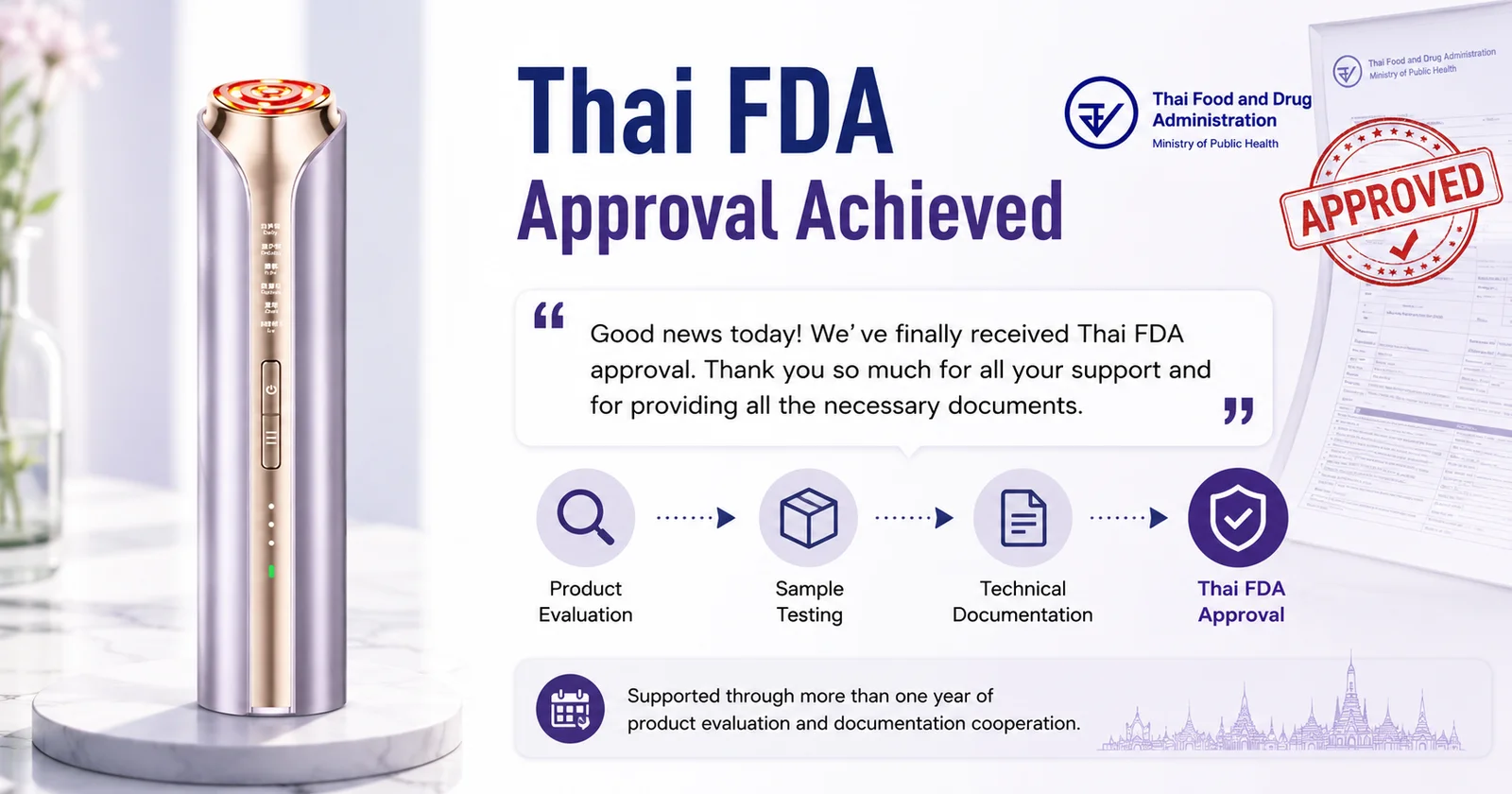
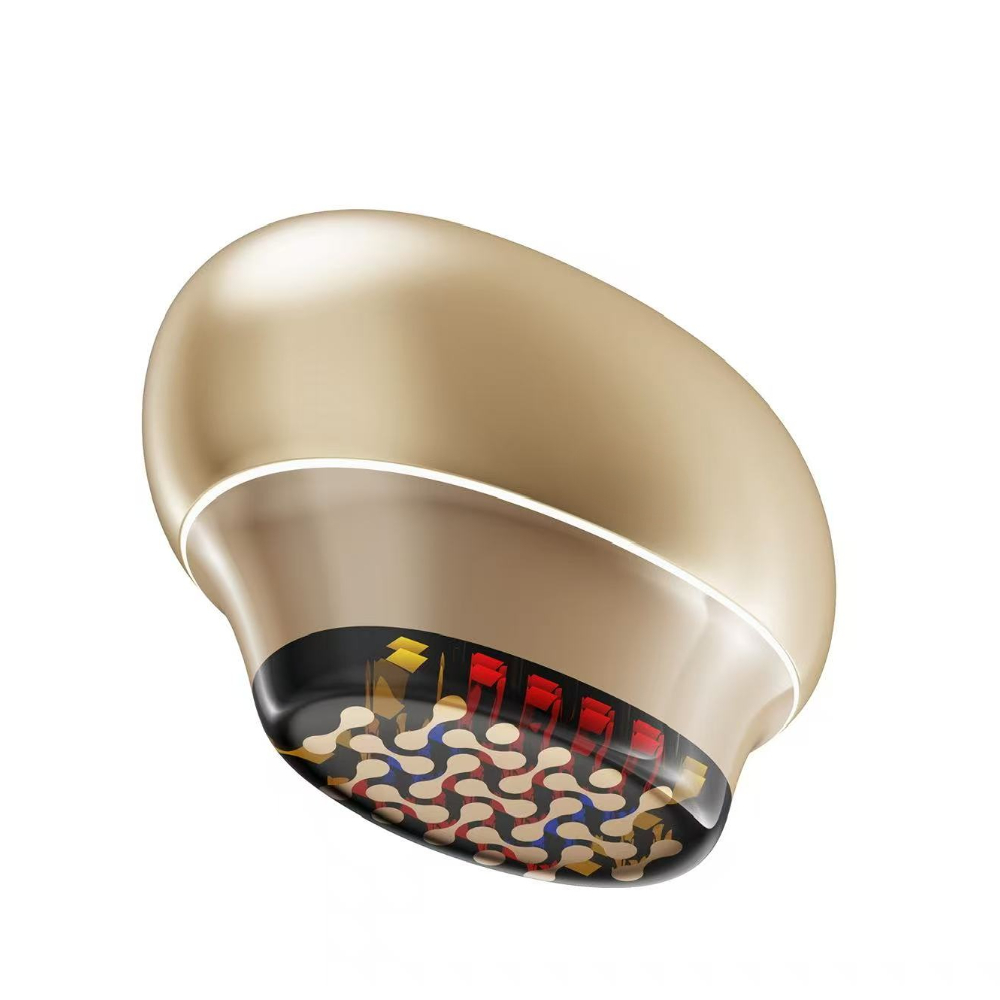
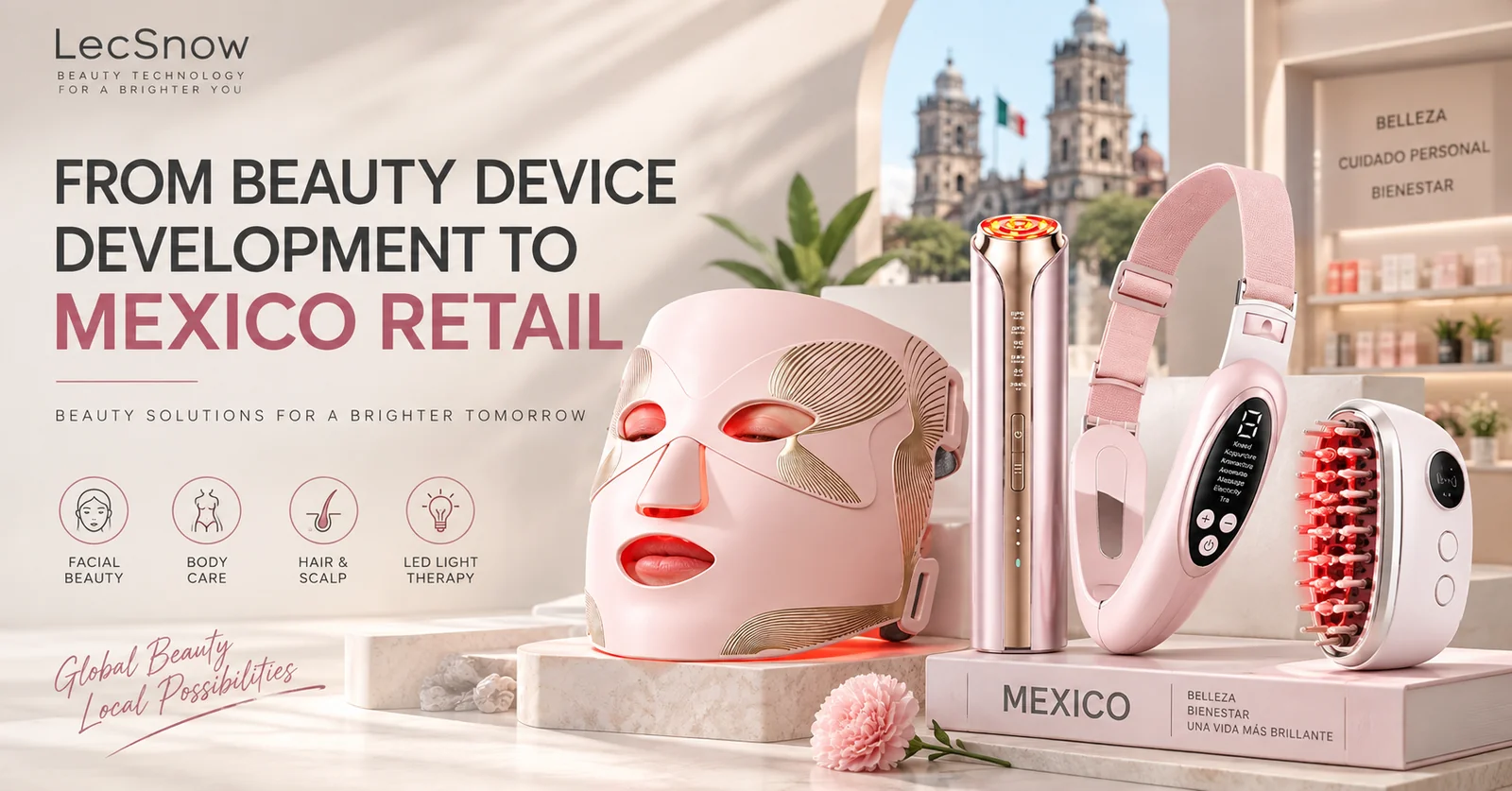
Designed for premium home-use skincare, the device integrates multiple technologies including RF, EMS, microcurrent, LED light therapy, cooling and vibration.
But selecting the device was only the beginning.
The customer first conducted product and sample evaluations. As the project moved toward registration, our role gradually expanded from product supplier to technical support partner.
Over the following months, we worked with the customer on the technical documentation and product information required for their Thai FDA application.
After more than a year of cooperation, sample evaluation and documentation support, the approval was finally granted.
The lesson is straightforward:
For regulated beauty device projects, the cheapest factory quotation can become very expensive if the supplier cannot support what happens after product selection.
We hear the same concern from buyers in different markets.
Factories may be able to manufacture an RF facial device, IPL hair removal device or LED beauty device, but that does not automatically mean they can support the documentation required by an importer, regulatory consultant or local authority.
Depending on the product classification, intended use and target country, a project may require technical specifications, electrical safety information, test reports, risk-related documentation, labeling information or other supporting materials.
Requirements should always be confirmed according to the specific product and its regulatory classification rather than assuming that every beauty device follows the same registration route.
This distinction becomes particularly important for technologies such as:
For B2B buyers, regulatory readiness should therefore be evaluated before placing a large OEM order, not after production has already started.
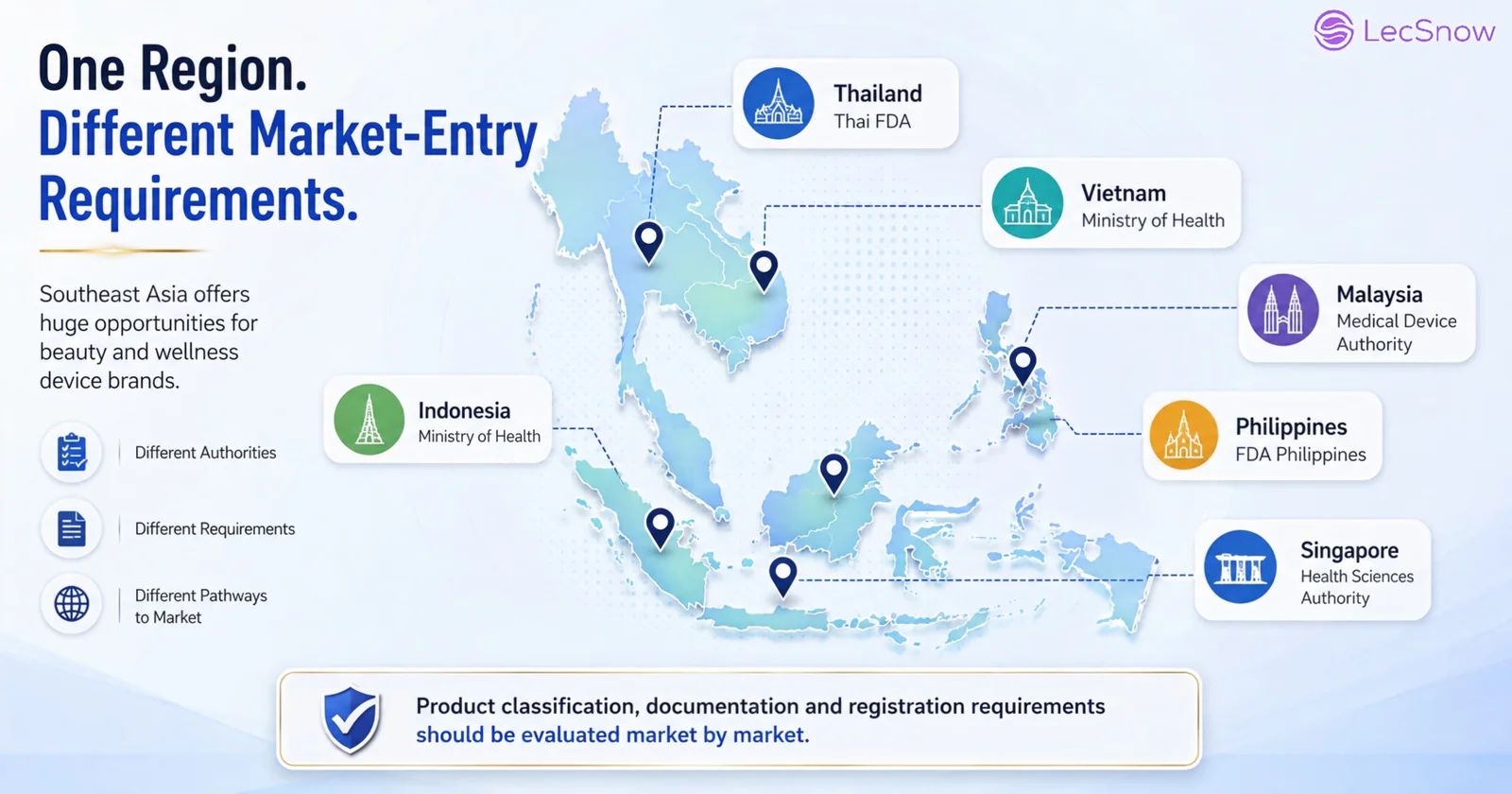
Thailand is only one part of the opportunity.
Indonesia, Vietnam, Malaysia, the Philippines and Singapore are also important beauty and personal-care markets, but Southeast Asia should not be treated as a single regulatory system.
Each country has its own authority, device classification rules and market-entry procedures.
For example, medical-device regulation in Malaysia is administered by the Medical Device Authority (MDA) under the Ministry of Health, with medical-device registration and establishment licensing handled through its MeDC@St system.
Indonesia operates its own medical-device registration system under the Ministry of Health, while Singapore's Health Sciences Authority provides registration routes based on device risk classification.
Vietnam and the Philippines likewise maintain their own medical-device regulatory frameworks.
This means that a product successfully launched in one Southeast Asian country cannot simply be assumed to have an identical regulatory path in another.
For brands planning regional expansion, the better approach is:
Build the technical foundation once, then evaluate the additional requirements market by market.
The commercial opportunity is also becoming harder to ignore.
Asia-Pacific is one of the fastest-growing regions for skincare and home-use beauty technologies. Grand View Research projects the Asia-Pacific skincare devices market to reach approximately US$7.9 billion by 2030, with a projected CAGR of 14.7% from 2025 to 2030.
Digital beauty commerce is particularly important in Southeast Asia.
According to 2026 regional e-commerce research from Moojing, beauty sales across Indonesia, Thailand and Vietnam alone generated approximately US$4.33 billion on Shopee between April 2025 and March 2026. Thailand showed relatively strong beauty spending per consumer, while Vietnam stood out for the scale of its beauty tools and accessories category.
For beauty-device brands, this creates opportunities across several product directions:
Facial beauty devices: RF, EMS, microcurrent, LED, cooling and multi-function skincare systems.
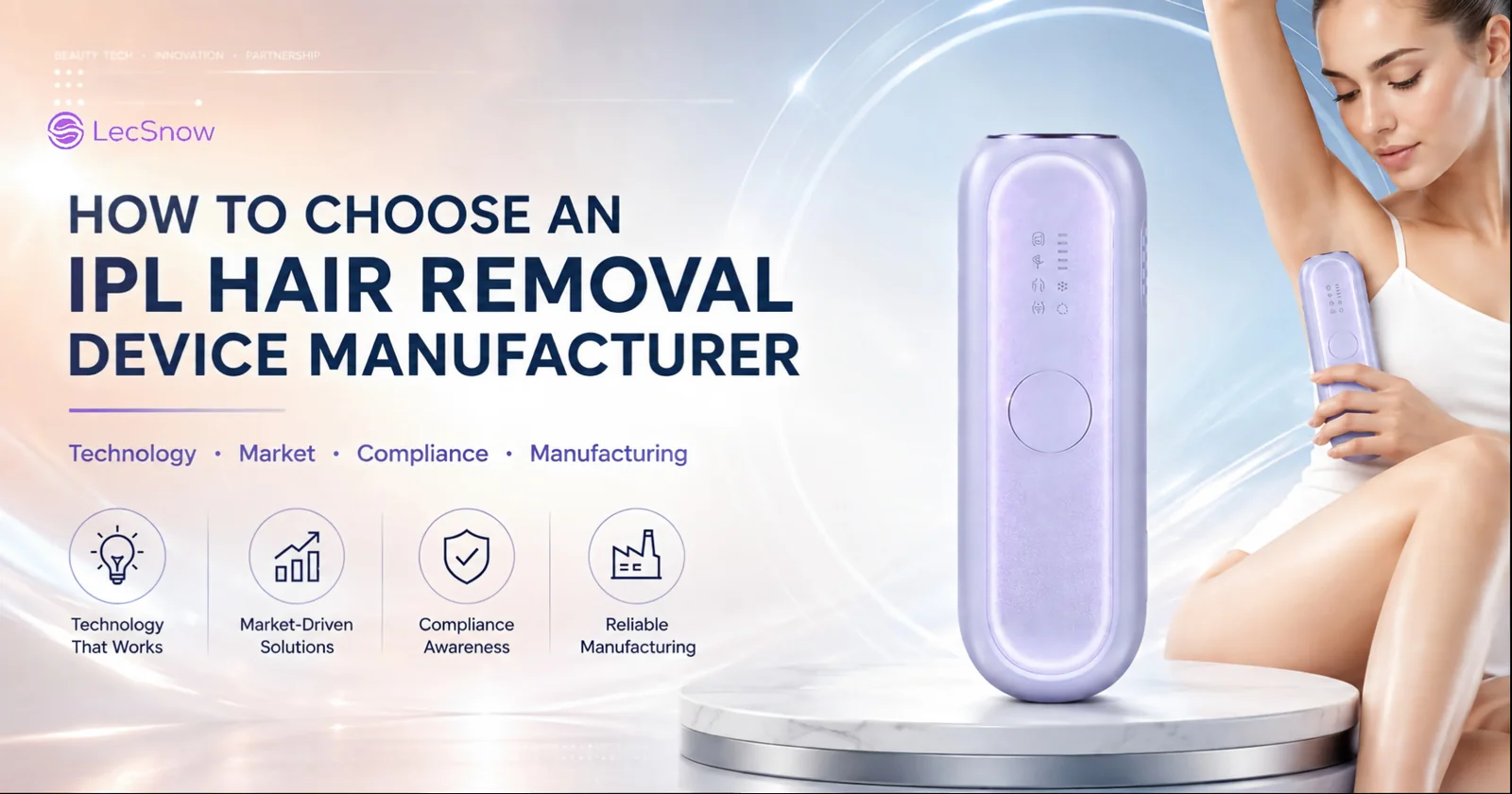
IPL hair removal devices: home-use hair removal remains a major device category, particularly for brands that can combine competitive pricing with safety documentation and differentiated industrial design.
LED and wearable beauty devices: products that combine skincare benefits with convenience and home-use routines fit naturally into the region's social-commerce-driven beauty market.
The opportunity, however, is not simply to export the same device everywhere. Pricing, positioning, claims, technology combinations and registration strategy should be adapted to the target country.
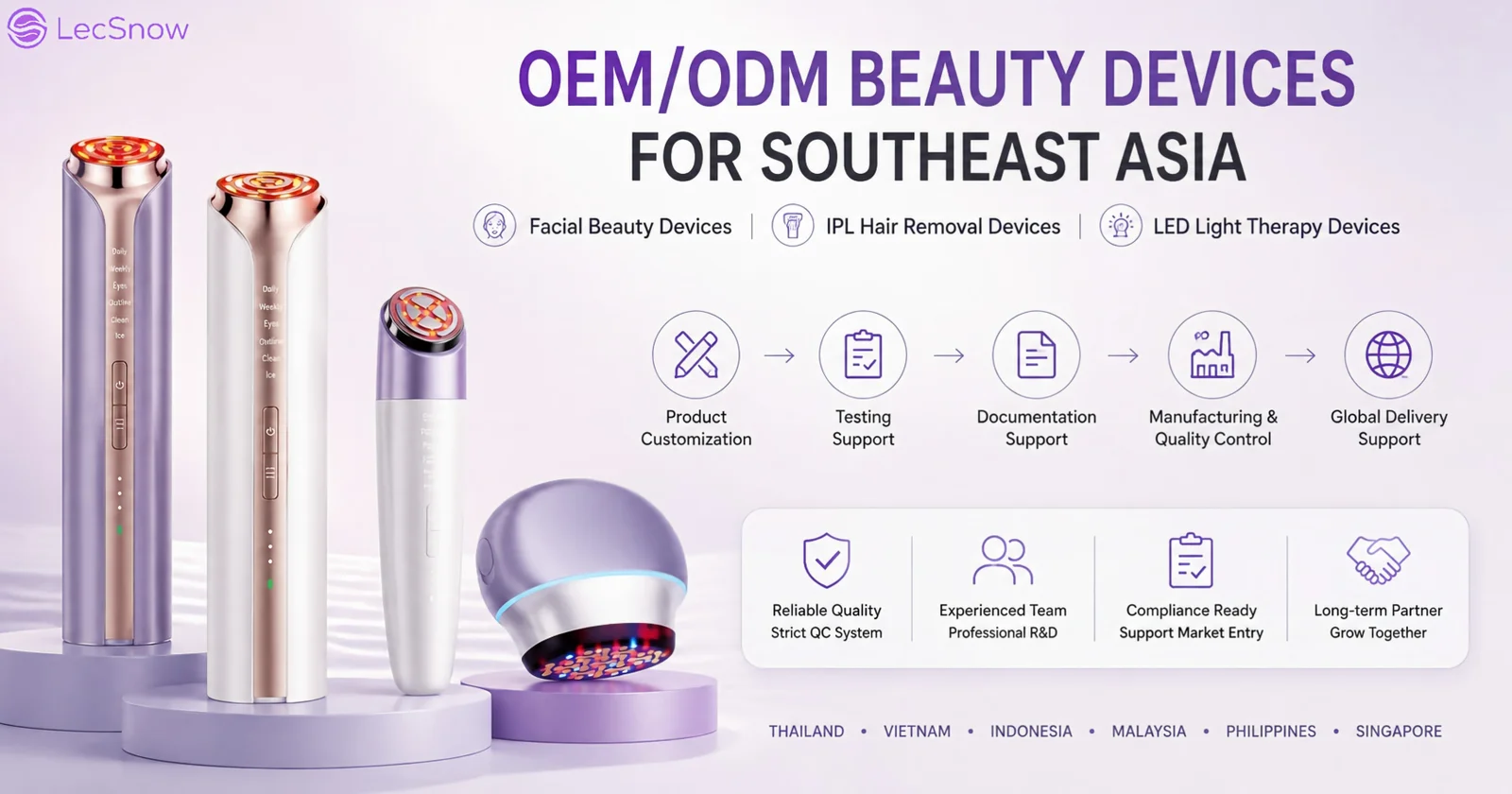
Before choosing an OEM beauty device manufacturer or private label beauty device supplier, buyers should look beyond MOQ and unit price.
A more useful supplier evaluation should ask:
These questions reveal much more about the real project risk than a quotation alone.
At LecSnow, we work with brands, importers and distributors developing OEM/ODM facial beauty devices, IPL hair removal devices, LED beauty devices, body care devices and wellness products for international markets.
Our support can extend beyond manufacturing to technical documentation, product testing coordination, customization and cooperation with customers during local market-entry processes.
For qualified strategic projects with appropriate order volume and market commitment, regional product protection or exclusive distribution arrangements can also be discussed.
And Southeast Asia is not a market we intend to manage only through email. We regularly travel internationally and are open to visiting partners in Thailand and other Southeast Asian markets to better understand their distribution channels, product roadmap and local requirements.
If you are sourcing an OEM beauty device, private label facial beauty device or IPL hair removal device for Thailand, Vietnam, Indonesia, Malaysia, the Philippines, Singapore or another Southeast Asian market, product selection should be only the first step.
The more important question is whether your manufacturing partner can support the project from product evaluation and customization through technical documentation, testing and mass production.
Explore LecSnow's OEM/ODM Beauty & Wellness Solutions
Or send us the product category and target market you are evaluating. We can review the project from both a product-development and market-entry perspective before you commit to mass production.
Whether launching your first product or scaling your next bestseller, LecSnow is here to bring your vision to life faster, smarter, and without compromise.