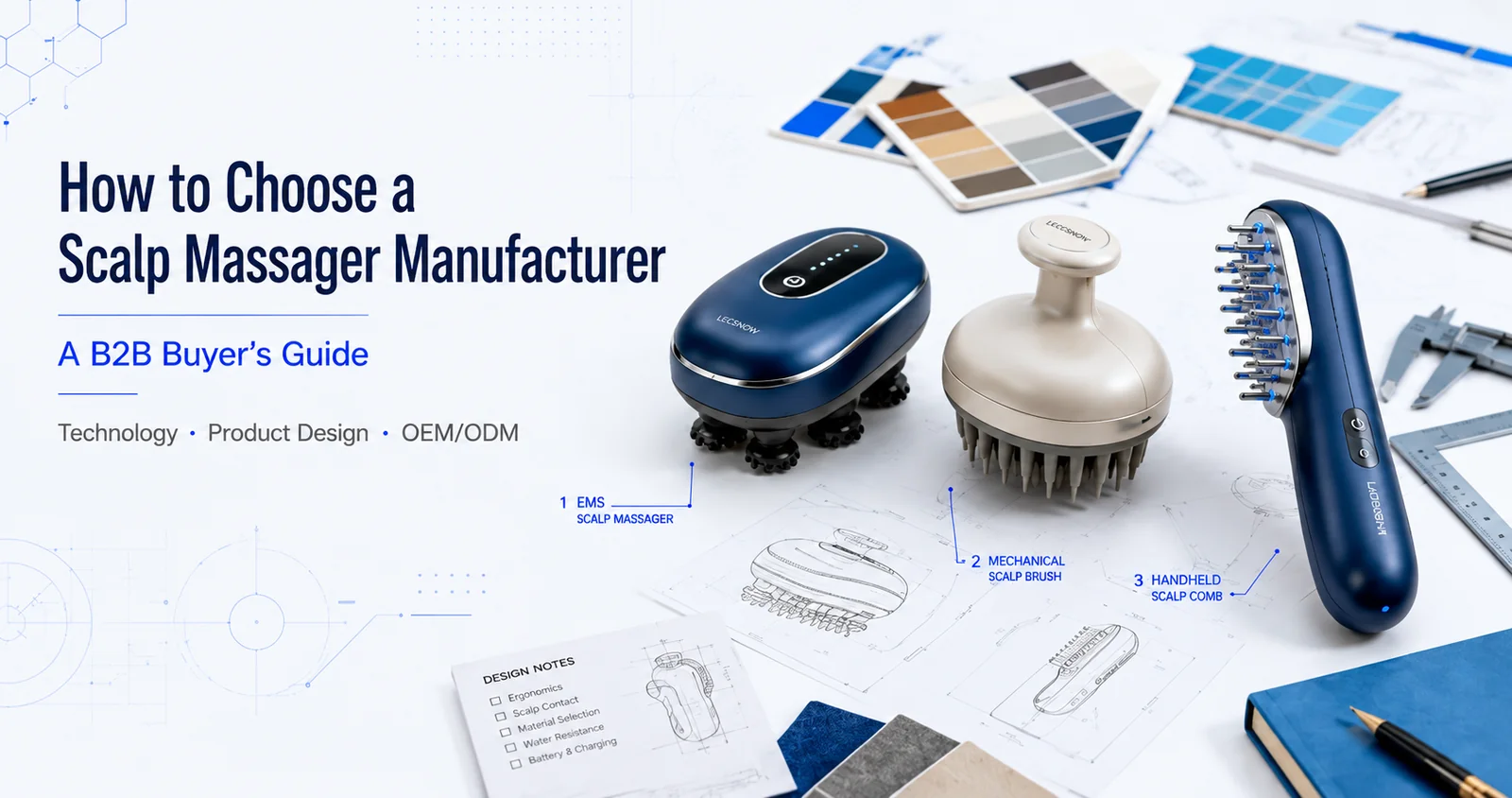
A practical B2B framework for choosing a scalp care device manufacturer that can support product-market fit, defensible claims, compliance documentation, repeat production, and long-term brand growth.

Choosing a scalp massager manufacturer starts with a product question: what should your device help users do repeatedly, and what type of scalp-care routine can your brand credibly own? A scalp massager may be a simple mechanical brush, an EMS and vibration device, a serum-delivery tool, or part of a broader hair-and-scalp system. The right manufacturer should help you choose the route, explain the engineering trade-offs, and turn the concept into a repeatable product—not simply add your logo to a catalogue model.
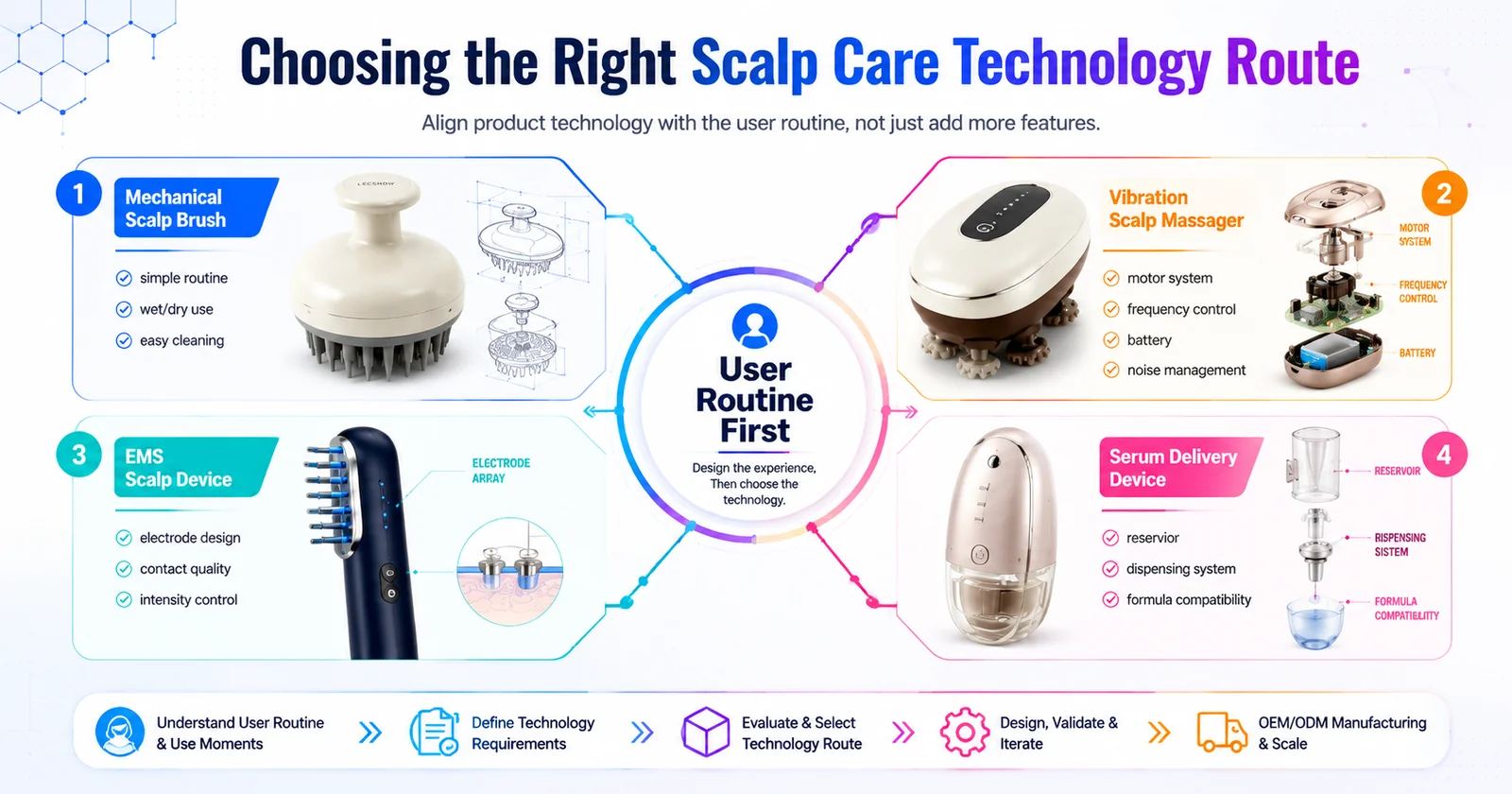
A brand entering scalp care should first define the customer problem in practical, non-medical terms. Is the product intended to make shampooing feel more thorough, provide a relaxing massage, support a daily scalp-care ritual, improve serum application, or combine several of these jobs? Each objective leads to a different product architecture.
A wet-use shampoo brush needs soft, durable contact points, drainage, easy cleaning, and a grip that remains secure with water and product residue. A dry-use handheld device can support stronger vibration, multiple modes, or a serum applicator, but it must control noise, weight, charging, and contact comfort. A premium device may add EMS, heat, LED, or app-related features, but those functions only add value if the routine remains simple enough for frequent use.
This is where a capable scalp massager manufacturer should challenge the brief. If a supplier immediately recommends the same four-function platform for every brand, it may be selling a specification rather than solving a scalp-care problem. A better discussion starts with scalp coverage, hair density, session length, wet or dry use, target price, and the moment in the customer’s routine when the device will be used.
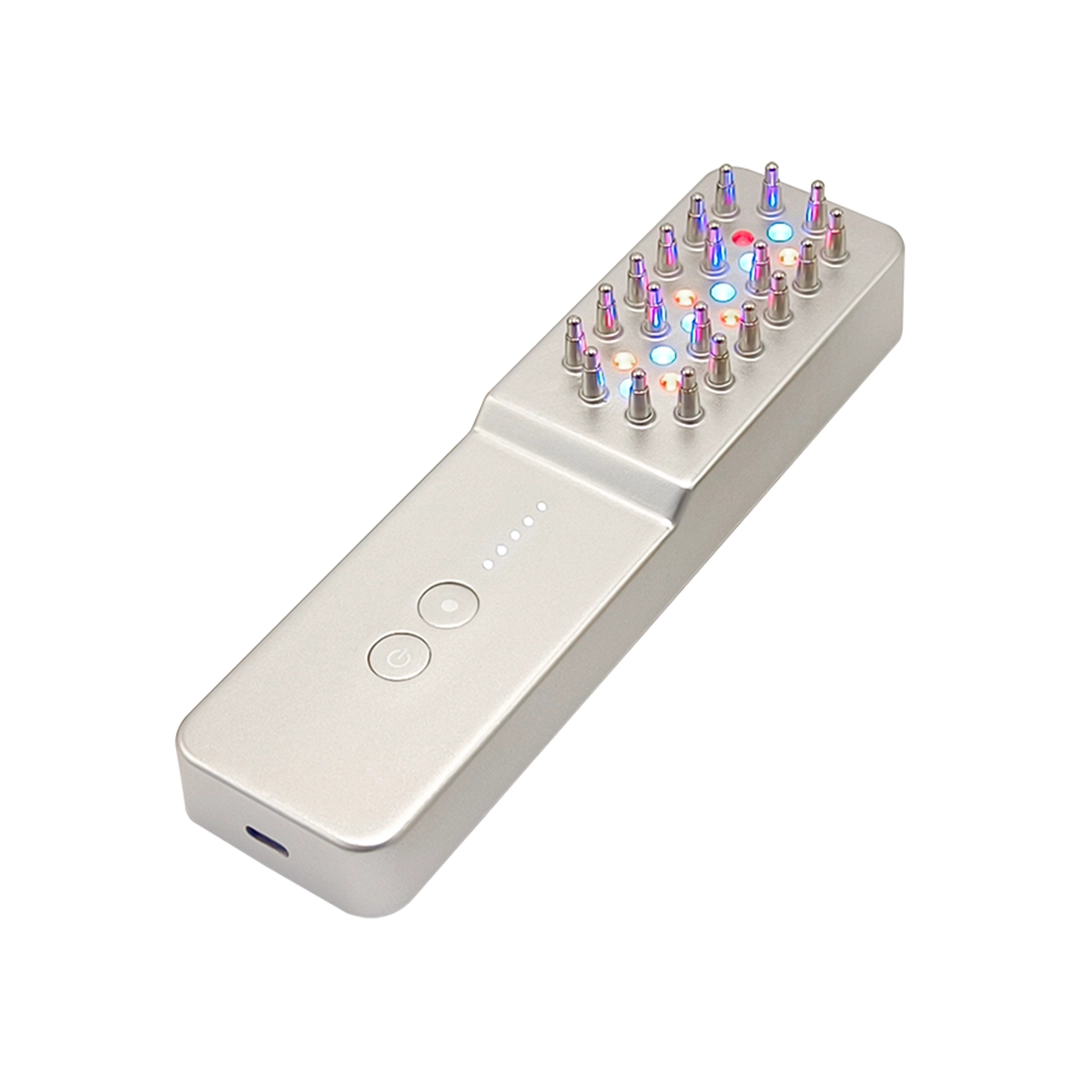
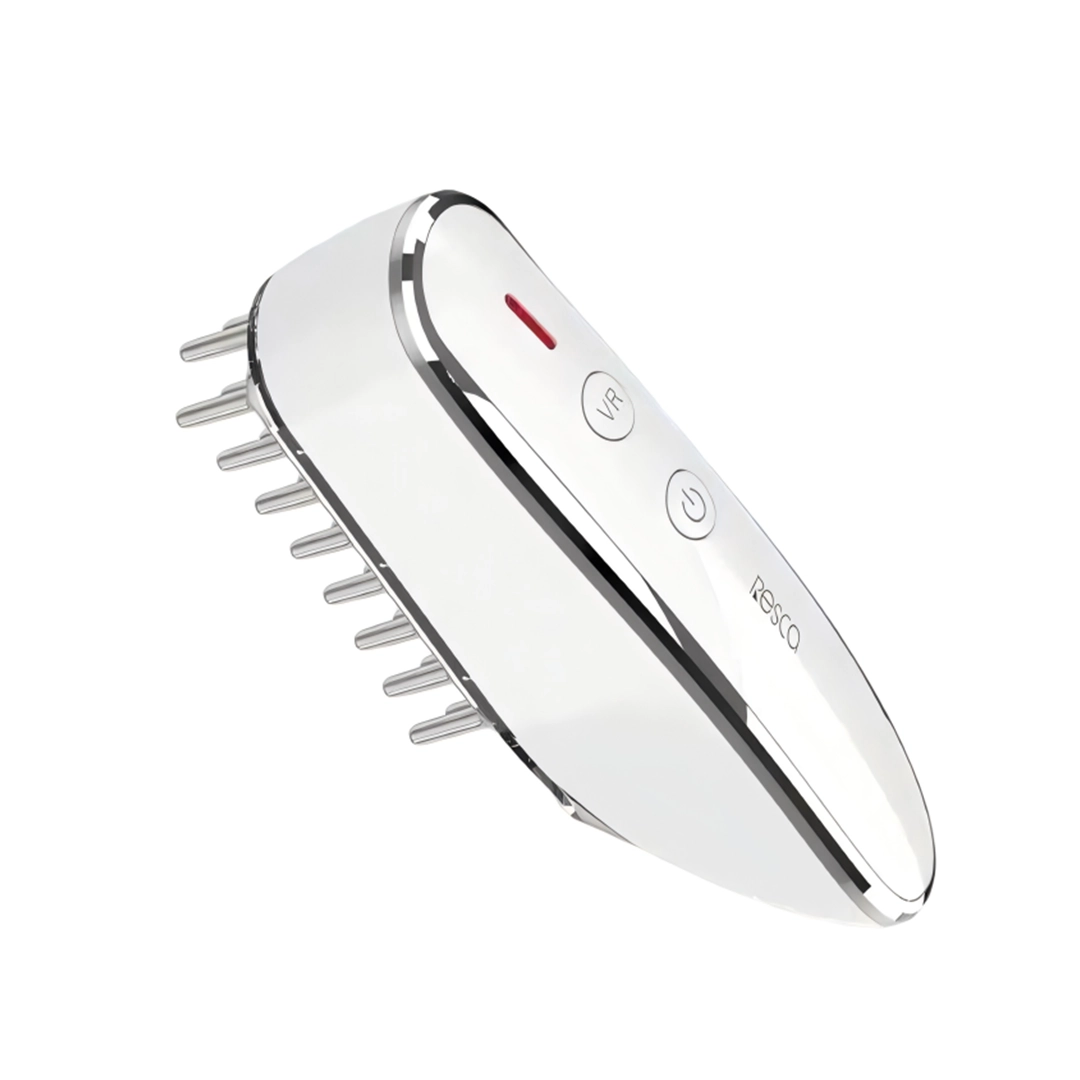
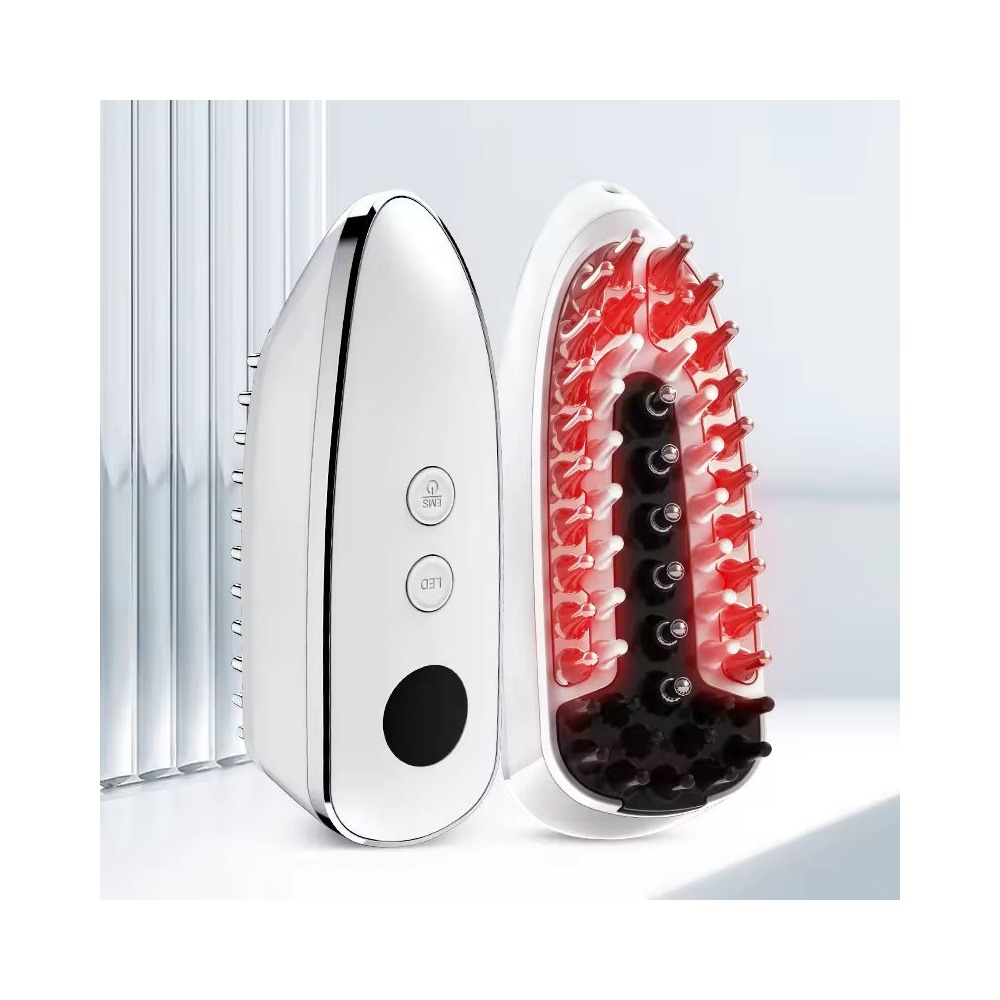
For a brand evaluating ready platforms, LecSnow’s OEM hair and scalp device category provides a useful reference point for comparing scalp-focused formats, including an EMS scalp hair Meridian body massage device and a scalp/body meridian therapy comb. The product format should be treated as a starting point for development questions, not as proof of a clinical or hair-growth outcome.
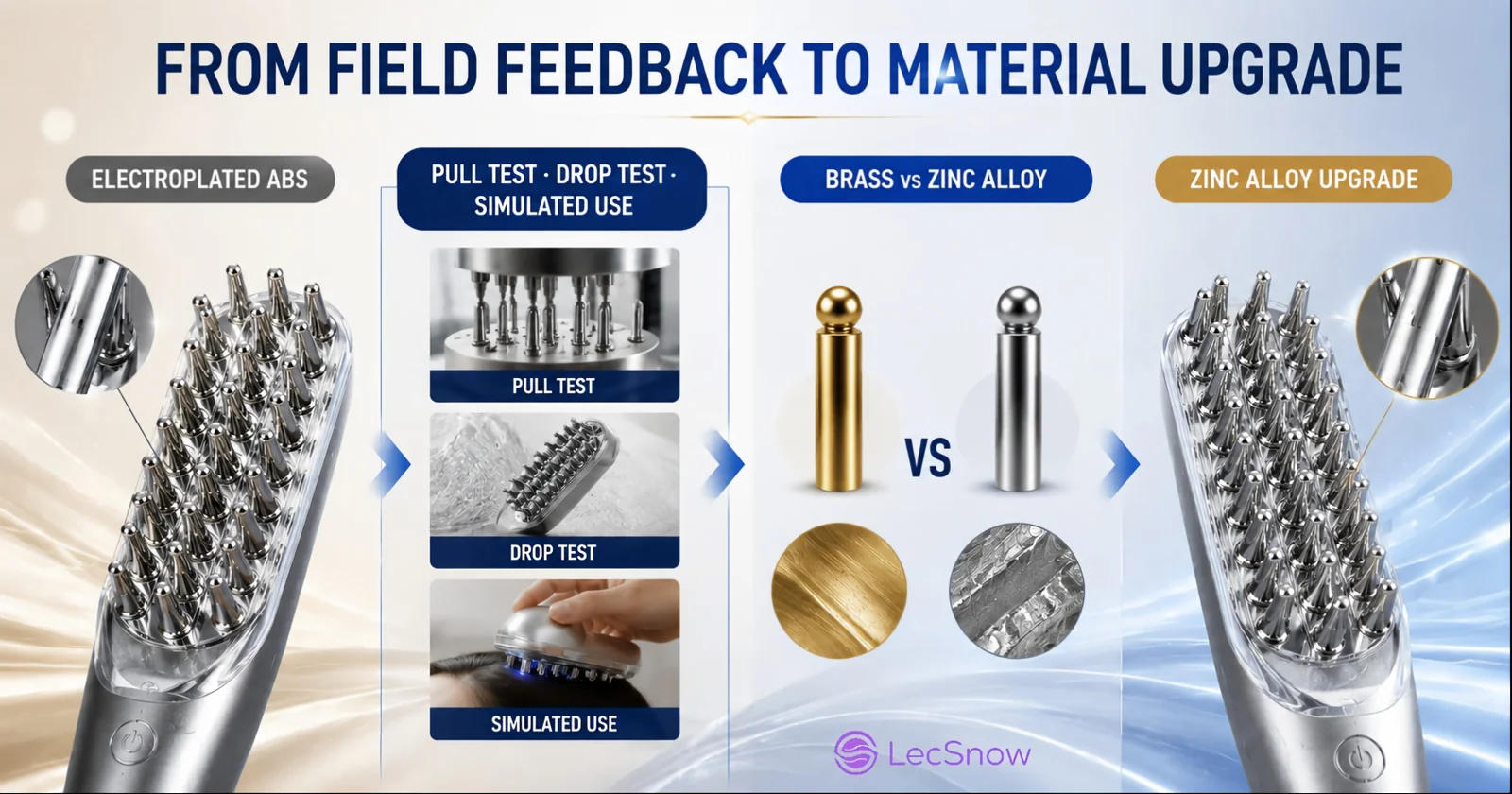
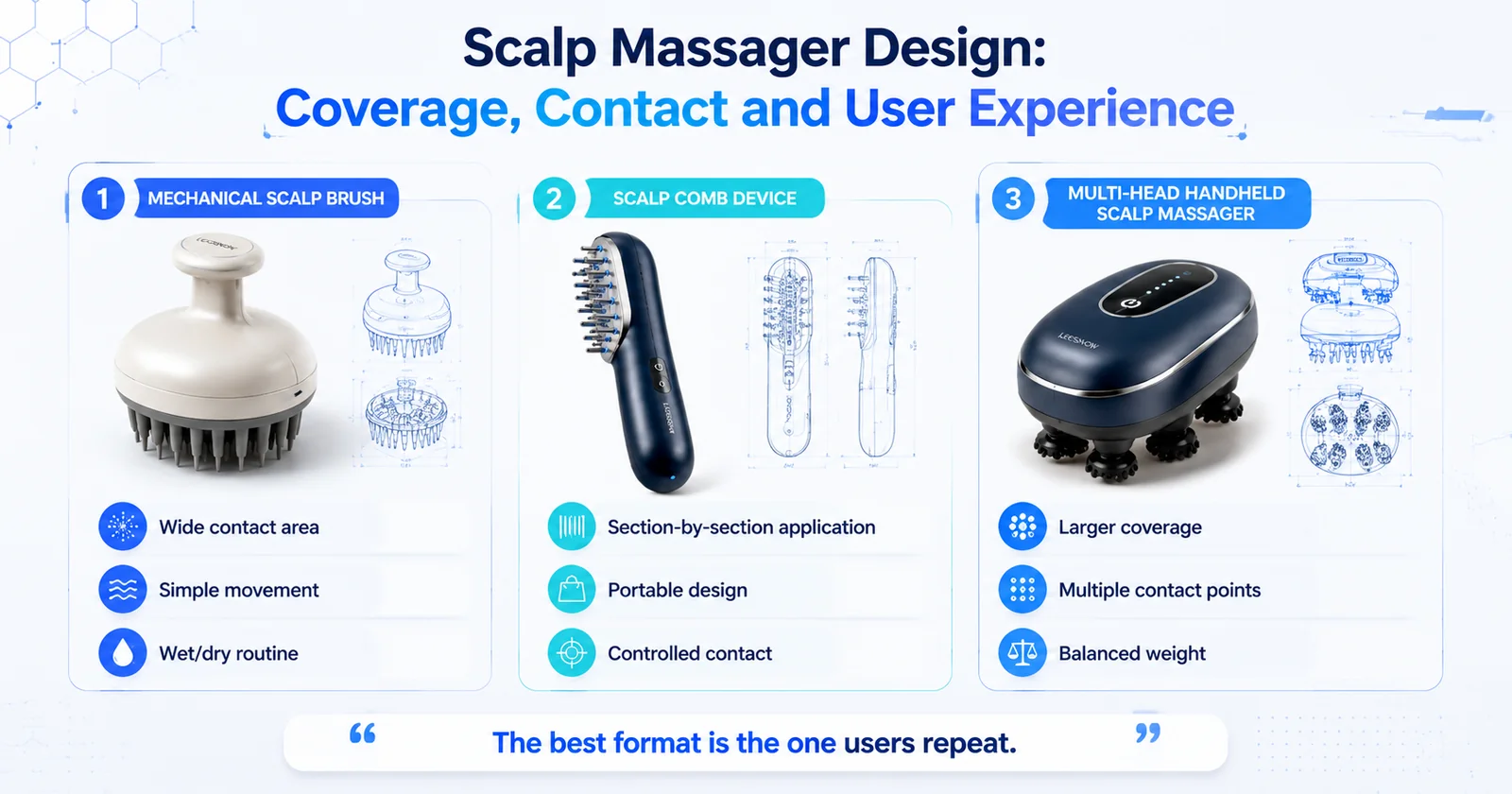
A mechanical brush is the simplest route. It can be affordable, lightweight, easy to explain, and suitable for wet or dry routines. Its differentiation comes from the geometry and material of the contact tips, spacing, flexibility, grip, and cleaning design. The main development risk is not electronic performance but user comfort: tips that feel too rigid, pull hair, collect residue, or create pressure points can reduce repeat use.
Vibration adds a more recognisable device experience and can support a premium price. The engineering questions include motor balance, amplitude, frequency, noise, waterproofing, battery life, and how vibration changes when the device is pressed against the scalp. A supplier that only quotes “three vibration modes” has not yet shown category expertise. Ask for the actual operating range, load behaviour, session timer, and validation method.
EMS can differentiate a scalp-care product, but it adds contact, intensity, skin-safety, and user-instruction requirements. The treatment head must maintain reliable contact through hair and around the scalp curve. The brand also needs a clear use protocol, appropriate intensity steps, and a realistic explanation of what the function does. EMS should not be presented as evidence of hair regrowth or as treatment for a medical condition.
A serious supplier should explain whether the electrodes work with dry skin, a water-based serum, or a specified conductive medium, and how the system prevents an unpleasant first pulse or unstable output. These details reveal more than the number of modes printed on the packaging.
A serum-delivery concept can connect the device to the brand’s existing hair-care range and create a stronger replenishment model. But the dispenser, channel, reservoir, and treatment pins must be designed around viscosity, cleaning, leakage prevention, dosage consistency, and compatibility with the formula. A manufacturer that understands both device mechanics and the product used with it should ask for the serum’s viscosity, ingredients, storage conditions, and intended application pattern before promising a reliable system.
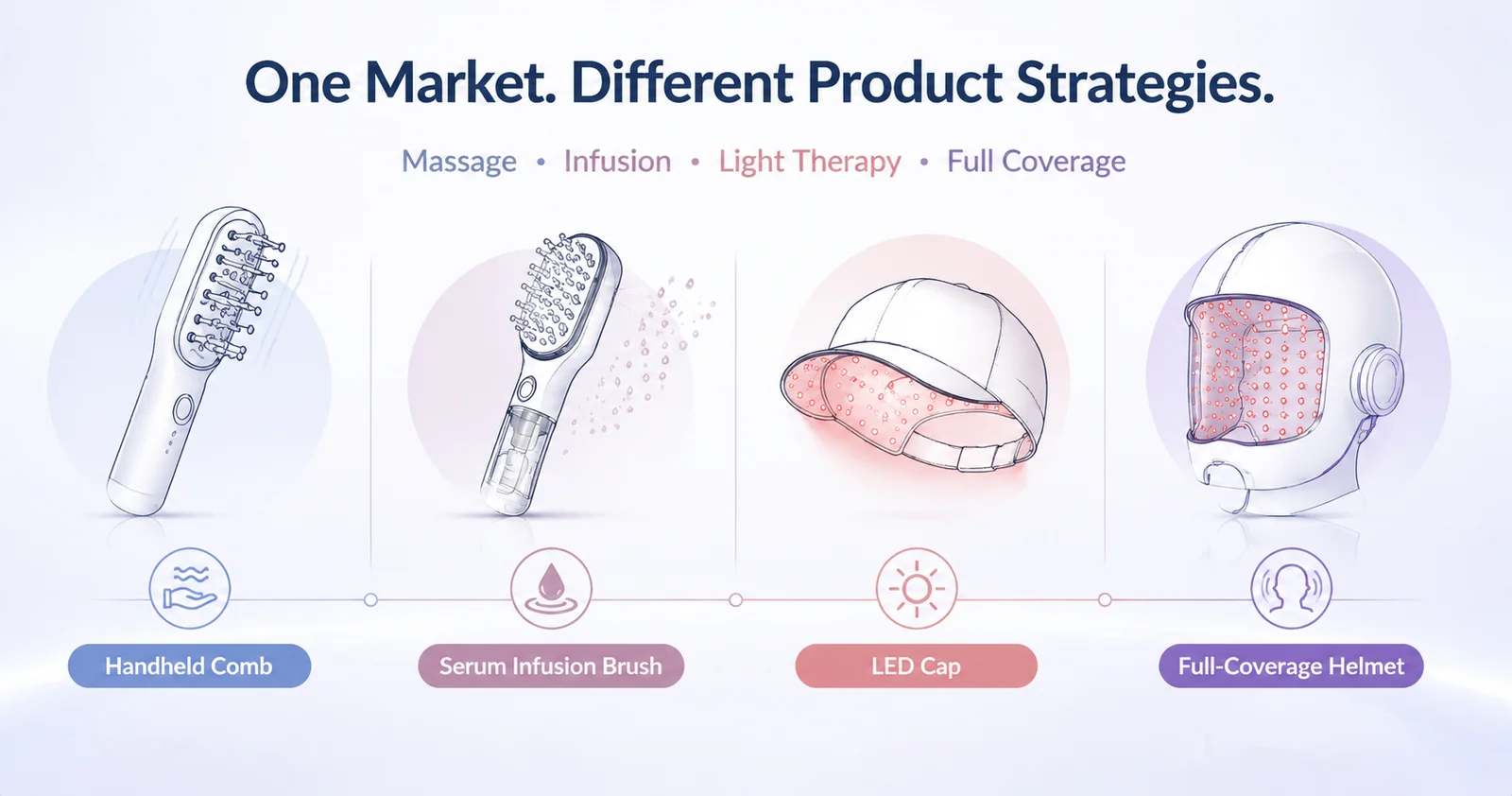
The product shape determines how the device behaves in a real routine.
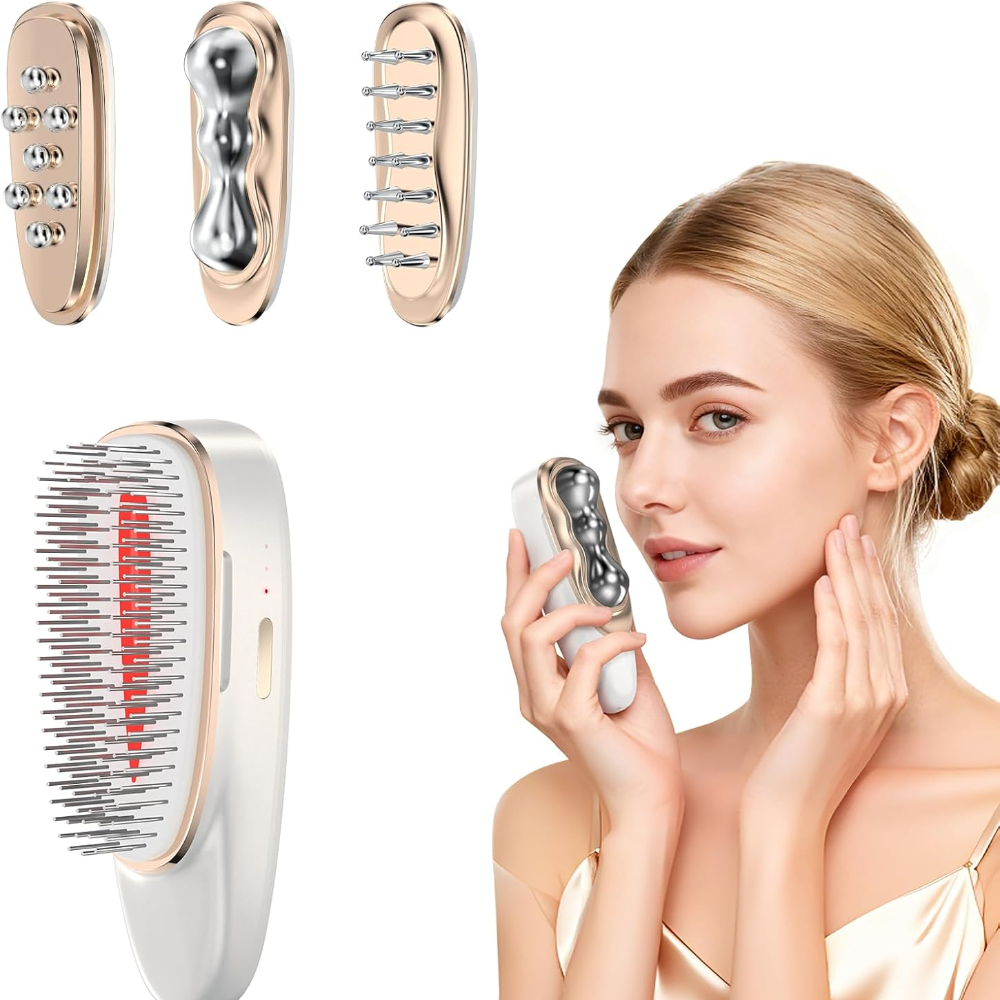
A brush format is familiar and easy to merchandise, but it may provide uneven pressure if the user moves too quickly. A comb can support section-by-section application and portability, although it requires more user control and may be less convenient for a full-scalp session. A multi-head handheld massager can cover more area with less manual precision, but it needs careful head geometry, hair entanglement control, cleaning access, and balanced weight.
For a premium brand, the important question is not which format looks most advanced. It is which format makes the intended behaviour repeatable. A ten-minute device that is uncomfortable after two minutes is weaker than a simpler product users will actually keep in their routine. This is an original product insight that should shape the prototype brief, packaging claims, and user testing.
Ask the manufacturer to demonstrate the device on different hair densities and lengths. Check whether the head reaches the scalp without pulling, whether the user can feel the difference between modes, whether product residue is easy to remove, and whether the device can be used without looking in a mirror. These are category-specific acceptance tests.
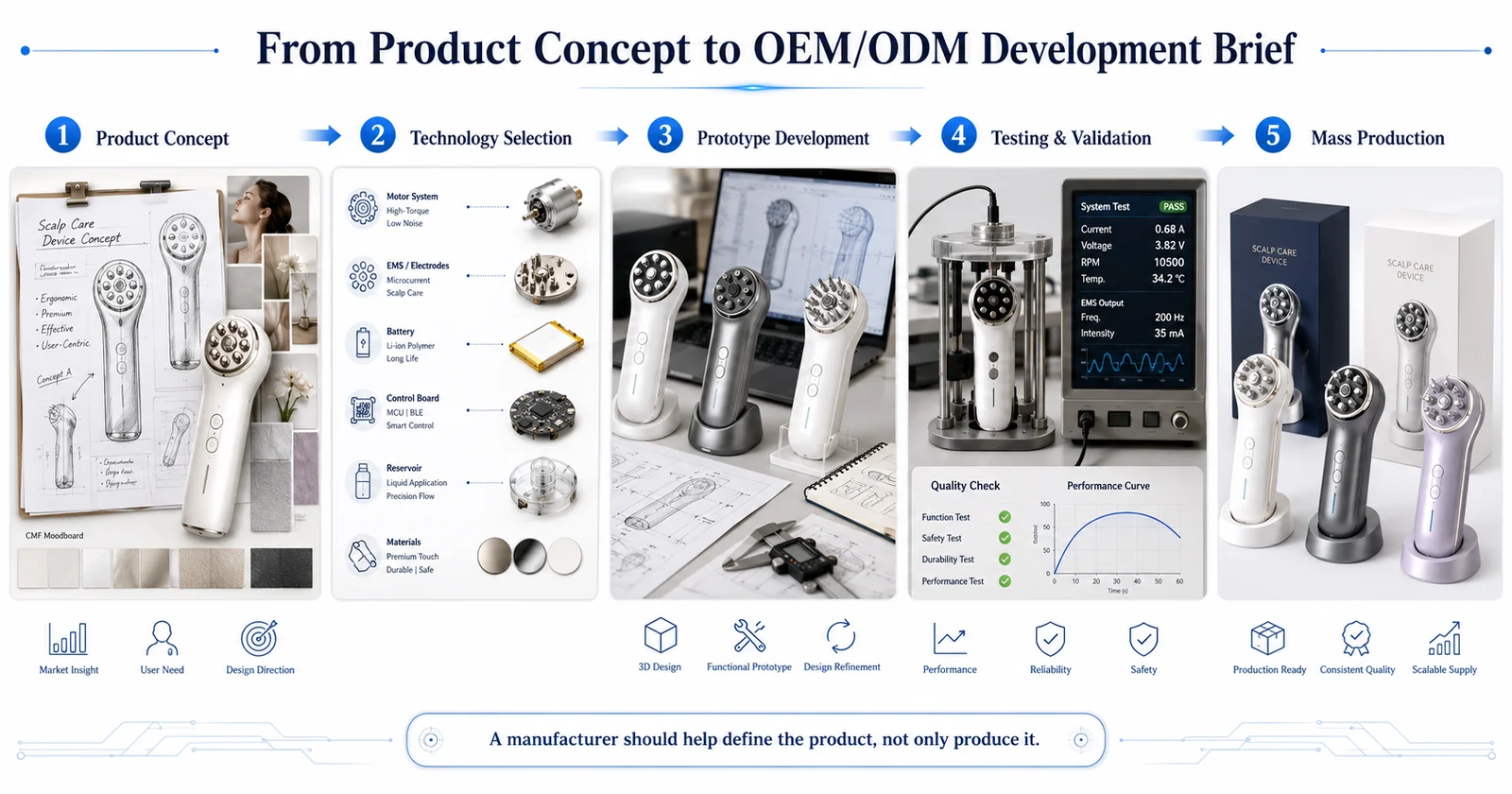
For brands that need structural, electronics, and user-experience support, LecSnow’s ODM beauty device development page describes a multidisciplinary R&D approach. During a real project, ask which engineers will own scalp-contact design, power management, firmware, and usability validation for the selected configuration.
A supplier demonstrates category knowledge through the questions it asks and the trade-offs it can explain.
A capable scalp massager manufacturer should be able to discuss:
The supplier should also distinguish a feature from an outcome. “Red LED,” “EMS,” “microcurrent,” or “deep massage” describes a function or technology category. Those terms should not be used as evidence of hair regrowth, follicle activation, dandruff treatment, or a guaranteed improvement. Ask the manufacturer to connect every planned product statement with the exact hardware, user protocol, test plan, and target-market requirements.
This is the second major buyer insight: the most credible supplier is not the one making the strongest efficacy promise. It is the one that can connect the intended claim to the exact hardware, user protocol, test plan, labeling, and market pathway.
Before requesting a final quotation, give shortlisted manufacturers a product brief with:
LecSnow’s OEM beauty device manufacturing process describes support from product selection and customization through prototyping and production. For a scalp project, the important follow-up is to lock the exact configuration: contact materials, motor, electrodes, battery, charger, firmware, accessories, packaging, and user manual.
Only after the product route is clear should you compare MOQ, tooling, lead time, warranty, and production capacity. Ask how the manufacturer controls substitutions and whether a component, firmware setting, or treatment head can change without written approval. A golden sample, production test standard, and change-control record protect the experience your brand is selling.
Choose a scalp massager manufacturer by its ability to make the product concept more specific. The right partner should help you decide whether your brand needs a mechanical brush, vibration massager, EMS-assisted device, serum-delivery tool, or a controlled combination. It should explain how scalp contact, hair density, wet-use conditions, output, comfort, cleaning, claims, and testing affect the product.
Would you like to turn your scalp-care concept into a clearly defined product route? Contact LecSnow to discuss the target user, technology combination, form factor, customization scope, and prototype plan for your brand.
Whether launching your first product or scaling your next bestseller, LecSnow is here to bring your vision to life faster, smarter, and without compromise.