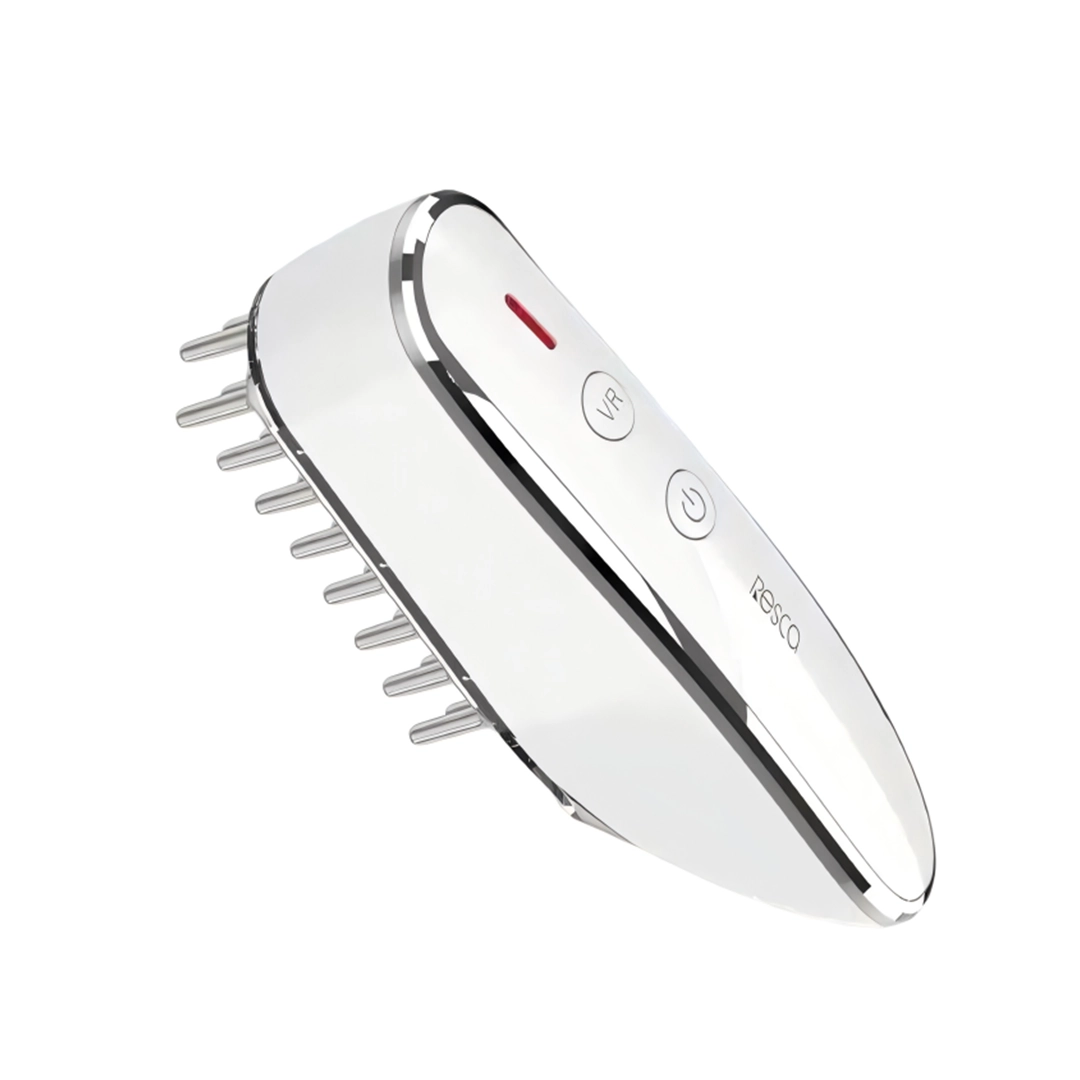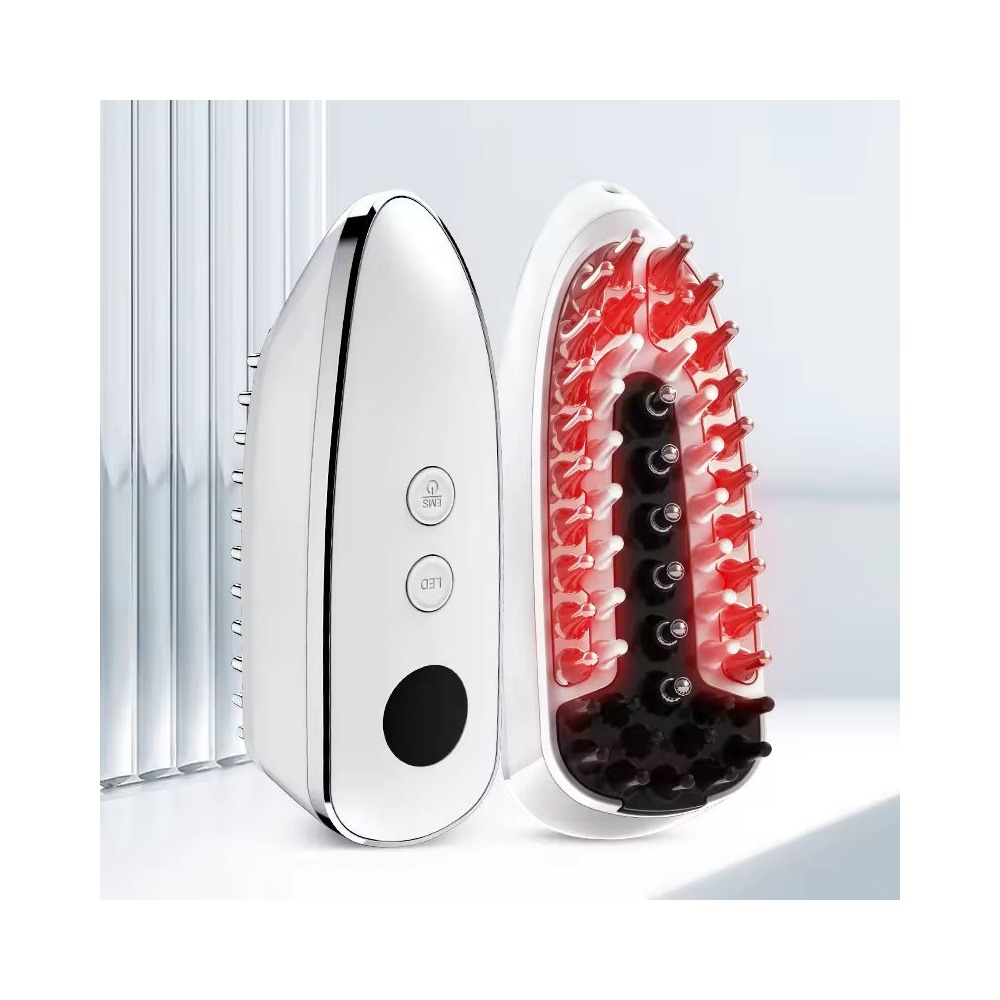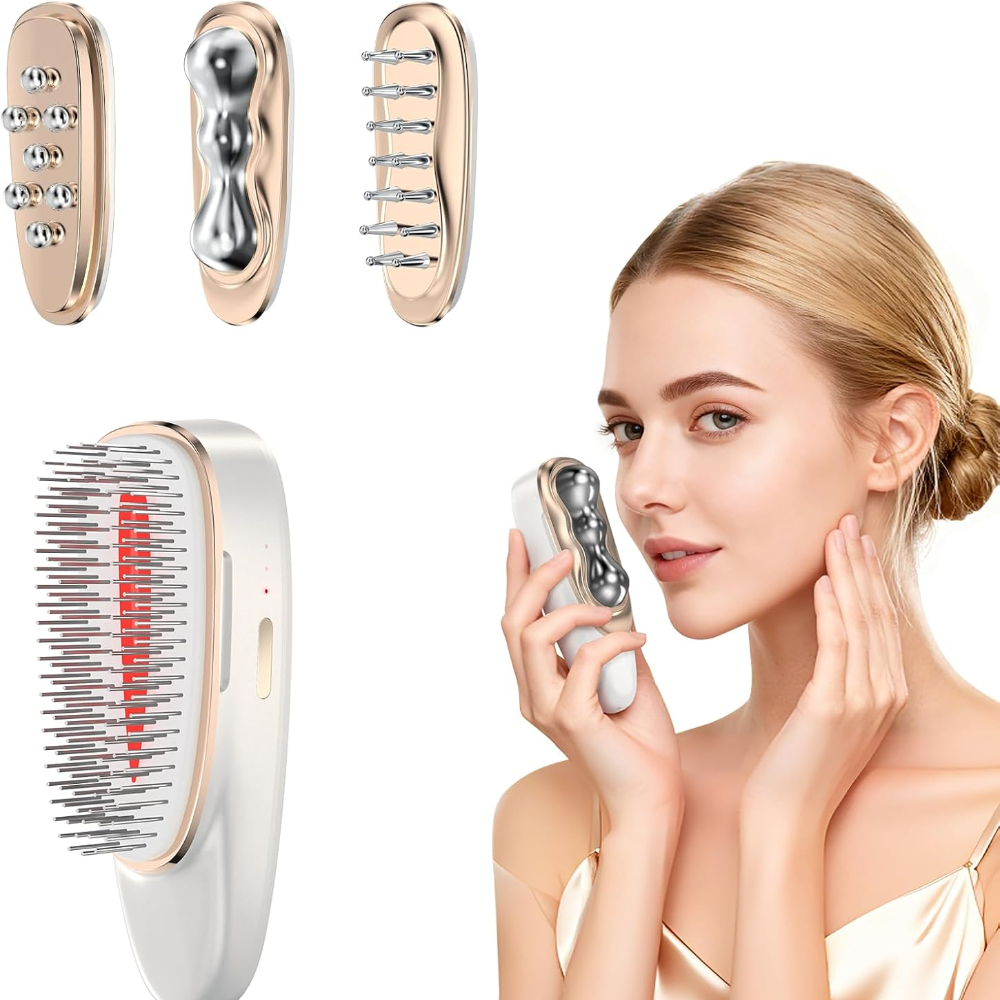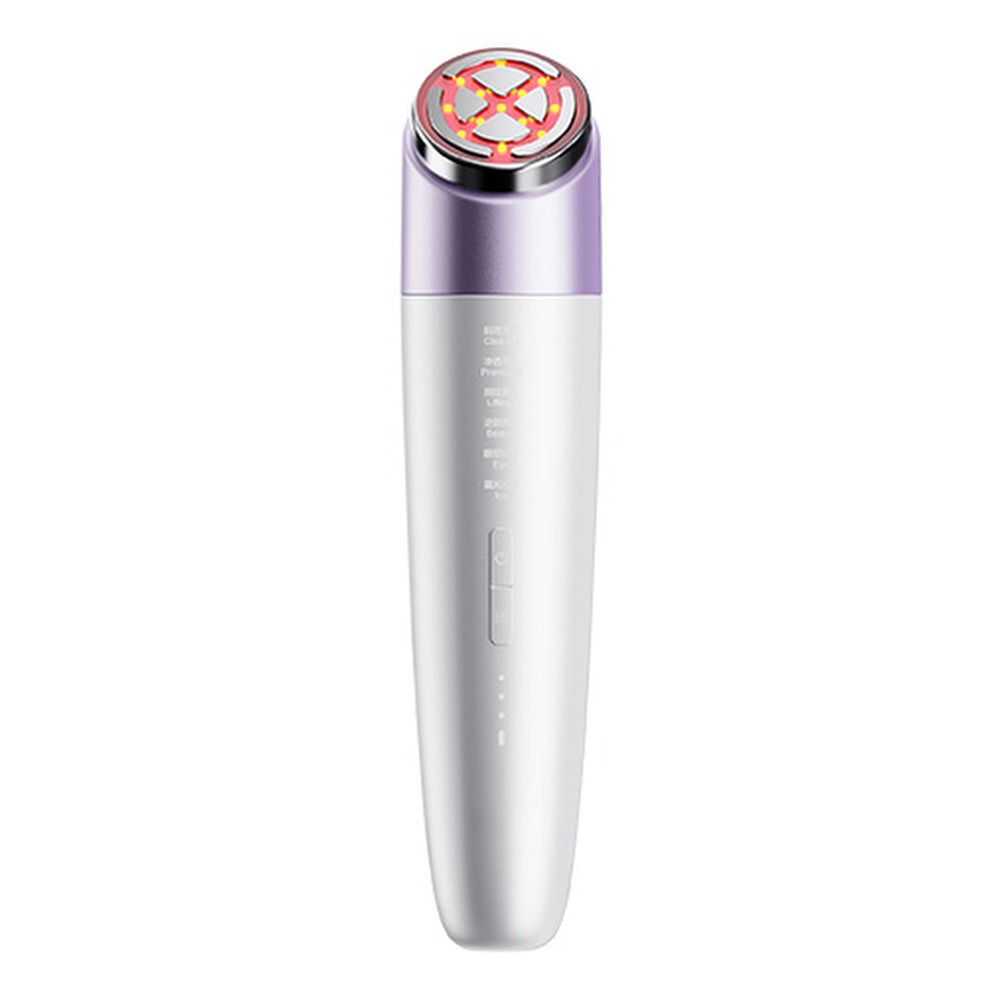
See how real after-sales feedback helps improve scalp care device reliability, from stronger massage pins and IPX6 water resistance to charging, EMS and durability improvements.

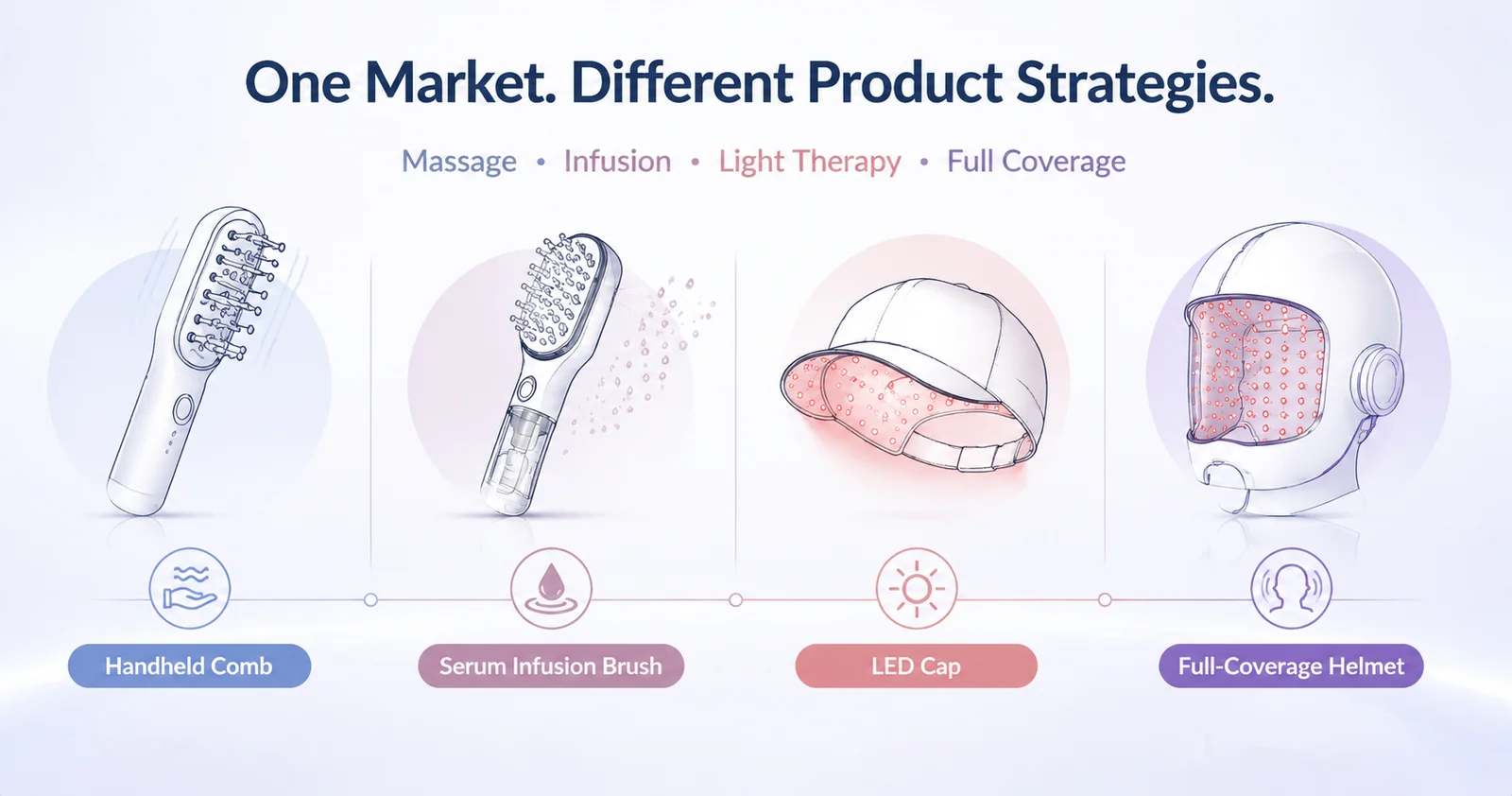
For brands developing a scalp massage comb, electric scalp brush or multifunctional hair-care device, scalp care device reliability should be evaluated as seriously as EMS intensity, vibration, LED, RF or industrial design. These products are repeatedly handled, charged, carried, used around wet hair and exposed to accidental drops — conditions that a showroom sample cannot fully represent.
Across multiple production batches of a long-term scalp and meridian massage device project, we have used after-sales feedback as an engineering input rather than simply treating each case as a replacement request. Representative returned units are selected for inspection, engineers analyze the failure cause, an 8D report is prepared when appropriate, and corrective actions are validated before being introduced into later production.
Over time, reported issues have progressively decreased from batch to batch. More importantly, the process has shown us where relatively small engineering changes can make a meaningful difference to long-term product reliability.
Broken massage or conductive pins are one of the more recognizable mechanical issues in this category. But the correct response is not simply to assume that every broken pin is a production defect.
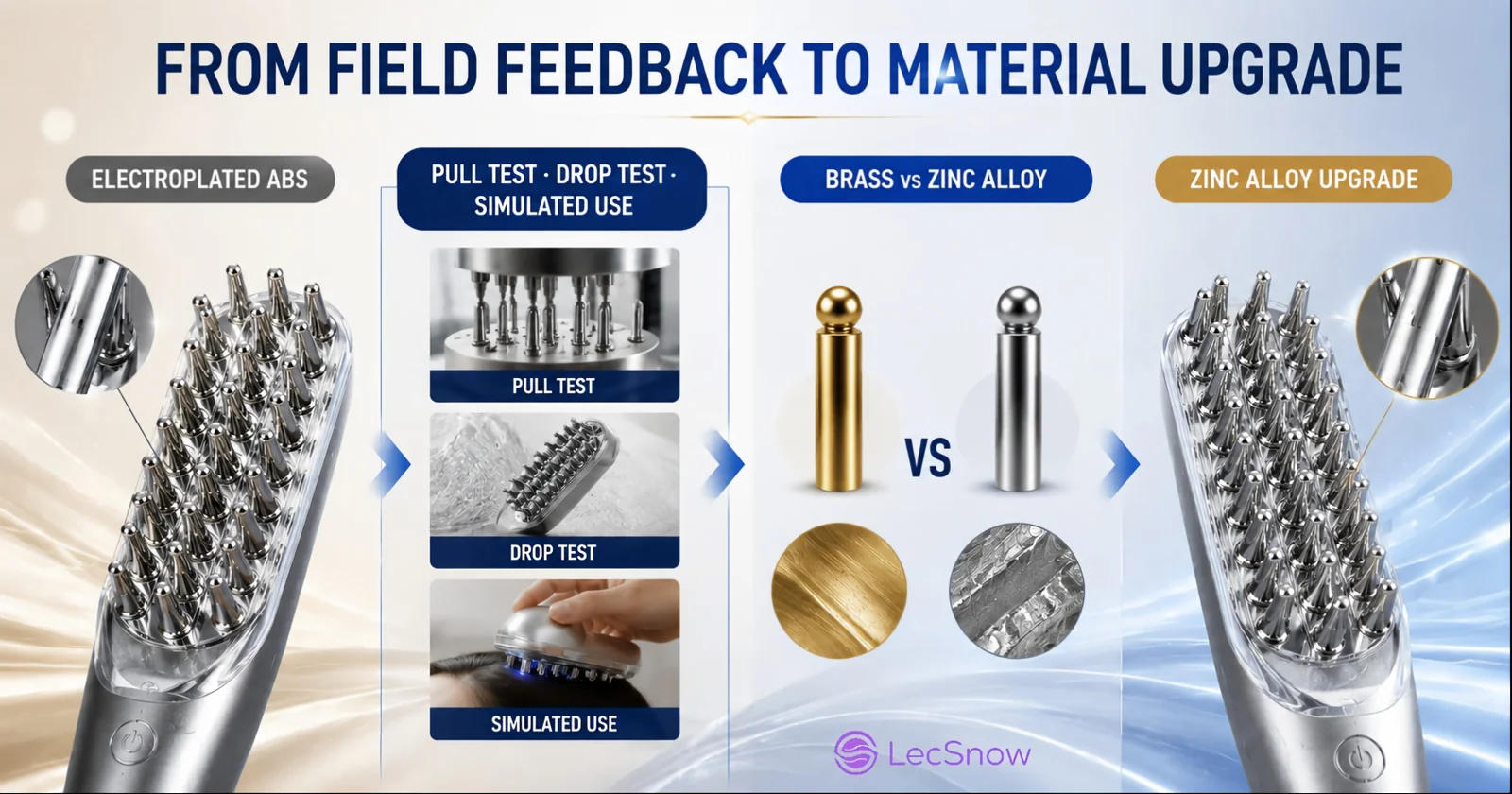
In one long-term project, the original conductive pins were made from electroplated ABS. We returned representative damaged units for analysis and carried out repeated simulated-use tests, pull-force tests and drop tests. The results showed that accidental impact and drops were a major failure scenario, particularly when the force was concentrated directly on individual pins.
This matters because stricter final inspection cannot prevent damage that occurs after shipment. If the weakness is related to the material and impact resistance, the solution needs to move upstream into product engineering.
We therefore evaluated alternative metal solutions, including brass and zinc alloy. The comparison was not based on strength alone. We also considered cost, weight, surface treatment, production stability, electrical requirements and compatibility with the complete device.
After multiple rounds of validation, zinc alloy offered the better overall balance. It provides much stronger resistance to the pin-breakage failure mode than the original electroplated ABS structure while remaining practical for mass production.
The lesson for brands is simple: when the same mechanical problem appears repeatedly, replacing units is not enough. The objective should be to redesign the weak point so that the next production batch is more robust.
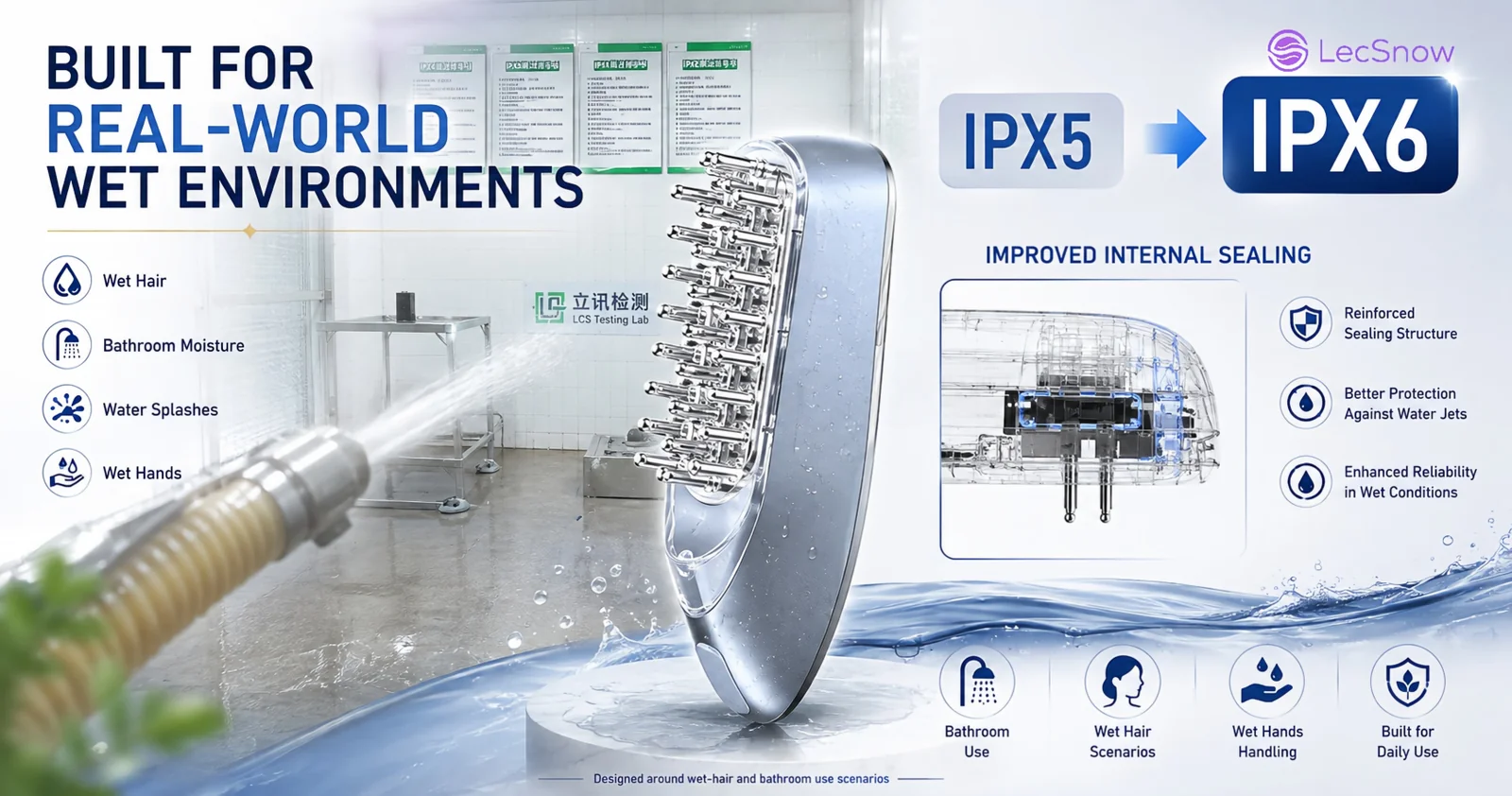
Water resistance is especially important for scalp-care devices because their actual use environment is often wetter than that of a conventional handheld beauty device.
Consumers may use a scalp massage comb in the bathroom, shortly after showering, with wet hands or directly on damp hair. The product may not be designed for immersion, but repeated exposure to moisture and splashes still increases the importance of sealing and internal protection.
For this project, we reviewed the internal structure and sealing system and identified areas that could be optimized without completely redesigning the exterior. Through relatively small structural adjustments, the water-resistance level was upgraded from IPX5 to IPX6.
The difference is meaningful in this use case. Under standardized testing, IPX6 represents protection against more powerful water jets than IPX5. It does not mean the device can be immersed in water, but it provides a stronger protection margin for wet-hair and bathroom environments and helps reduce water-ingress risk.
This is also an important product-development principle: not every reliability improvement requires a new mold or a completely new platform. Sometimes targeted changes inside an existing structure can materially improve how well the product tolerates real-world use.
Charging and power-related feedback can include short operating time, intermittent charging, unstable charging-port contact or a device that powers off unexpectedly.
Although the symptoms can look similar to the user, the cause may sit in different parts of the system: the battery, charging connector, PCB, power-management circuit, assembly process or another component.
For representative cases, our engineers inspect returned units and try to reproduce the reported symptom before deciding on corrective action. When a recurring issue is identified, it is documented and followed through an 8D process so that the solution can be implemented and verified in subsequent production.
This approach is more useful than simply replacing a suspected component. Across successive batches, power-related feedback in this project decreased as the identified causes were addressed one by one.
EMS-related feedback requires a different type of diagnosis. A consumer reporting “no sensation” or “weak stimulation” does not automatically mean that the circuit is defective.
Perceived stimulation can also be influenced by electrode contact area, skin or scalp condition, moisture, contact pressure and the material or geometry of the conductive pins.
For this reason, output measurement and actual-use evaluation should be considered together. This is particularly important when a manufacturer changes pin materials or structures: a mechanical improvement should not unintentionally compromise electrical contact or user experience.
The broader lesson is that functional complaints need to be reproduced and measured before the root cause is assigned.
A scalp-care device may pass a standard outgoing inspection and still encounter problems months later because final inspection captures only one moment in the product lifecycle.
For this category, reliability validation may include repeated operating cycles, charging tests, aging tests, drop tests, pull-force tests and simulated-use testing. The exact test plan should depend on the structure and intended use environment of the product.
A comb with long conductive pins needs different mechanical validation from a flat facial device. A product designed for wet-hair use deserves more attention to sealing than a device intended only for dry environments.
The most useful test plan therefore starts with a simple question: how will consumers actually handle, carry, charge and use this product after it leaves the factory?
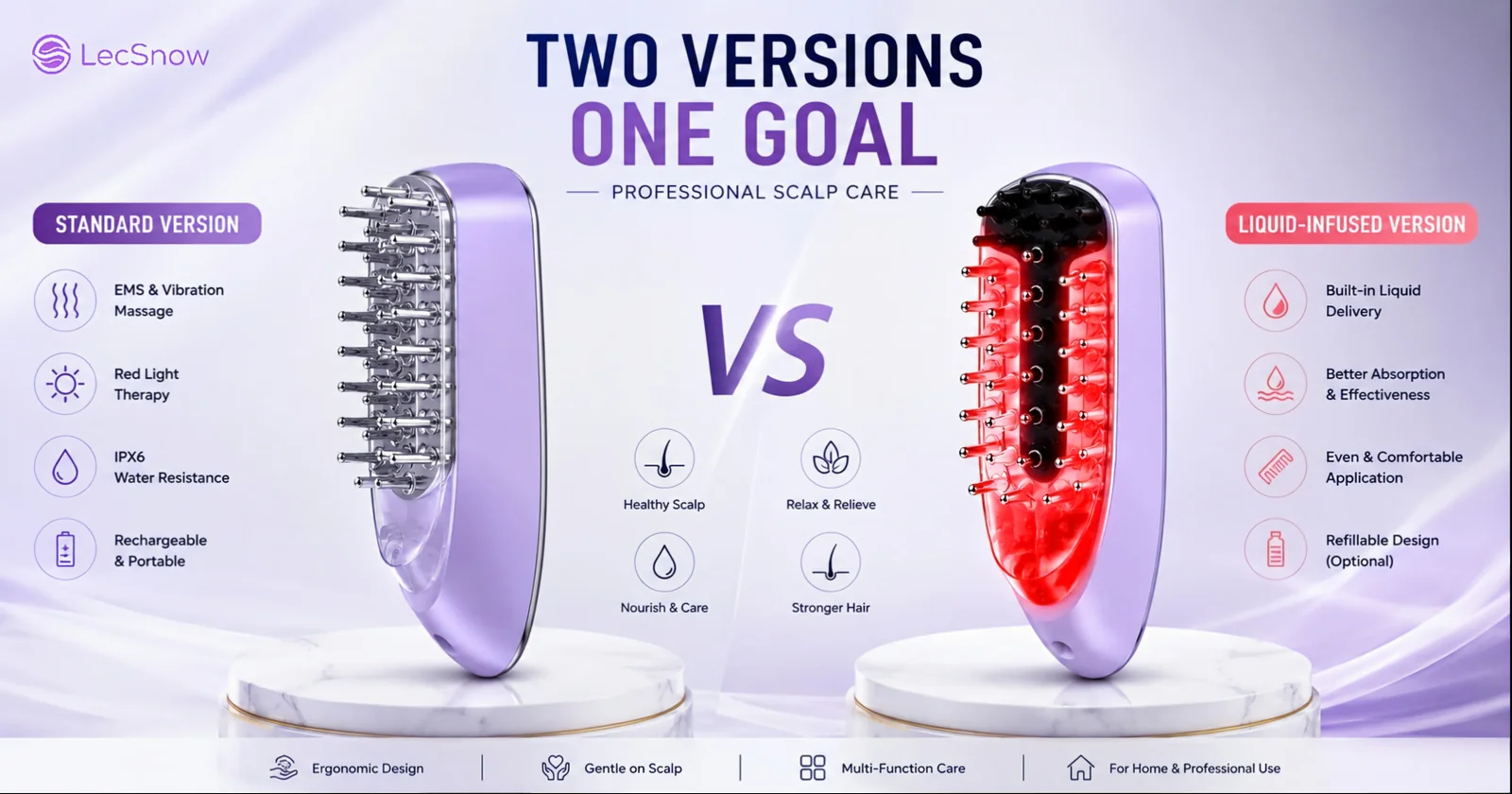
After-sales data becomes valuable when it feeds back into engineering.
Our process for long-term projects can be summarized as:
Customer feedback → Representative returned units → Engineering inspection → Root-cause analysis → 8D corrective action → Validation → Next production batch
This creates a continuous improvement loop. Some issues can be reduced through tighter process control. Others require changes to materials, components, sealing or structure.
The pin-material upgrade and the move from IPX5 to IPX6 show two different ways the same principle can work: one addressed a mechanical weak point through material engineering; the other improved protection in a realistic wet-use environment through internal structural optimization.
The objective is not simply to pass final inspection. It is to use real production and market feedback to make each production batch more reliable than the one before it.
A feature-rich sample is easy to demonstrate. A product that remains reliable after repeated charging, wet-hair use, transportation and everyday handling is harder to build.
If you are developing a scalp massage comb, EMS scalp device or multifunctional hair-care product, LecSnow can help evaluate the product platform from both sides: the features you want to add and the reliability risks that should be removed before scale-up.
Send us your target market, target retail price, required functions and expected order volume. We can review whether an existing platform is suitable, which structures should be upgraded, and where additional reliability validation is worth the investment before you commit to mass production.
Whether launching your first product or scaling your next bestseller, LecSnow is here to bring your vision to life faster, smarter, and without compromise.