How a 10+ year OEM/ODM partnership with a Japanese beauty brand shaped LecSnow's quality systems, prototyping discipline, and global manufacturing standards.

What does it take for a beauty device manufacturer to remain a trusted partner to the same Japanese client for more than 10 years?
Starting a supplier relationship is relatively easy. A sample is approved, a price is agreed, and the first order is placed.
Maintaining that relationship across multiple product generations, changing market expectations and increasingly detailed quality requirements is much harder.
For more than a decade, our team has worked with a Japanese client across multiple home-use beauty and personal care categories. The most valuable result of these 10+ years is not the number of products we have manufactured. It is how the experience changed the way we develop products, investigate problems and control quality today.
Japan is not simply an established beauty market. It is a market where consumers increasingly expect more from the products they bring into their daily routines.
Recent market data shows a clear shift toward premiumization. According to Euromonitor , retail volume for personal care appliances in Japan declined slightly to 29.8 million units in 2025, while value sales continued to grow.
Japanese e-commerce data shows a similar pattern. From February to April 2026, beauty appliance sales increased 4.3% year over year while unit sales remained almost flat, with the average selling price increasing 4.5%.
For beauty brands, the signal is important: growth is not simply coming from selling more low-cost devices. Product performance, design, perceived quality and the overall consumer experience increasingly matter.
Japan's Ministry of Economy, Trade and Industry has also highlighted Beauty × Tech as part of the evolution of J-Beauty, emphasizing areas such as precision technology, quality management and user-experience design.
This closely reflects what we have experienced through more than a decade of working with Japanese beauty-device clients:
A successful product is rarely judged by function alone.
The entire finished product matters.
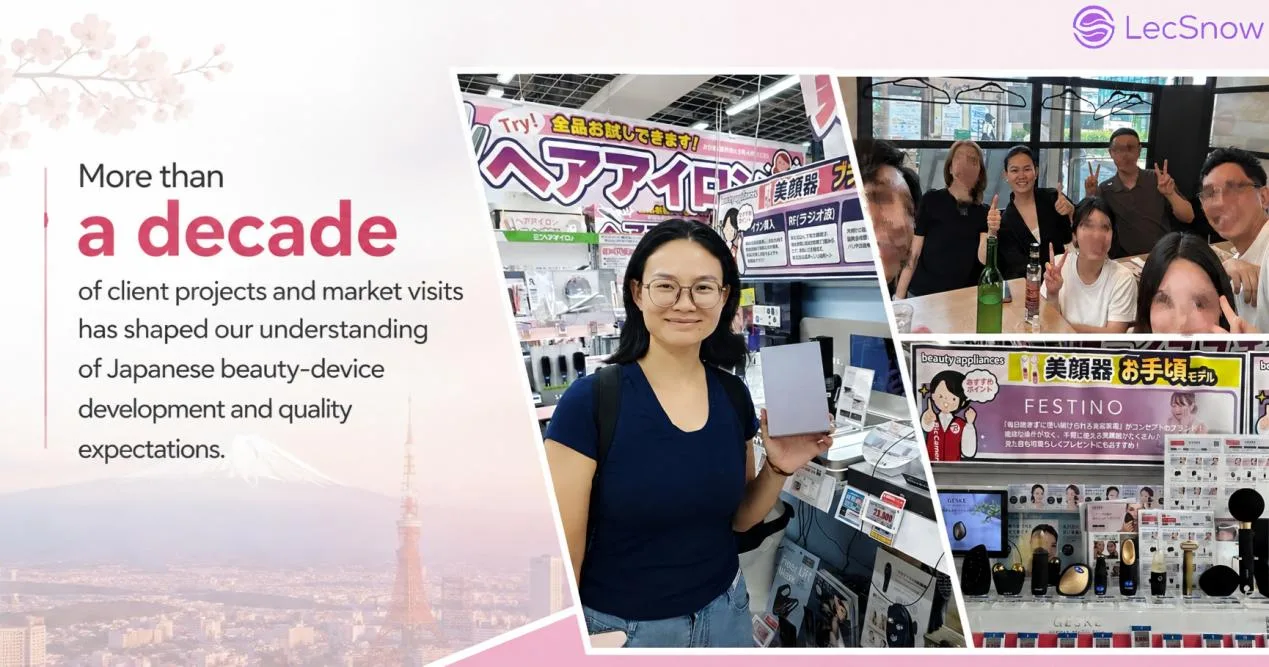
Our cooperation did not remain around one device.
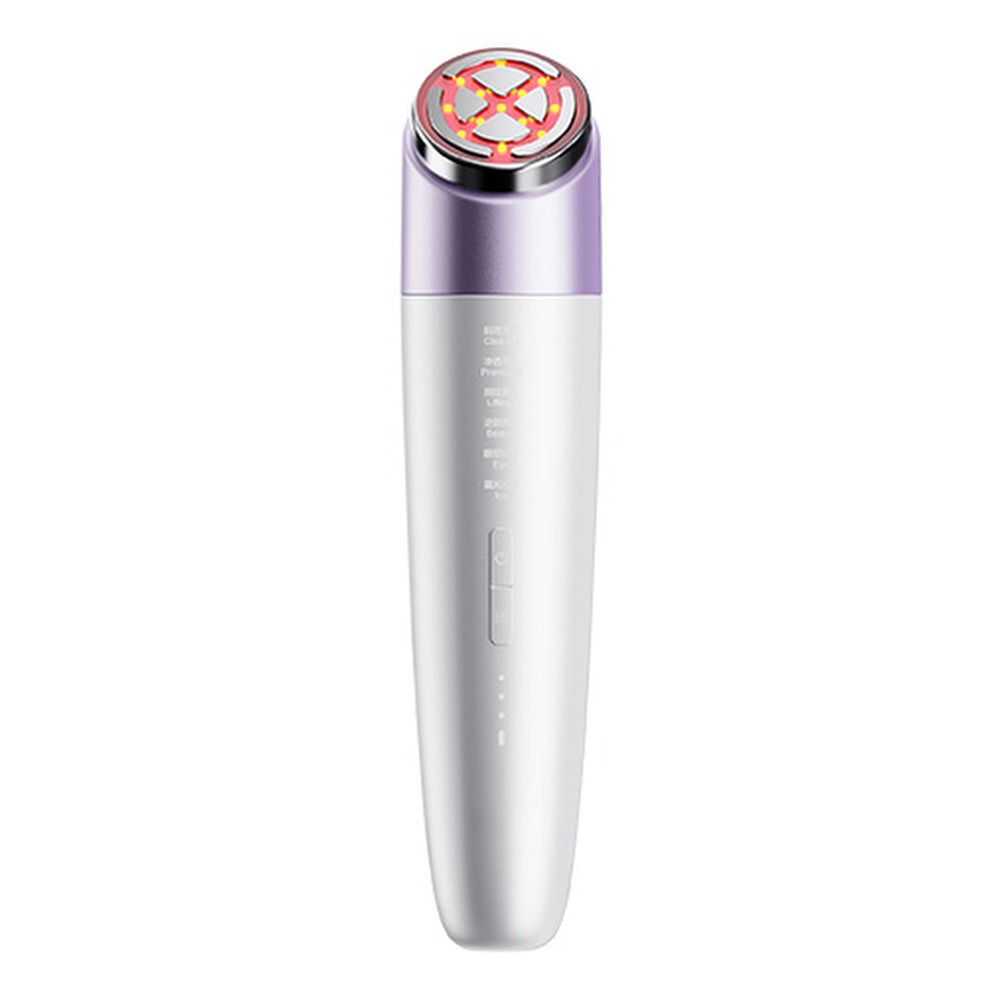
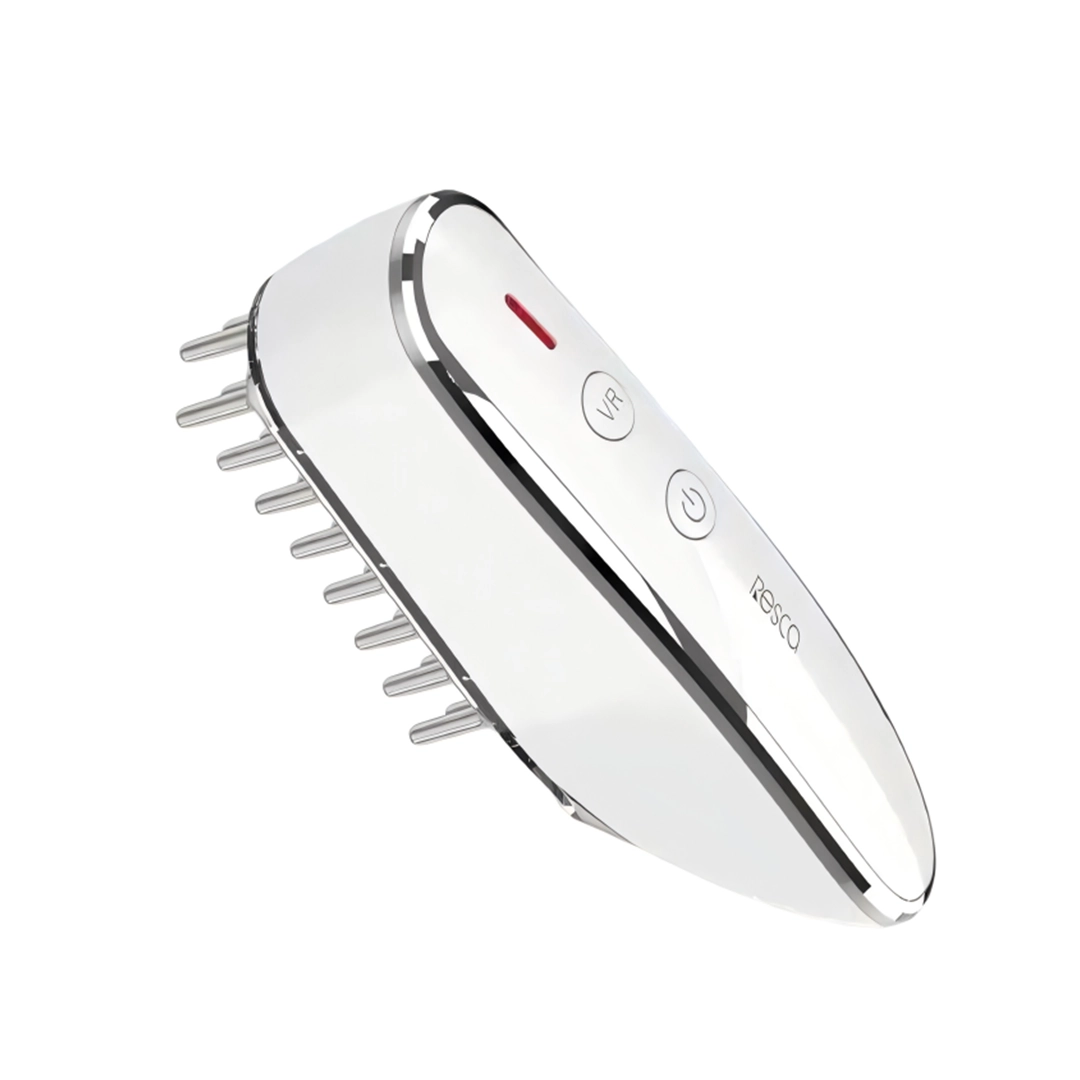
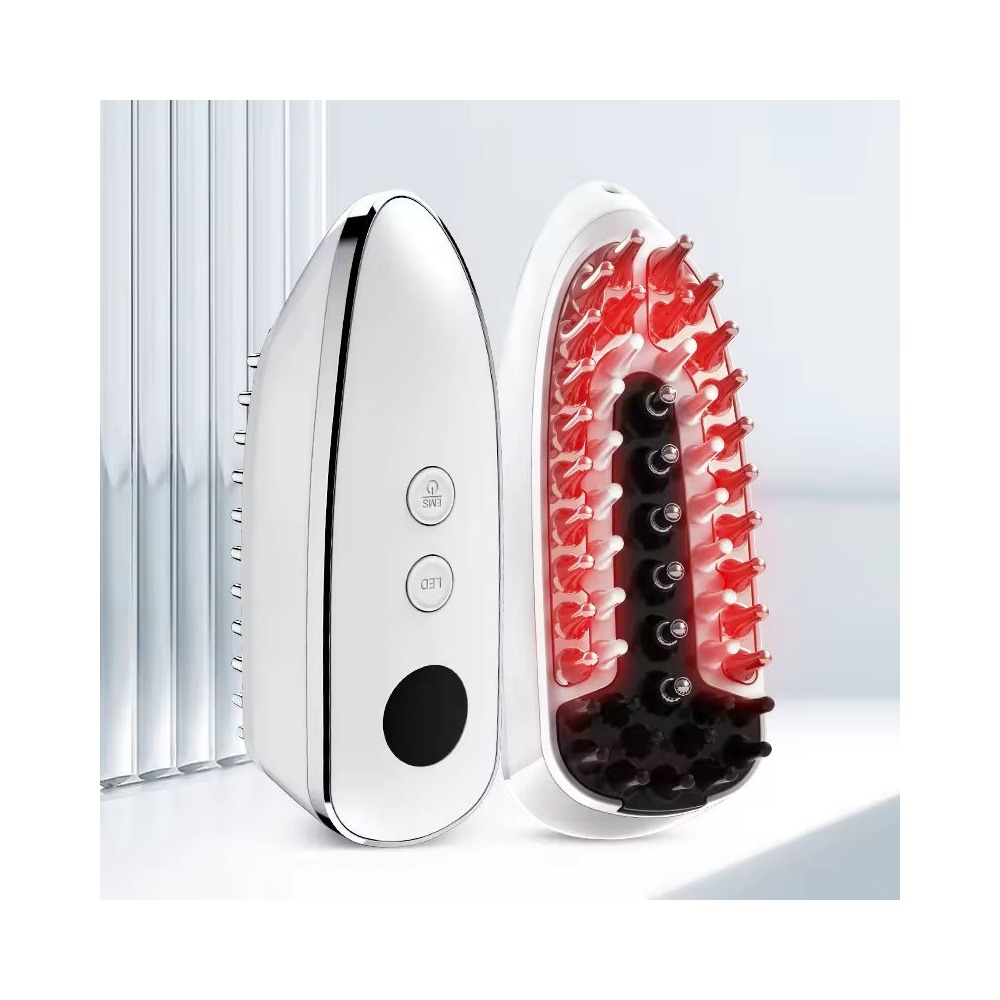
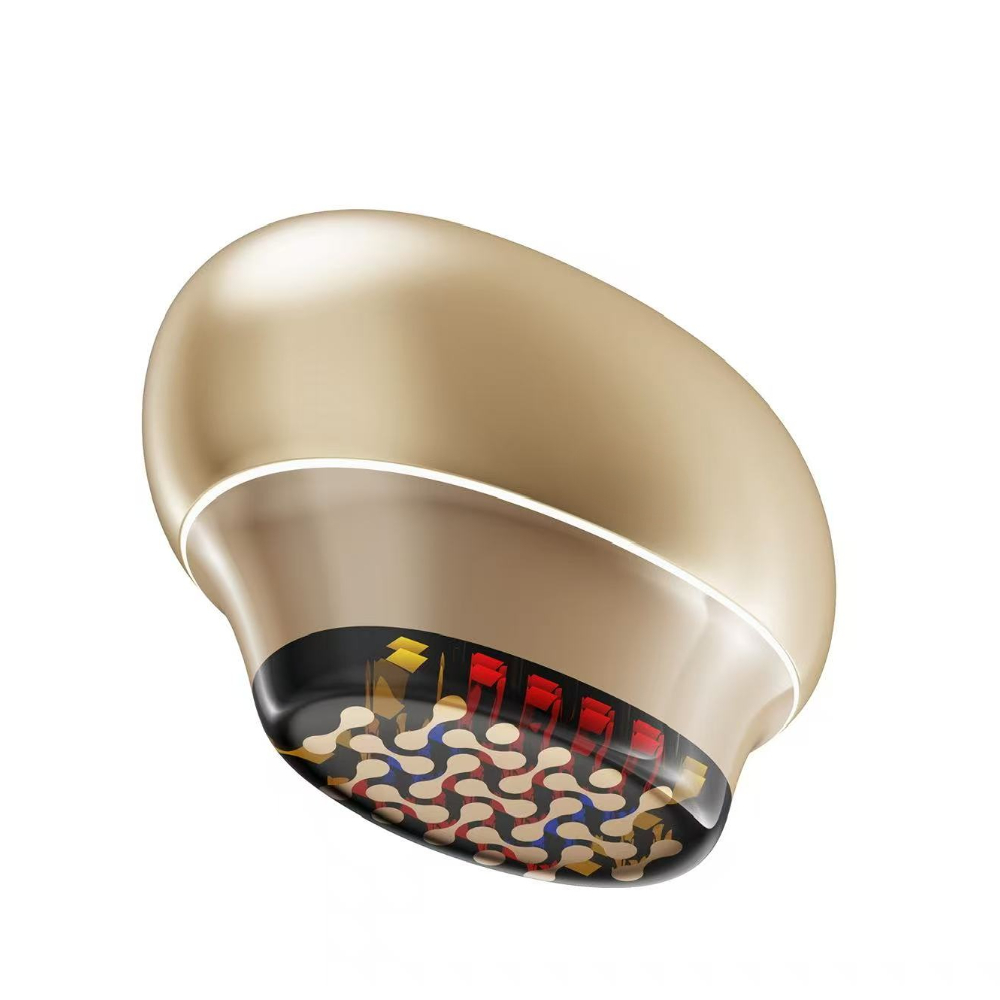
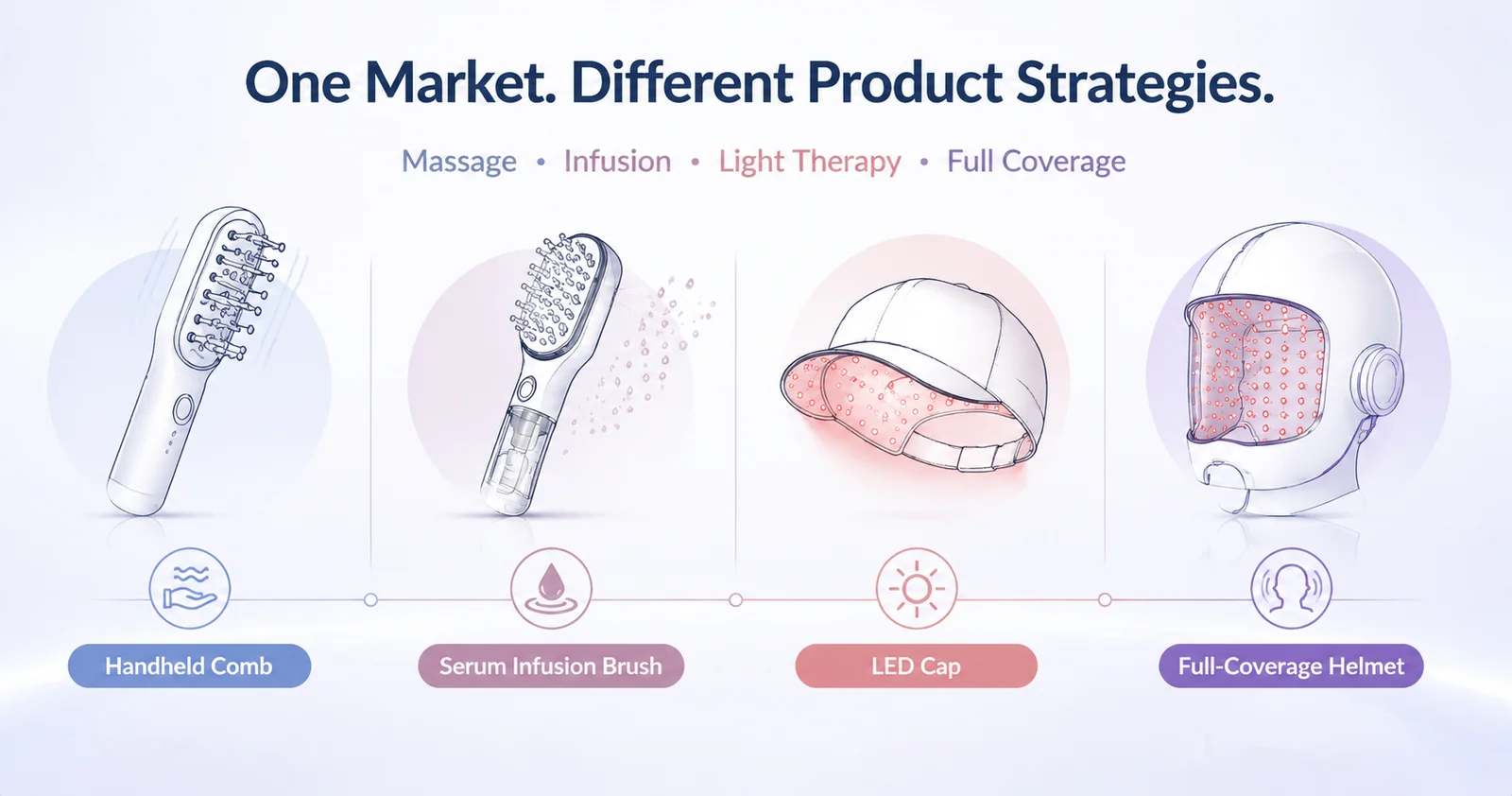
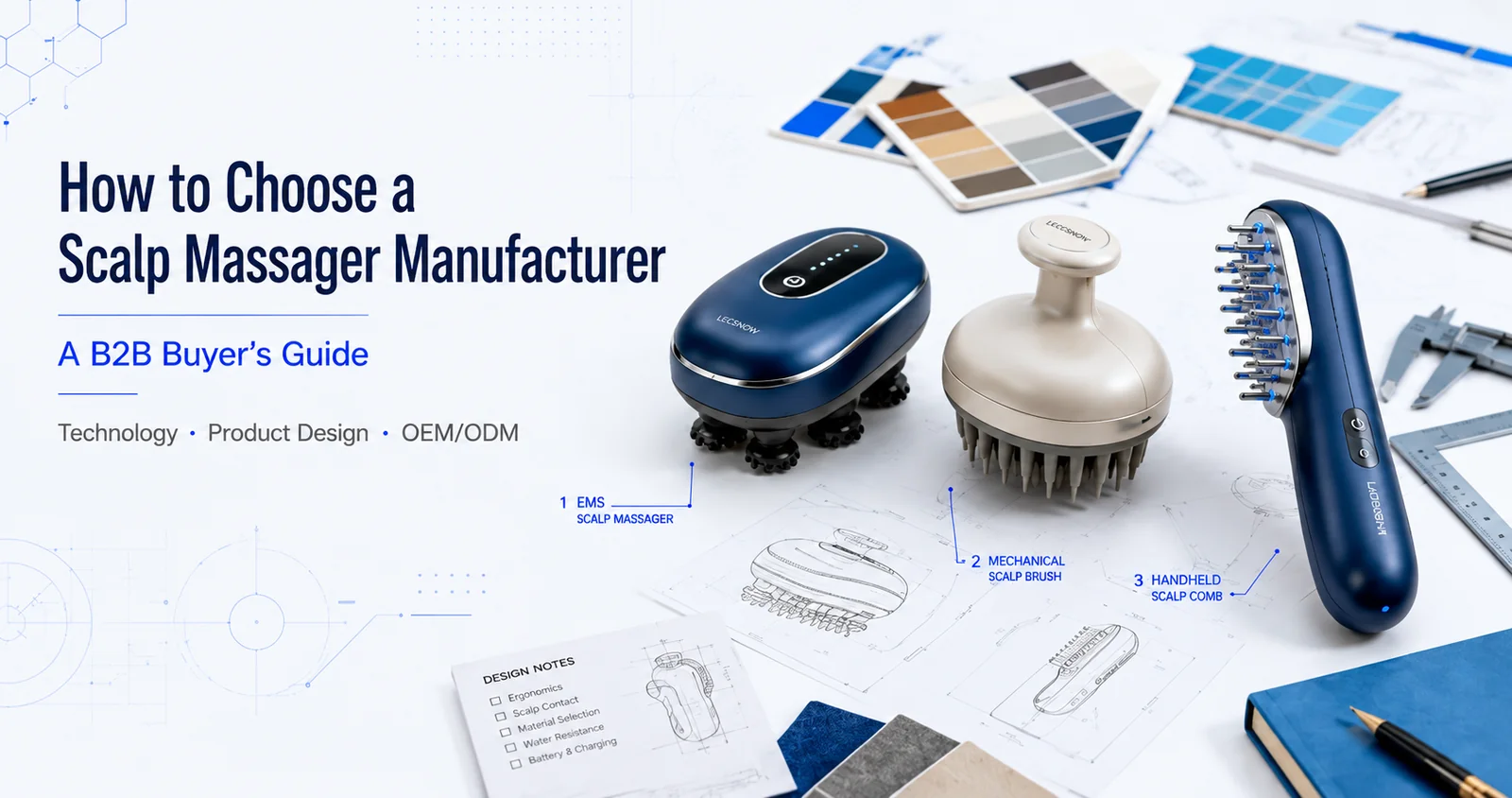
Over the years, we have supported different generations of facial, body and scalp-care products, including:
Some of these categories have continued to expand in Japan. Scalp care is one example: Japan's scalp massager market generated approximately USD 53.8 million in 2024 and is projected to reach USD 82.6 million by 2030, according to Grand View Research.
But following a growing category is the easy part.
The harder part is turning a concept into a product that can meet the same approved standard again and again in mass production.
And that is where many of our most important lessons came from.
Speed matters in product development, but getting the product right matters more.
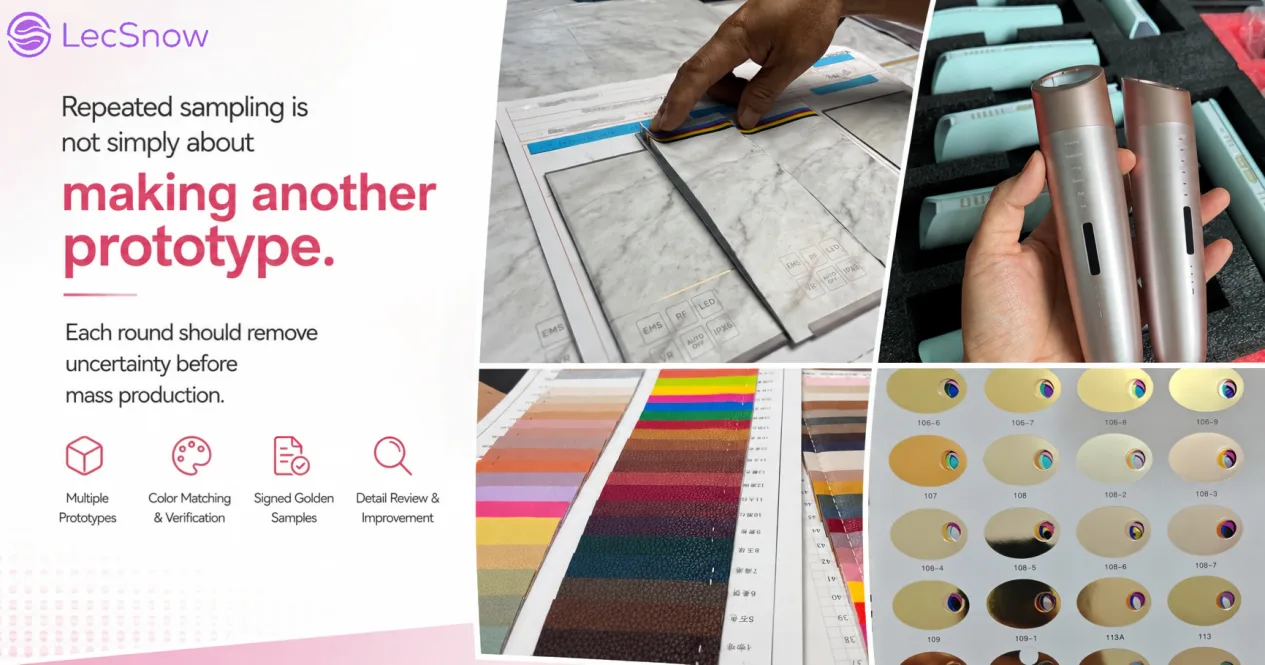
Some Japanese projects required multiple rounds of prototypes before final approval. In particularly demanding cases, the device, color, logo, accessories, packaging or printed materials went through more than 6 rounds of adjustment.
Why so many?
Because seemingly minor differences can become major problems once thousands of units are produced. A housing color may look acceptable by itself but appear noticeably different beside the approved reference. A logo may meet a dimensional requirement but still look visually misaligned. A packaging insert may protect the device correctly but fail to present the product as intended.
This experience changed how we manage development.
Approved samples are clearly identified and retained as reference standards. Color samples are stored appropriately to minimize changes caused by light exposure and aging. Critical requirements and modifications are confirmed in writing, while color-measurement instruments can be used where visual comparison alone is not sufficient.
The objective is simple: Reduce subjective judgment and turn important details into controllable standards.
Quality control does not mean problems will never occur.
The real test of a manufacturing partner is what happens after an abnormality is discovered.
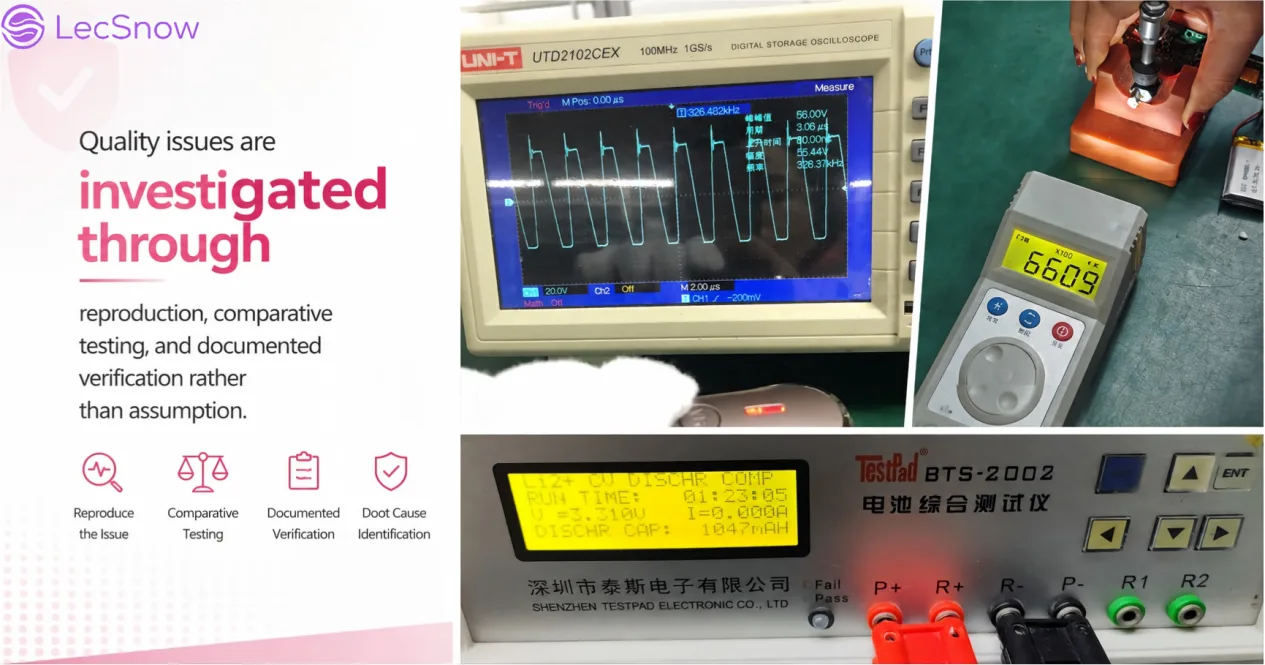
When a customer reports a potential issue, our first step is not to argue whether the product is acceptable.
We try to reproduce the problem.
Depending on the issue, this may involve repeated functional tests, comparison with retained samples, testing multiple production units, reviewing production records and checking relevant electrical, mechanical or performance parameters.
If necessary, engineers conduct targeted verification tests and document the results in a test or analysis report.
The process typically follows a straightforward logic:
Reproduce → Test → Compare → Identify the root cause → Verify the solution.
This matters because the symptom a customer sees is not always the actual cause.
Replacing a component or adjusting production without identifying the root cause may temporarily hide the problem while allowing it to return in the next production batch.
A clear test result can often identify the issue far more effectively than repeated discussions between the customer, sales team and factory.
When there is a quality disagreement, evidence should speak first.
For beauty brands, quality is not limited to whether RF, EMS, LED or another technology performs correctly.
The consumer receives a complete product.
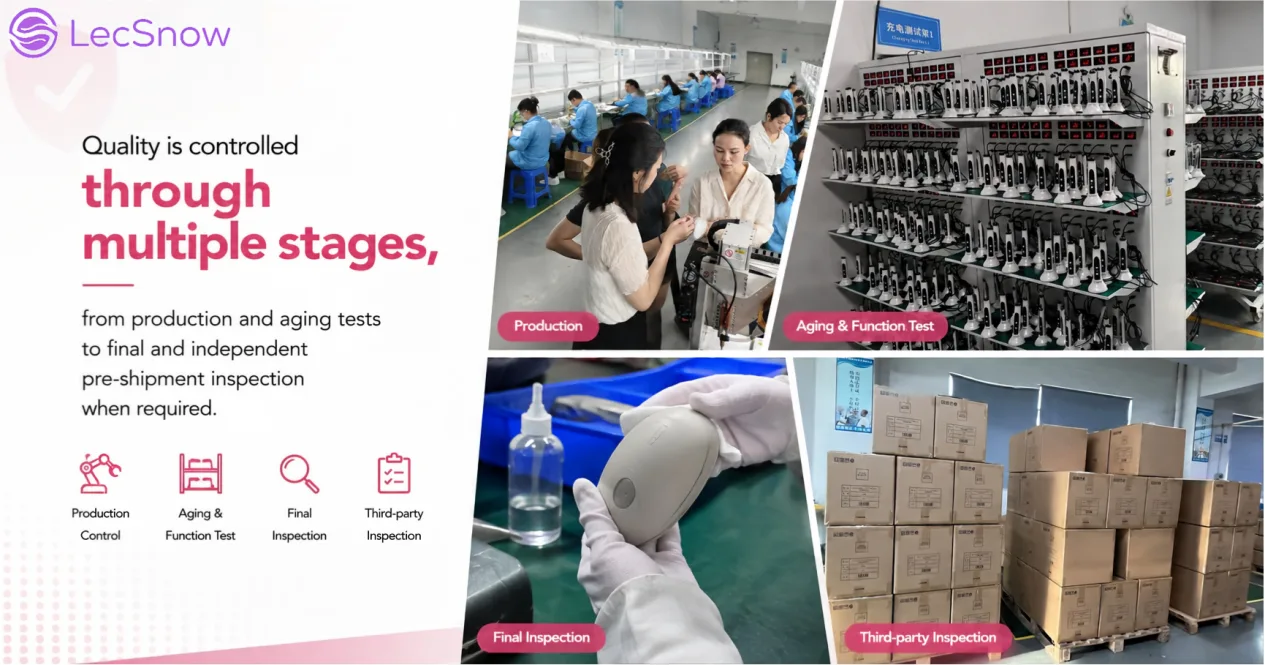
That means control may extend to housing color, surface finishing, assembly gaps, logo positioning, accessories, cables, packaging, labels and instruction manuals.
Production itself can involve multiple control points, including incoming material inspection, in-process quality control, functional and appearance inspection, aging tests and final inspection.
For projects requiring another layer of assurance, an independent inspection company can conduct pre-shipment inspection according to agreed AQL standards.
The goal is not to create more inspection for the sake of inspection.
It is to catch problems at the stage where they are easiest and least expensive to solve.
Find the problem before the product reaches the market.
Working with demanding customers for a long time changes a manufacturer.
Japanese projects taught our team to be more patient with repeated development, more disciplined with documentation and more sensitive to details that might once have been considered minor.
They also taught us something more fundamental:
“Good quality” is not a standard.
A measurable color range is.
An approved golden sample is.
A documented specification is.
A defined test procedure is.
A verified inspection result is.
And when something goes wrong, a reproducible test and a clear root-cause analysis are far more useful than saying, “We will pay more attention next time.”
This mindset gradually became part of our broader product-development and quality-management process.
Perhaps the most important outcome of these 10+ years is that the experience did not stay within our Japanese projects.
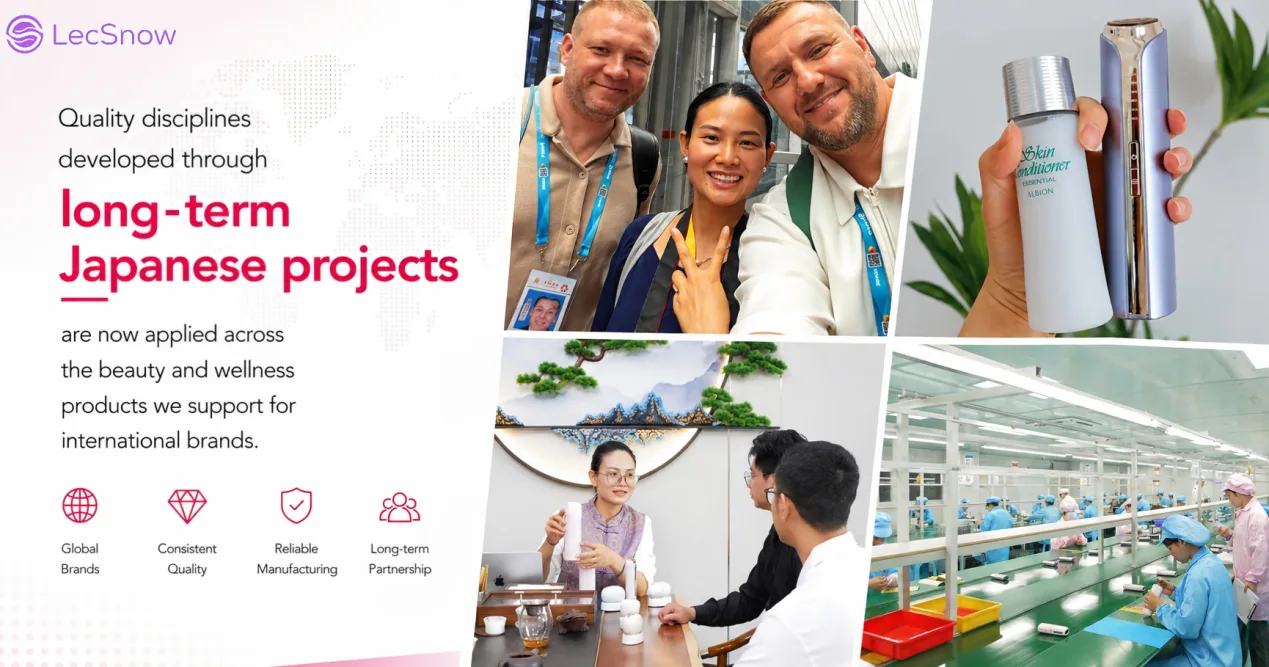
The same disciplines are now applied when supporting beauty and wellness brands in Europe, North America and other international markets.
Different markets have different regulatory requirements, consumer expectations and commercial priorities.
But the manufacturing fundamentals remain surprisingly similar:
Define the standard clearly. Control the variables. Detect deviations early. Investigate problems with evidence. Prevent the same problem from happening twice.
A European beauty brand may care about different certifications.
A US DTC brand may prioritize performance validation, consumer experience and speed to market.
A Japanese brand may pay exceptional attention to color, packaging and appearance consistency.
The requirements are different, but the systems developed through demanding projects help us manage all of them more effectively.
This is one of the less visible benefits of long-term manufacturing experience.
One demanding customer can improve the way you serve every customer that follows.
More than 10 years of experience does not mean every new project will be easy.
It means we have a much better understanding of where a project is likely to become difficult.
For brands developing beauty and wellness devices for Japan, our experience can support:
More importantly, we understand that an OEM project cannot be managed simply by asking:
“Does the sample work?”
The better question is:
“Can we define, verify and reproduce the same standard consistently when this product enters mass production?”
That is where manufacturing experience becomes valuable.
Ten years does not mean that nothing ever went wrong.
Across multiple products and many production cycles, there were difficult samples, demanding revisions, quality discussions and problems that needed to be solved.
That is exactly why the relationship matters.
Ten years is not proof that nothing went wrong. It is proof that both sides were able to identify problems, solve them and continue moving forward together.
For us, long-term cooperation is built on more than price or one successful product.
It comes from consistency, accountability, mutual respect and the ability to solve problems when things are not perfect.
We are very grateful to the Japanese client who have challenged our standards over the years.
They helped make us more precise in development, more disciplined in quality control and more respectful of the responsibility behind manufacturing another company's brand.
And those lessons continue to influence every market we serve today.
Whether you are developing a facial beauty device
, scalp care device , LED beauty device
or other home-use beauty and wellness product
, the right manufacturing partner should do more than simply produce what is on a specification sheet.
With 10+ years of experience supporting Japanese beauty brands and projects across global markets, LecSnow can help you evaluate the technology, product design, quality standards and mass-production risks before they become costly problems.
If you already have a product concept, reference product or technical requirements, send us your project brief. We’ll review it with our product and engineering team and tell you what is feasible, what needs attention, and the most practical path toward production.
Whether launching your first product or scaling your next bestseller, LecSnow is here to bring your vision to life faster, smarter, and without compromise.