A technical perspective for beauty brands developing the next generation of LED face masks and light-based devices.

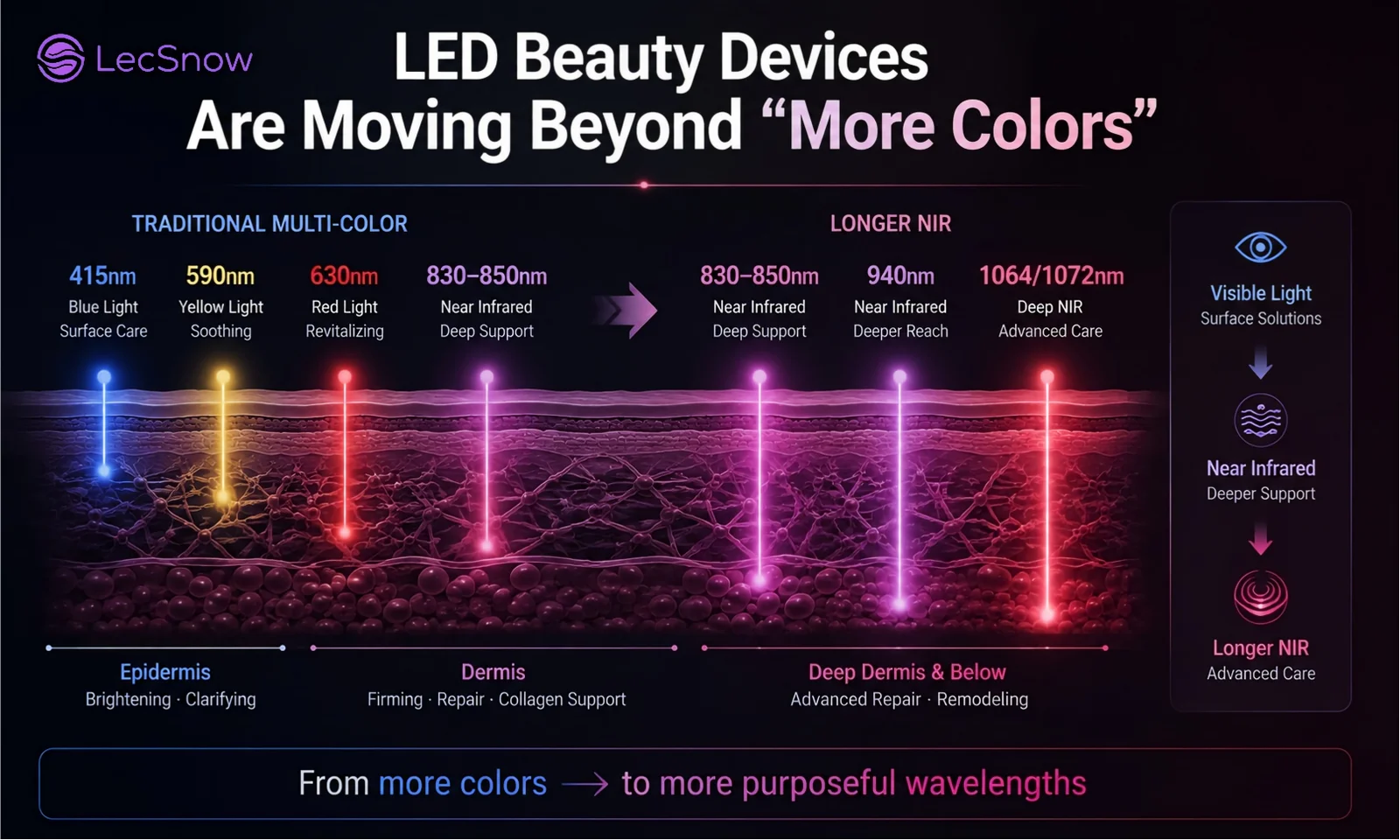
For the last few years, most LED beauty projects we worked on followed a familiar wavelength formula: red light, blue light, sometimes yellow or amber, plus near-infrared around 830–850nm.
That formula is still useful. But the premium end of the market is beginning to change. Instead of simply adding more visible colors, some brands are moving toward more deliberate wavelength architecture, including longer near-infrared bands above 1000nm.
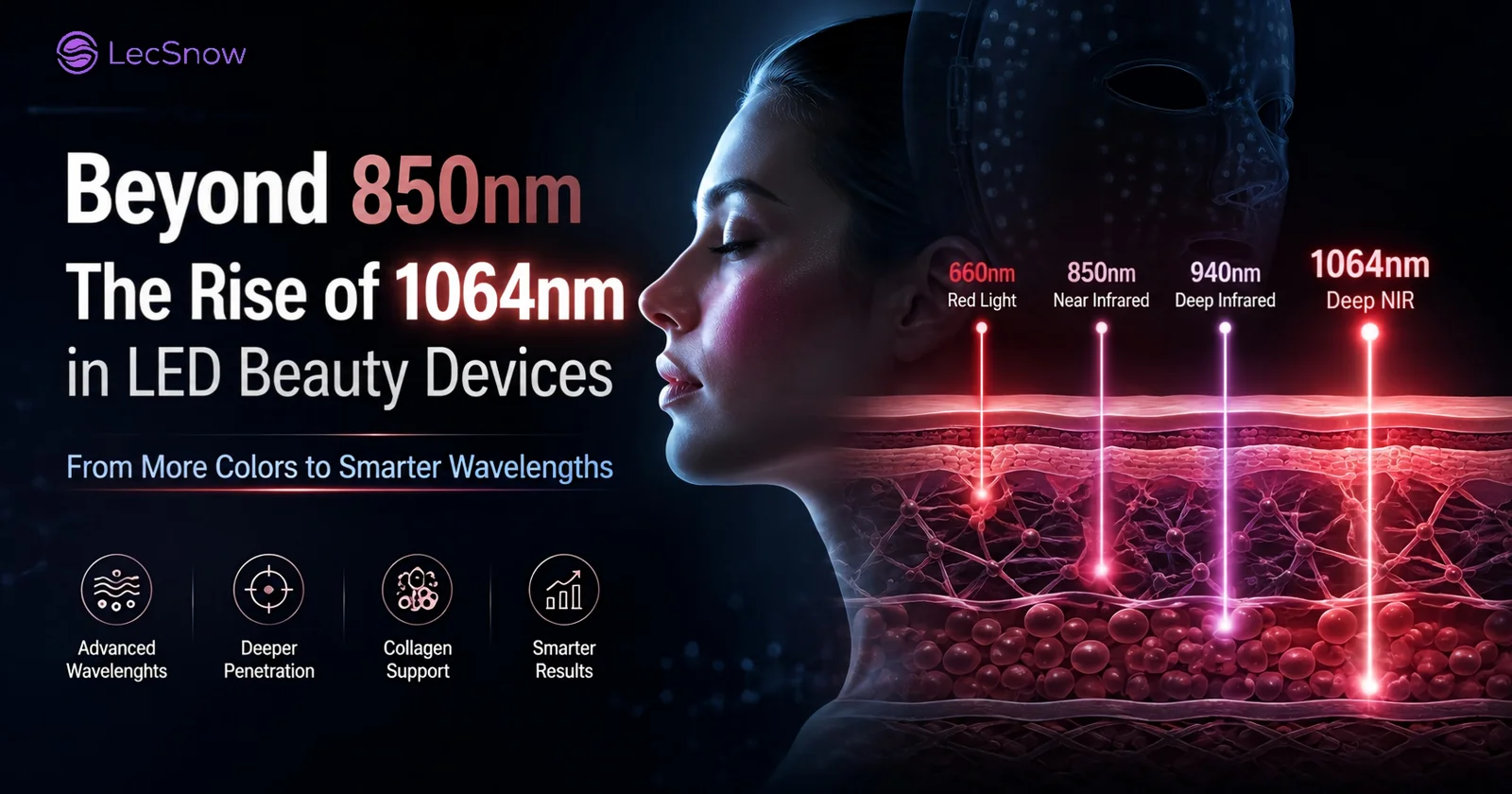
For example, CurrentBody Series 2 combines 633nm red, 830nm near-infrared and 1072nm deep near-infrared. Omnilux Men also combines 633nm, 830nm and 1072nm, while Therabody continues to use the more established 633nm, 830nm and 415nm architecture. That shift is worth watching. The competitive question is gradually moving from “How many colors does the device have?” to “Why were these wavelengths selected?” One wavelength we are now paying particular attention to is 1064nm near-infrared light, sometimes marketed in the beauty industry as “collagen light.”
1064nm is not technically a separate category of collagen light. It is an invisible near-infrared (NIR) wavelength. The term “collagen light” comes mainly from the long history of 1064nm energy in dermatology and aesthetic laser treatments, where it has been studied for dermal remodeling, wrinkle reduction and collagen-related effects.
A study of 1064nm Nd:YAG treatment reported collagen deposition in the papillary dermis after treatment (PubMed). Another clinical study reported improved wrinkles and skin elasticity, with histological increases in collagen and elastic fibers after long-pulsed 1064nm Nd:YAG treatment (PubMed).
But this distinction matters: a 1064nm home-use light device is not the same thing as a professional Nd:YAG laser. The wavelength may be identical, but power density, fluence, pulse structure, beam profile and treatment conditions are different. So the literature gives product developers a reason to investigate 1064nm — not a reason to copy professional laser claims onto a consumer device.
I would be careful with the common claim that “1064nm simply penetrates deeper than 850nm.” Skin optics are not that simple. Light penetration depends on absorption by melanin, hemoglobin and water, as well as scattering, optical power, treatment geometry and tissue composition. A systematic review of 1064nm photobiomodulation discusses the wavelength’s relatively low melanin absorption and reduced scattering compared with shorter wavelengths, while also showing that biological response depends heavily on treatment parameters (full-text review).
For B2B product development, the more useful idea is therefore not “1064nm replaces 850nm,” but that different wavelengths can be designed as a layered optical system.
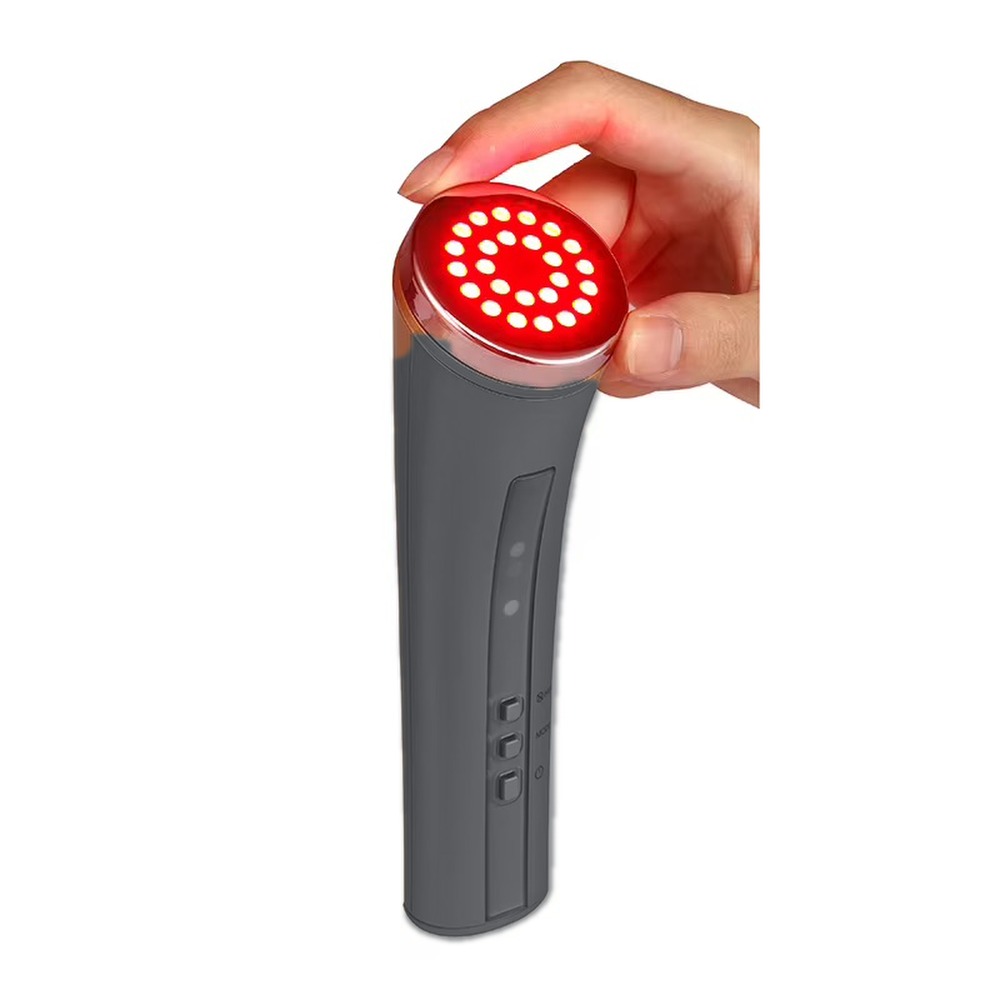
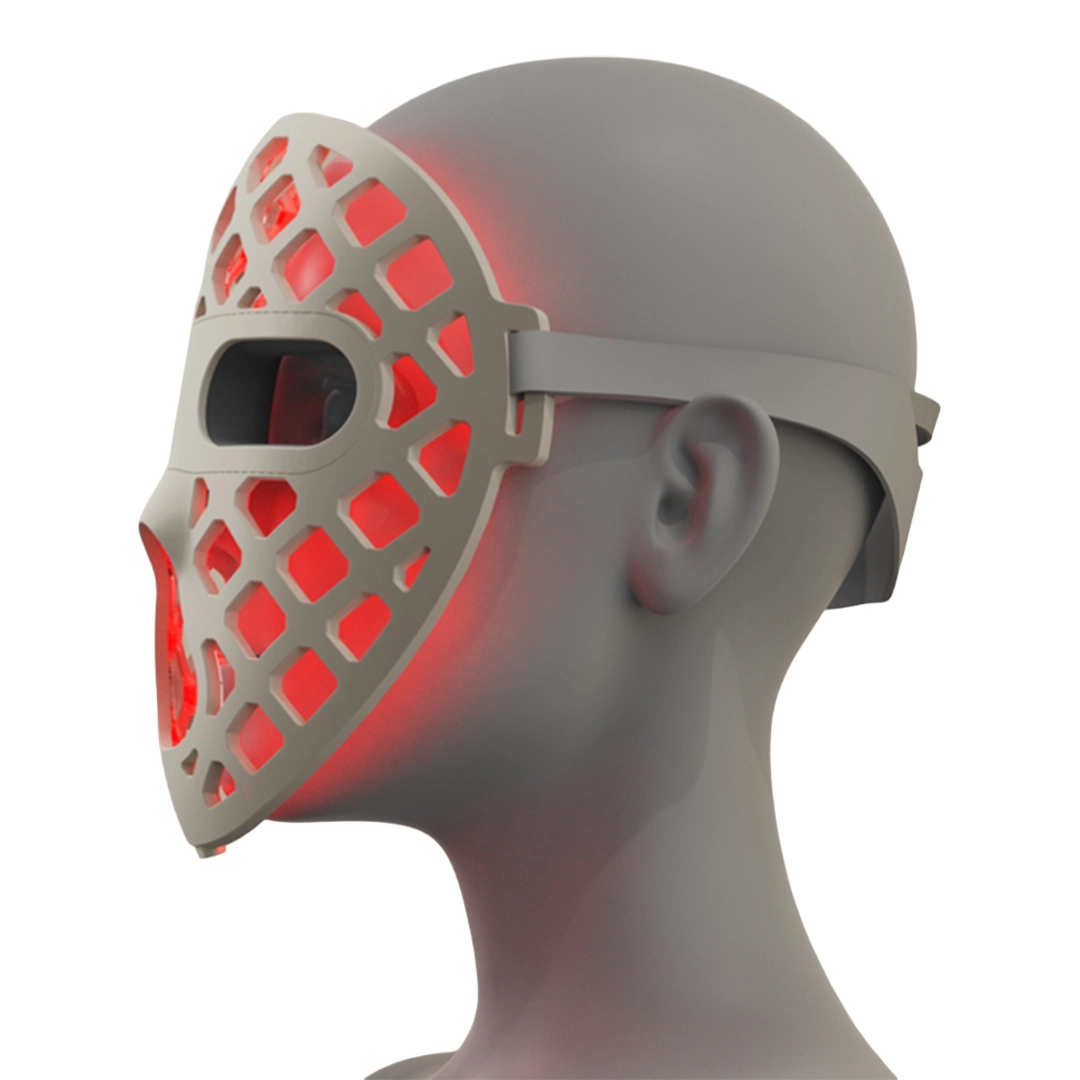
LED face masks, skin-rejuvenation devices, Red LED Panel . This is currently the clearest home-use direction. Longer NIR bands can be combined with established red and near-infrared wavelengths to create a more differentiated premium platform.
Scalp and hair-growth devices. Hair-growth caps and helmets already use laser diodes and LEDs in different architectures. For brands exploring next-generation scalp products, longer NIR wavelengths may become another R&D direction.
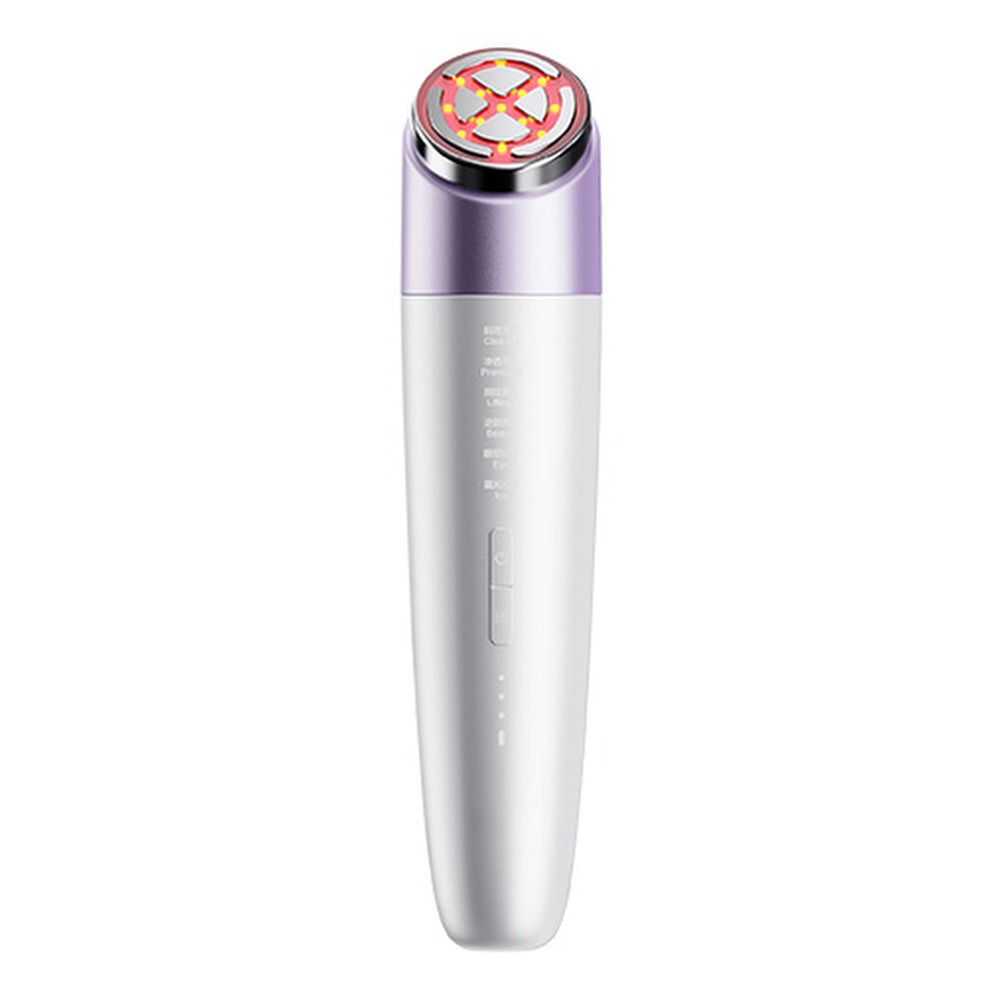
Home-use skin and light-based devices. 1064nm has a long history in professional laser platforms for skin rejuvenation and pigment-related applications. As compact laser and VCSEL components become more practical, some of those wavelength strategies are moving closer to consumer hardware.
Hair-removal and other laser categories. The broader home-use light-device market also shows how a category can evolve from a mature IPL or LED architecture toward laser-based systems. When the light source changes, drivers, thermal management, optical design, safety evaluation and production processes may all need to change as well.
For brands evaluating an LED face mask OEM/ODM project, scalp device, skin-rejuvenation device or other custom light-therapy product, 1064nm should therefore be treated as a platform decision — not simply one more wavelength added to the BOM.
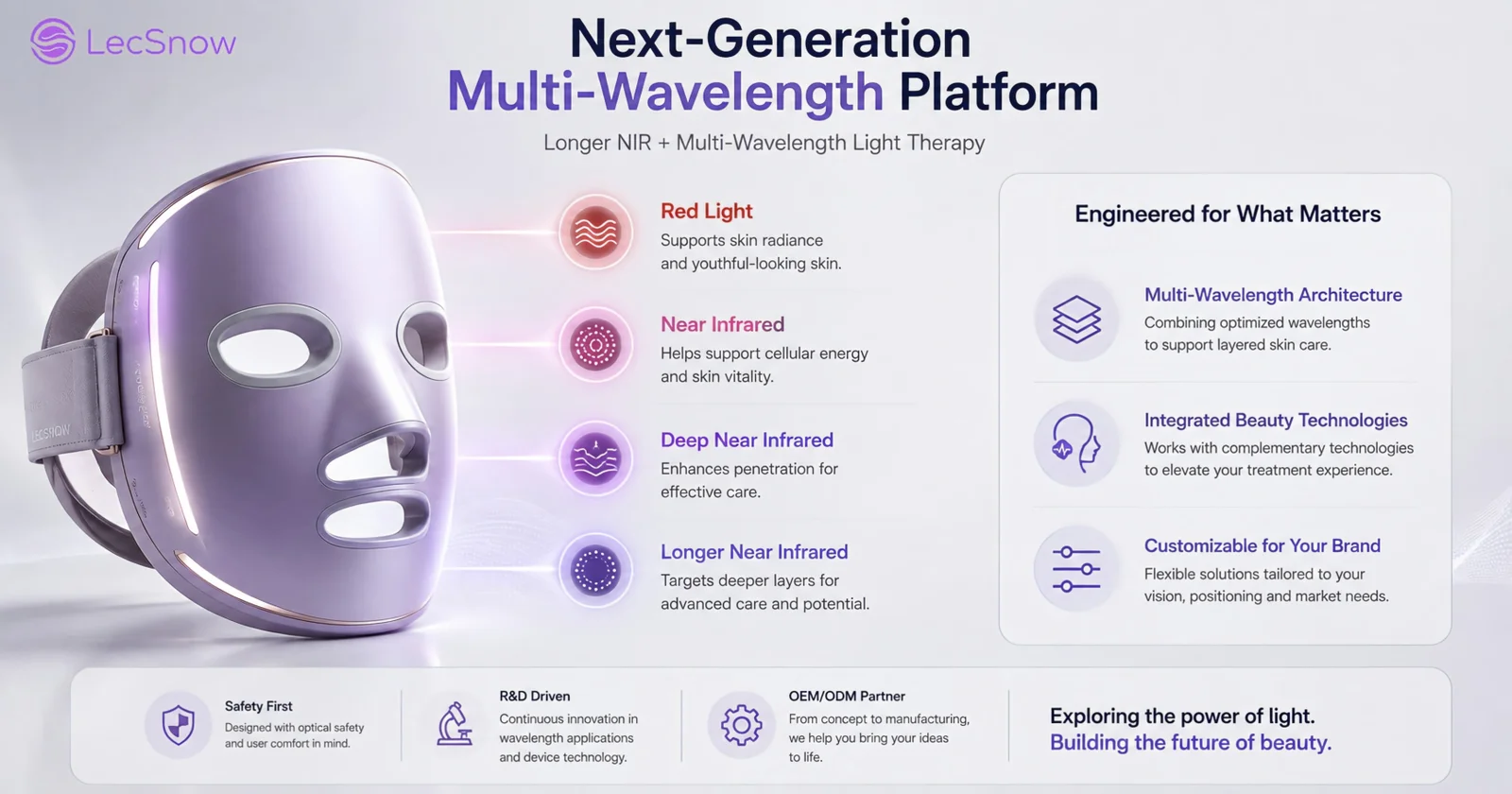
At LecSnow, we are already exploring how 1064nm can be incorporated into the next generation of home-use light-therapy devices. Our current R&D focuses on multi-wavelength light architecture combined with complementary beauty technologies, rather than simply adding another wavelength to an existing LED mask. The goal is to evaluate how longer near-infrared wavelengths can work alongside established red and NIR bands while balancing optical performance, treatment coverage, comfort and practical home use. Some of these concepts are now being developed into new facial and wearable platforms. As the projects are still under development, we are keeping the detailed wavelength configuration and structural design confidential. Please fill the form below get detail information from us. https://www.lecsnow.com/contact
For B2B beauty brands, the more relevant point is that 1064nm does not need to be treated as a standalone feature. Depending on the product positioning, it can be developed as part of a customized light-therapy architecture and combined with technologies such as microcurrent or other skincare functions. This gives brands more room to build a differentiated product around their own market positioning rather than selecting another standard LED mask from a catalog.
In our current development, the 1064nm channel uses VCSEL, Vertical-Cavity Surface-Emitting Laser — technology. This allows the 1064nm channel to be engineered separately from the conventional red/NIR light system.
But it also creates more engineering work. Because 1064nm is invisible, users cannot visually confirm that the emitter is operating. For a face-worn product, we have to evaluate optical output, wavelength verification, emitter spacing, treatment distance, heat management, eye-area protection and laser safety.
For laser products, the relevant safety framework includes IEC 60825-1, which covers laser-product classification and requirements. Conventional LED channels are evaluated under different optical-radiation safety frameworks, including IEC 62471. The applicable test plan should be confirmed for the finished product architecture and target market.
Which Brands Should Consider 1064nm?
1064nm is not automatically the right choice for every brand. If the main competitive advantage is low price, a more complex optical system may add cost without creating enough consumer value. It makes more sense for mid-to-premium beauty and wellness brands that already sell red-light or LED products, want a stronger next-generation platform, differentiate through technology rather than LED count, and are prepared to invest in optical validation, product safety and claims support.
For these buyers, 1064nm can become part of a broader product roadmap across LED face masks, scalp and hair-growth devices, skin-rejuvenation devices and other wearable photobiomodulation products.
For the U.S. market, intended use and claims can materially change the regulatory pathway. FDA classifies light-based over-the-counter wrinkle-reduction devices under product code OHS / 21 CFR 878.4810 (FDA classification database).
That work should begin before tooling, not after the product is finished.
If your next product still starts with “red + blue + yellow + 850nm, because that is what everyone uses,” it may be worth reopening the specification before development begins.
LecSnow supports beauty and wellness brands with LED face mask OEM/ODM, custom wavelength development, VCSEL-based light devices, scalp and hair-growth devices, skin-rejuvenation devices and wearable photobiomodulation products. Our current development platform includes 4 different lights, including VCSEL light with retractable microcurrent contacts.
Send us your target market, product concept and intended claims. We can help evaluate the wavelength strategy, optical architecture and development path before you lock the specification and tooling.
Whether launching your first product or scaling your next bestseller, LecSnow is here to bring your vision to life faster, smarter, and without compromise.