EMS body contouring devices use electrical pulses to trigger muscle contractions. Learn how the technology works, what brands can safely claim, and how to source a reliable device.

An EMS body contouring device uses low level electrical current to make muscles contract on their own. For beauty and wellness brands, that single mechanism opens a wide product range: wearable abdominal belts, handheld sculpting tools, and multi technology beauty devices. The promise is muscle activation and a firmer midsection, not a shortcut to weight loss. LecSnow's Waist Sculpting Belt is one example of how a wearable EMS format is packaged for daily everyday use.
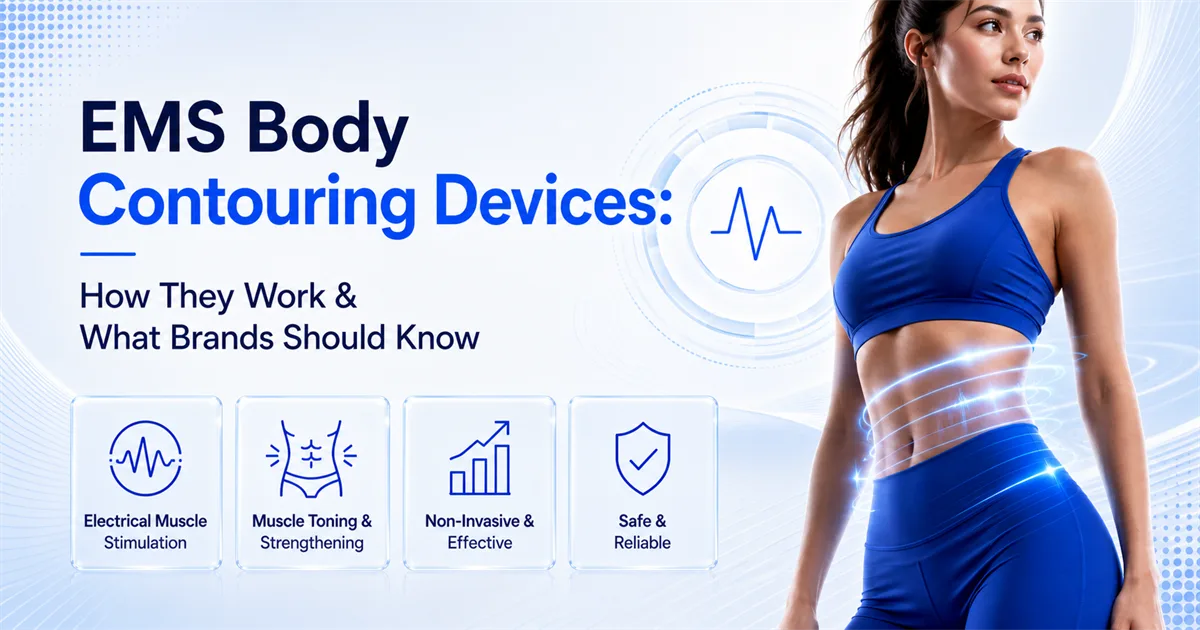
At its core, an EMS body contouring device is a muscle stimulator. Pads or built in electrodes sit against the skin, the unit sends a timed pulse, and the underlying muscle fibres fire as if the brain had sent the signal. The result is a series of involuntary contractions. In body care positioning this is sold as toning, firming support, and muscle engagement rather than as fat removal.
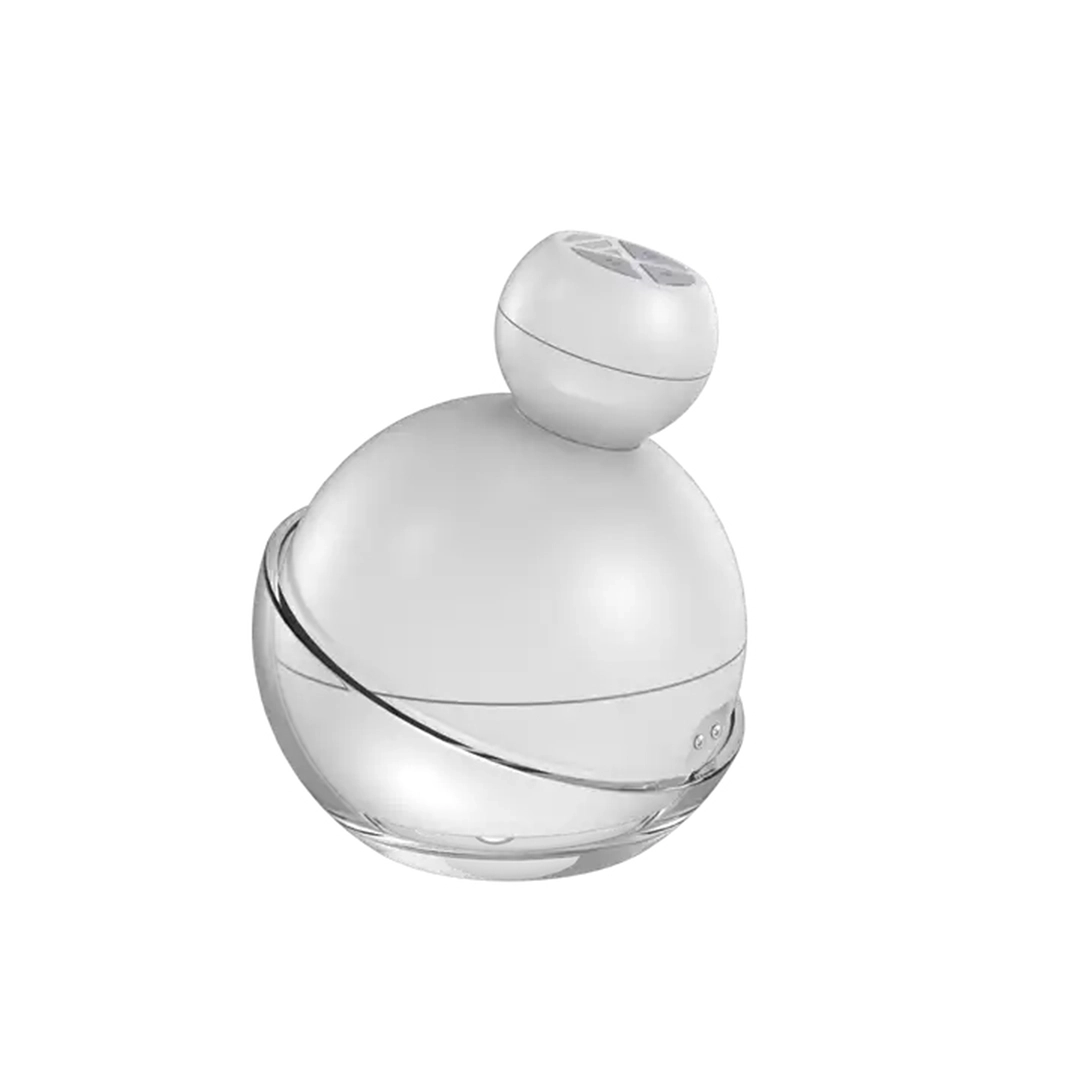
The same electrical principle scales into very different product shapes. A waist belt targets the abdominal wall for hands free use. A handheld body shaping device lets a user move the applicator across thighs, arms, or the back. A RES skin contouring beauty device pairs EMS with other modalities for a broader skin and body routine. All three are EMS body sculpting devices, but the form factor changes who buys them and how often they use it. Wearable belts suit daily use, while handheld and multi technology units serve treatment style routines.
The path from pulse to contraction is straightforward. Electrodes deliver current through the skin to motor nerves. Those nerves trigger the muscle to shorten, then the device releases and the muscle relaxes. Repeating this cycle mimics voluntary exercise, which is why EMS is described as passive training.
Two engineering details decide whether the user feels a clean contraction or an uncomfortable buzz. The first is waveform and frequency. Different muscles respond to different pulse shapes, so a device that fixes one waveform for every zone leaves results uneven. The second is electrode contact. Current follows the path of least resistance, so poor contact creates hot spots and weak contraction. That is why wearable EMS depends so heavily on pad placement, skin preparation, and stable wearing tension.
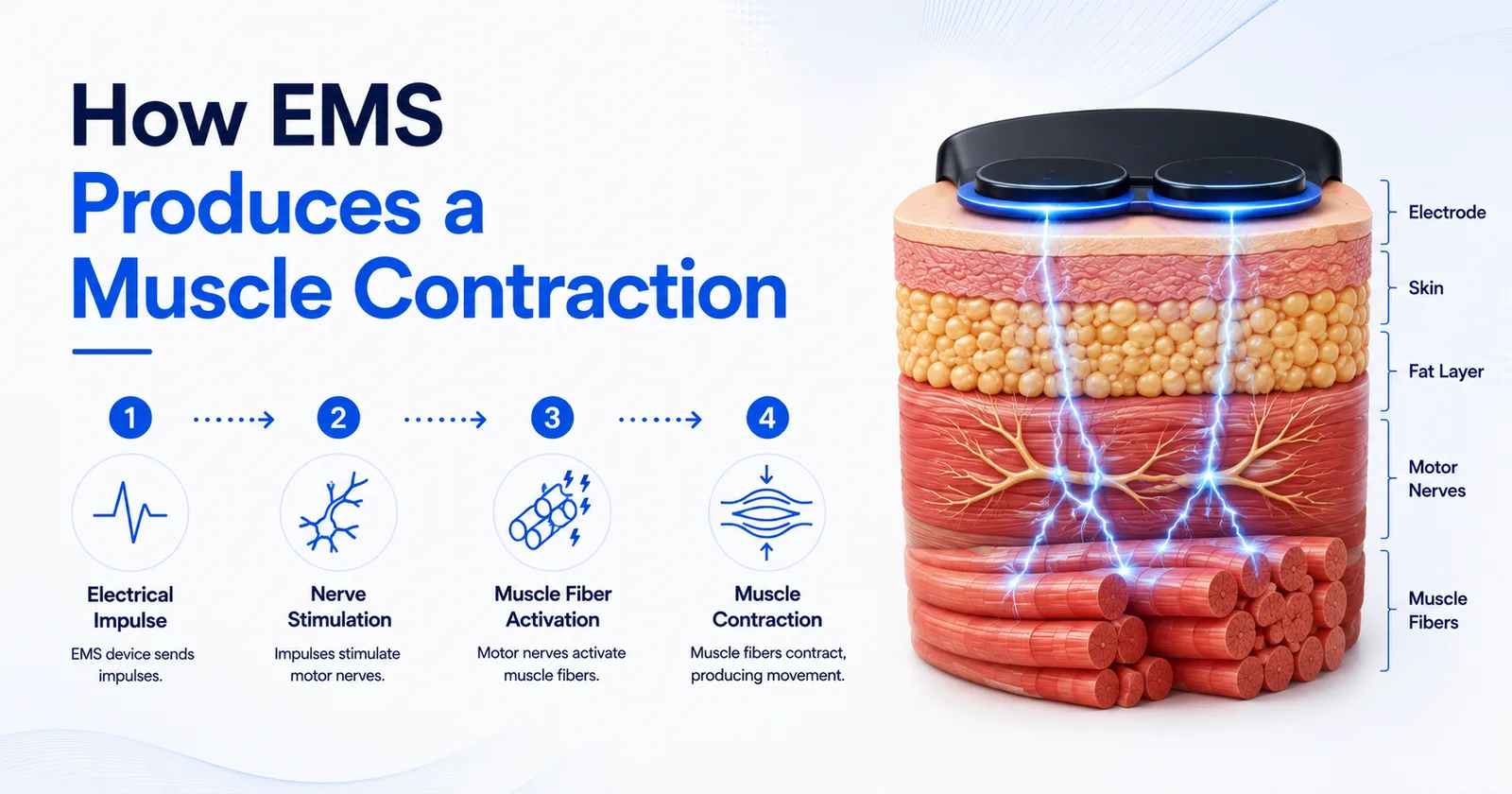
How an EMS pulse becomes a muscle contraction
EMS works by creating controlled muscle contractions. In body-care applications, this makes it a practical technology for muscle activation, toning, firming support, and a more defined body-contouring routine. Reviews of non-invasive body-contouring and aesthetic muscle-stimulation technologies describe EMS as a non-surgical modality whose results depend on the device, treatment parameters, and a consistent user routine. See the clinical overview and the critical review of muscle stimulation for aesthetic body shaping.
For product positioning, the important point is specificity: each EMS device should be presented for the muscle-stimulation and body-contouring experience it is designed to deliver. Do not borrow numeric outcomes from a different machine, protocol, or clinic setting. This keeps a brand's body-sculpting message credible while clearly communicating the value of its own product.
LecSnow offers three EMS-enabled formats for distinct routines. The Waist Sculpting Belt provides hands-free EMS stimulation for an easy at-home waist and abdominal routine. The Handheld Body Shaping Device gives users a guided, movable format for targeted body-care sessions. The RES Skin Contouring Beauty Device combines EMS with complementary beauty technologies for a more complete skin-and-body contouring experience. Together, these options let brands offer a clear sculpting and toning proposition across wearable, handheld, and multi-technology formats.
The biggest risk in this category is overclaiming. EMS is not a treatment for obesity, and it is not a permanent fat reduction method. Regulators classify these as electrical muscle stimulators. In the US, such devices are regulated with cleared uses centered on muscle stimulation and toning; weight loss and fat reduction are not cleared uses for these devices, which is why claim language on the box matters as much as the hardware.
A useful claim rule is to describe what the device does rather than outcomes it cannot deliver. Muscle stimulation, toning, and firming support are defensible; fat loss, weight loss, or inch loss are not. Unsubstantiated slimming claims have drawn regulatory challenge, so listing and manual wording is a compliance decision. Allowable language also varies by region, so verify the claim set for each target market before launch.
Safety boundaries belong in the manual and on the listing. EMS is not advised for people with pacemakers, during pregnancy, or for those with certain neurological or skin conditions. Brands that ship clear contraindications and intensity guidance reduce both returns and liability.
For a brand building or private labelling an EMS body contouring device, the buying decision comes down to a short list of engineering trade offs and the evidence a supplier can show for each.
Electrode layout and contact quality decide results more than peak power. A stable, well placed pad array beats a higher current number on paper. Per channel intensity control lets the device match left and right side response, which matters because users are rarely symmetric.
Waveform flexibility and firmware calibration keep output close to the spec across batches. An EMS slimming device that drifts between units earns complaints. Wearable comfort, battery life, waterproofing, and app guidance drive repeat use, while certification (CE, FCC, or market specific clearance, plus ISO 13485 aligned manufacturing and ROHS and REACH compliant materials) decides whether the product can be sold at all in the target region.
Before committing to a supplier, verify four things: the electrode contact method and whether output is calibrated per unit, the certification held for the target market, the contraindication and intensity guidance supplied with the unit, and how any claimed results were measured and at what intensity. LecSnow develops EMS based body and beauty devices across these form factors and supports OEM and ODM programs for brands wanting a differentiated product rather than a generic white label unit. Choose the option that matches your channel, claim strategy, and quality expectations, not the loudest marketing.
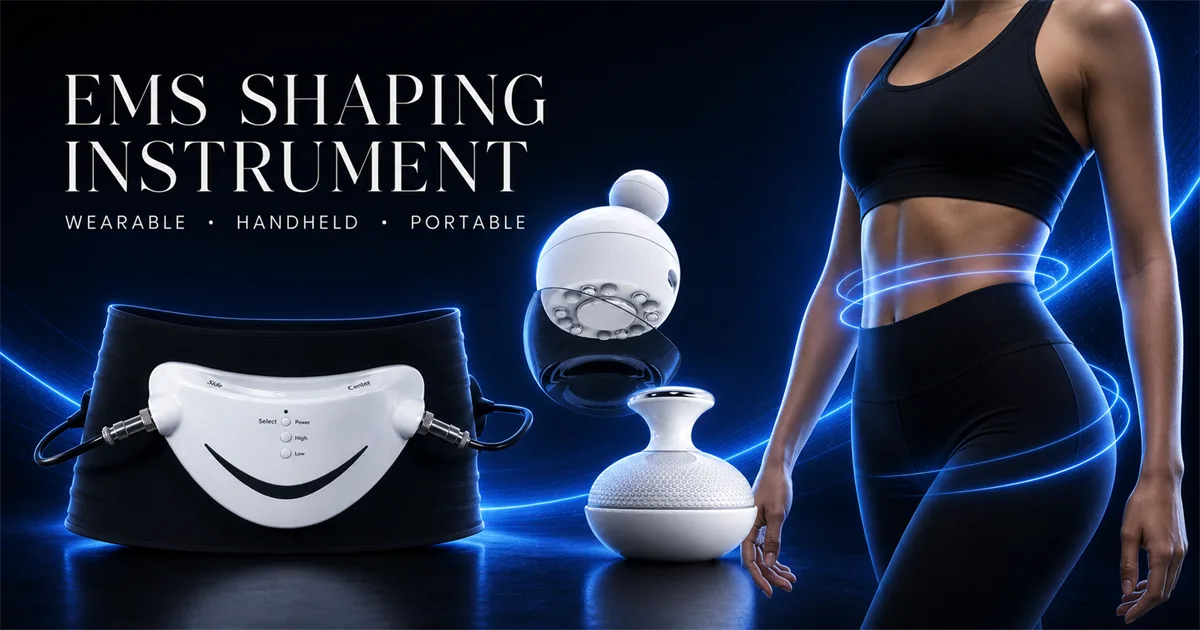
EMS body contouring form factors: belt, handheld, RES
Alizadeh Z, Halabchi F, Bodaghabadi Z, et al. Non-invasive Body Contouring Technologies: An Updated Narrative Review. PubMed. https://pubmed.ncbi.nlm.nih.gov/37749418/
Muscle Stimulation for Aesthetic Body Shaping: A Comprehensive and Critical Review. PubMed. https://pubmed.ncbi.nlm.nih.gov/35985005/
Whether launching your first product or scaling your next bestseller, LecSnow is here to bring your vision to life faster, smarter, and without compromise.