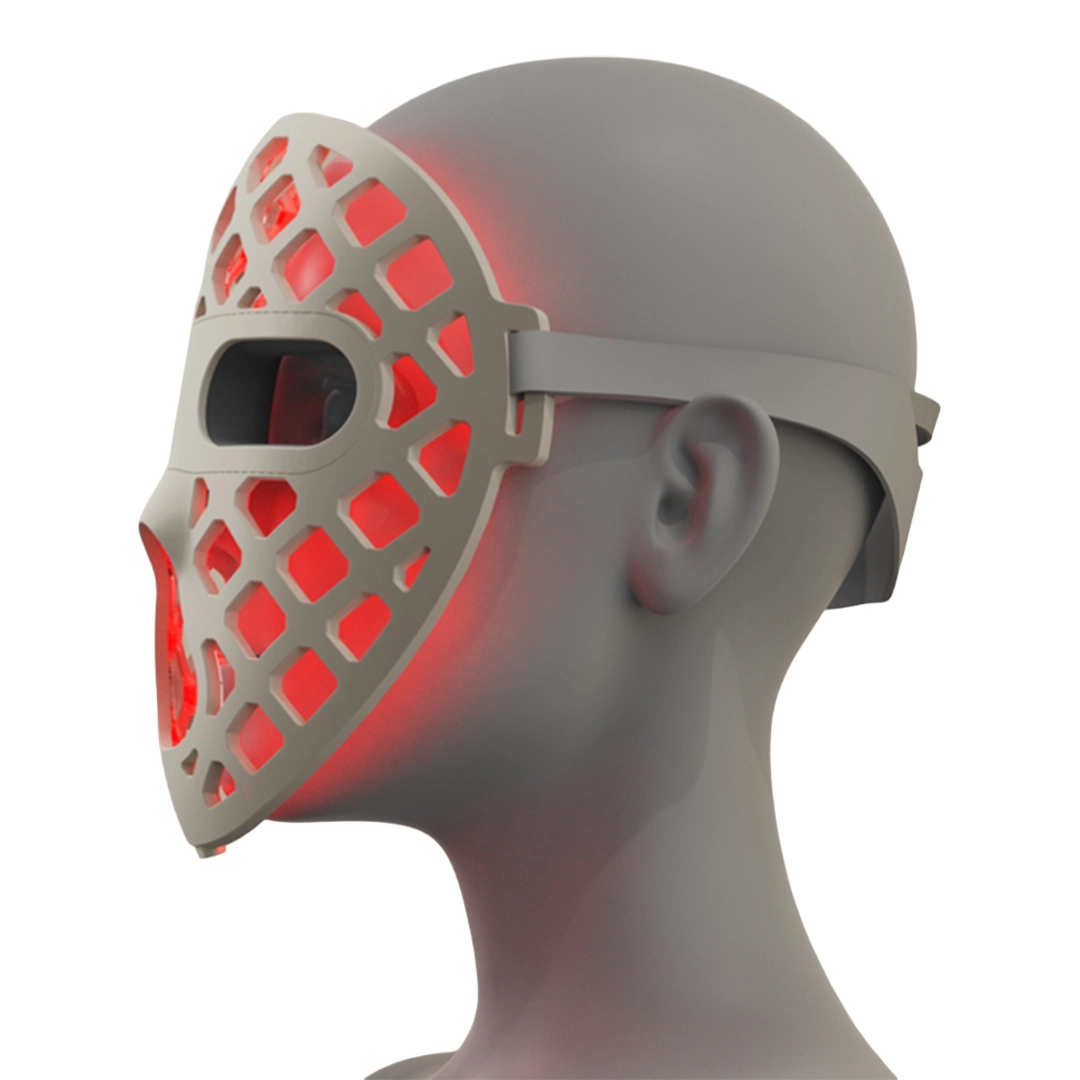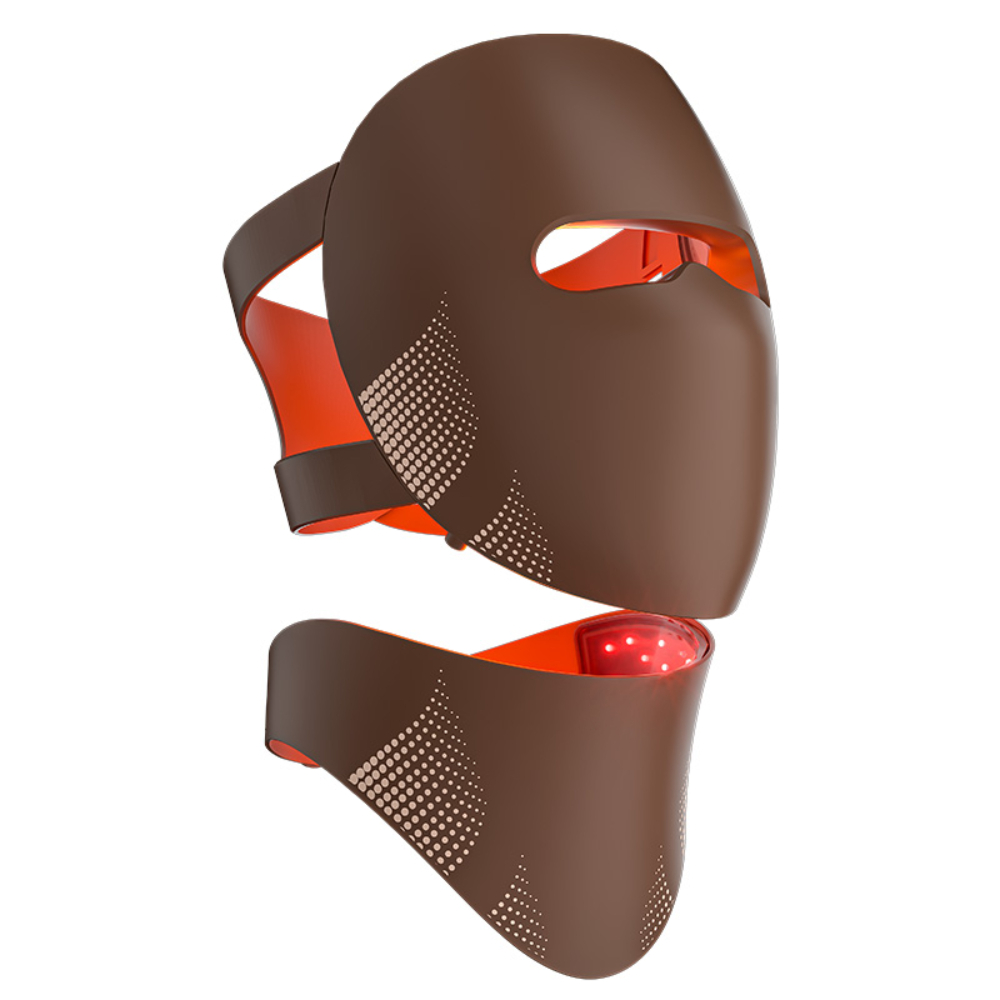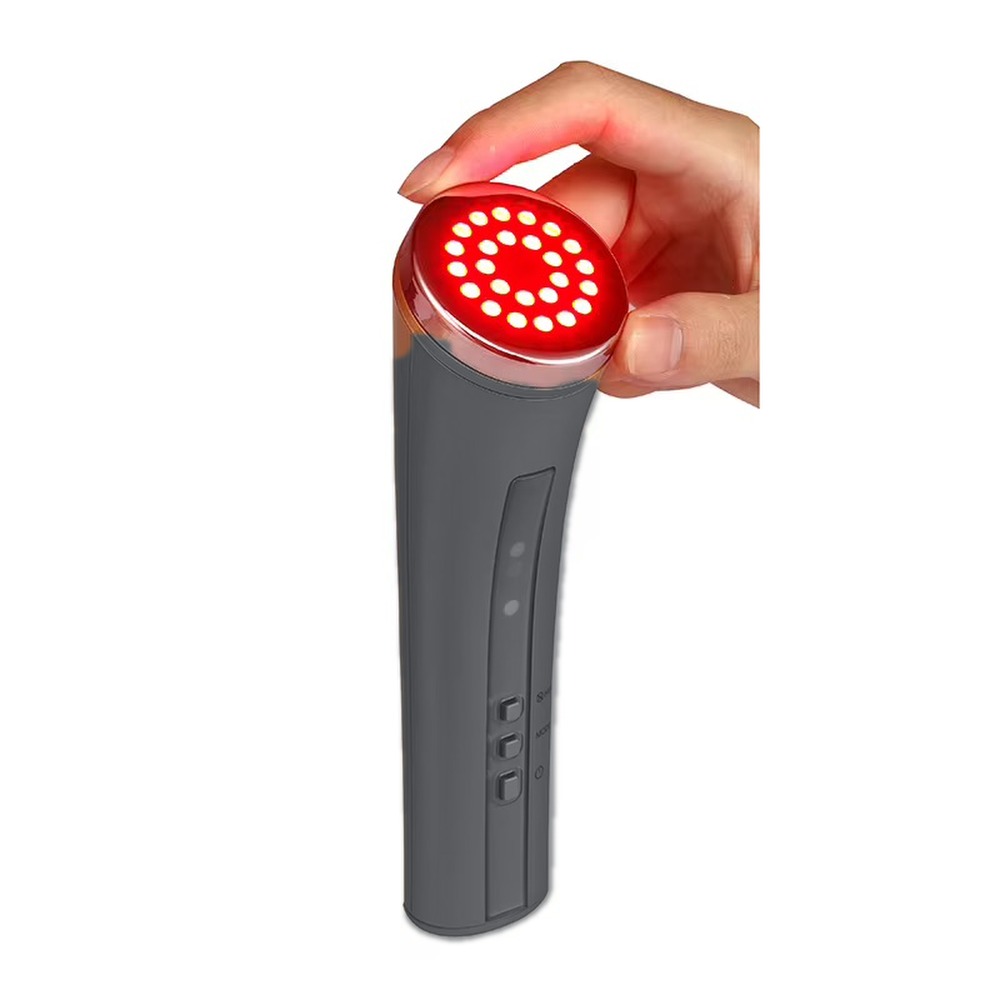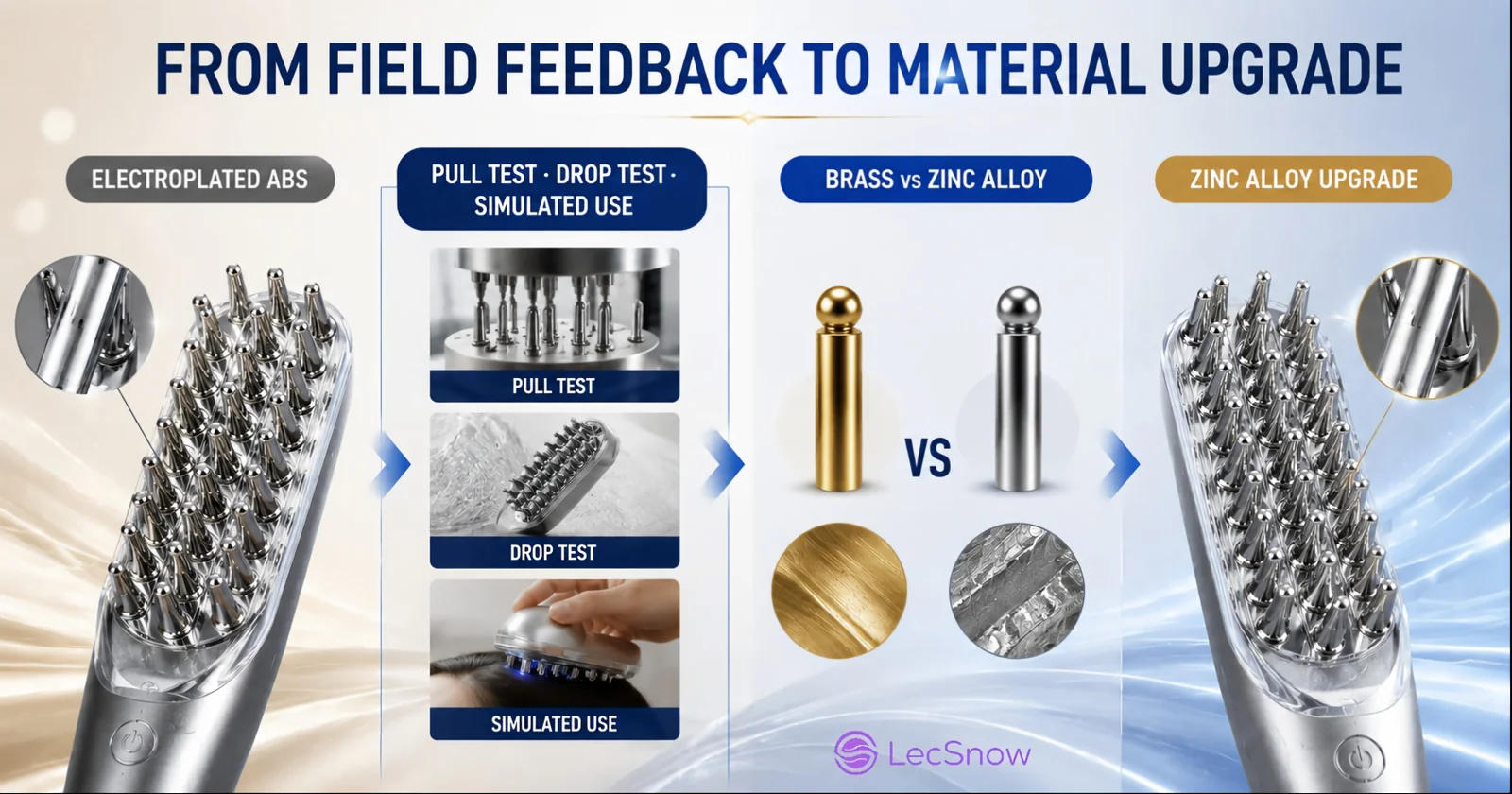
Most LED face mask failures show up after the golden sample ships. This QC checklist covers wavelength, irradiance, thermal, material, and certification gaps to catch before production.

A private-label LED mask lives or dies on what the factory does after the golden sample ships. Most brands learn this the hard way: a hand-built sample passes every test, then the first production batch shows uneven brightness, warm spots on the forehead, or a controller that dies within weeks. If you are evaluating an LED face mask manufacturer, the useful question is not "does the sample glow" but "where does this product actually fail, and what check catches it before it reaches your customer."
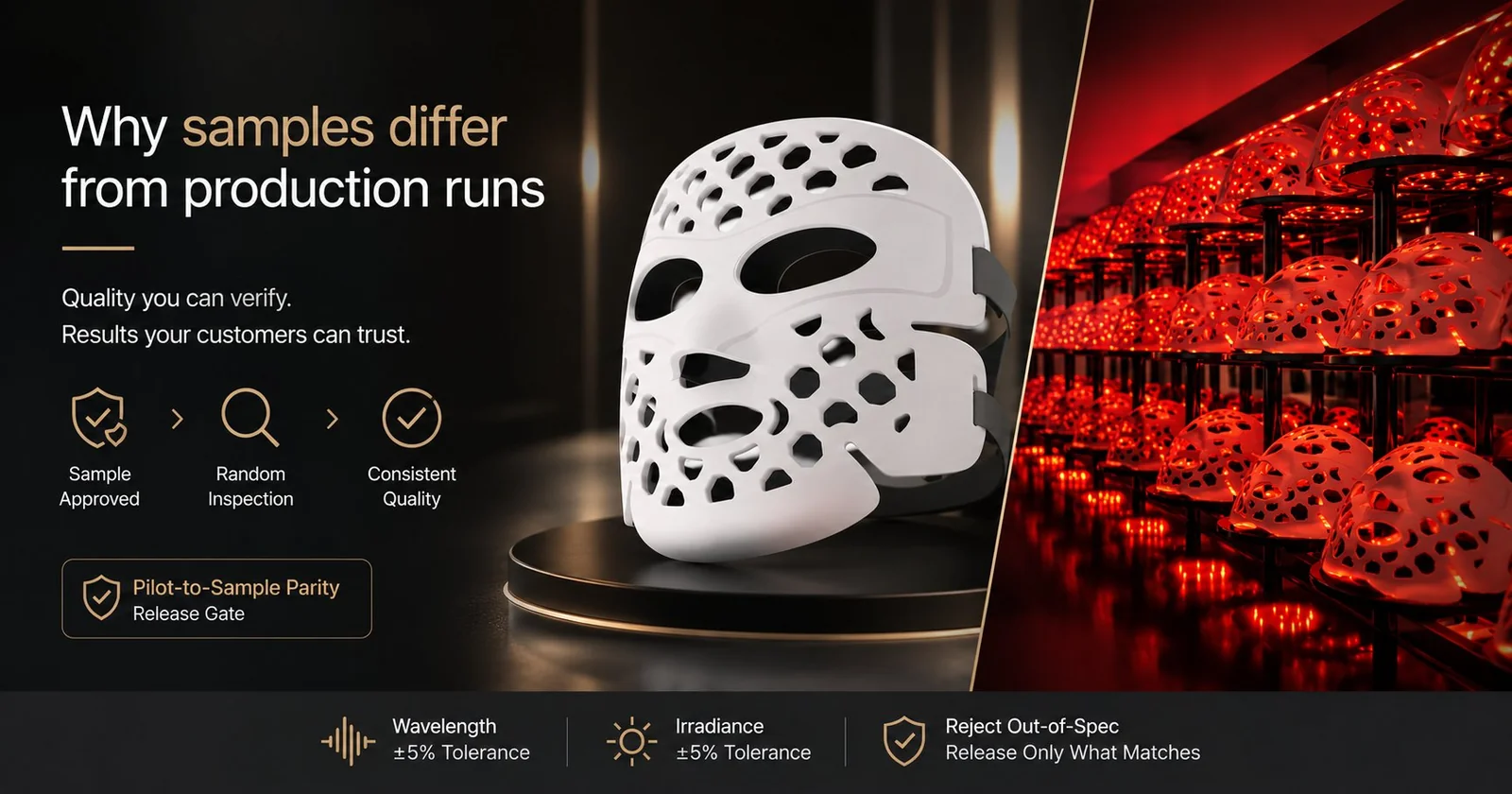
The sample you approve is rarely the product you receive. Suppliers have sent excellent hand-assembled samples, then shipped pilot orders with different LED chips, different silicone, and looser solder joints. One openly admitted they upgrade samples to win the order. The fix is not a longer spec sheet. It is a post-production random inspection: pull 3 to 5 units from the batch, measure each against the golden sample, and reject if wavelength or irradiance drifts beyond a fixed tolerance, commonly 5 percent. We hold pilot-to-sample parity as a release gate in our own LED mask OEM programs (the Ultra-Light Hollow LED Therapy Facial Mask 2.0, for example), under ISO 13485 process controls: a defect rate that looks acceptable on one hand-built sample is not the same as process capability across a batch. A manufacturing partner that cannot hold pilot-to-sample parity is showing you the defect before you pay for volume.
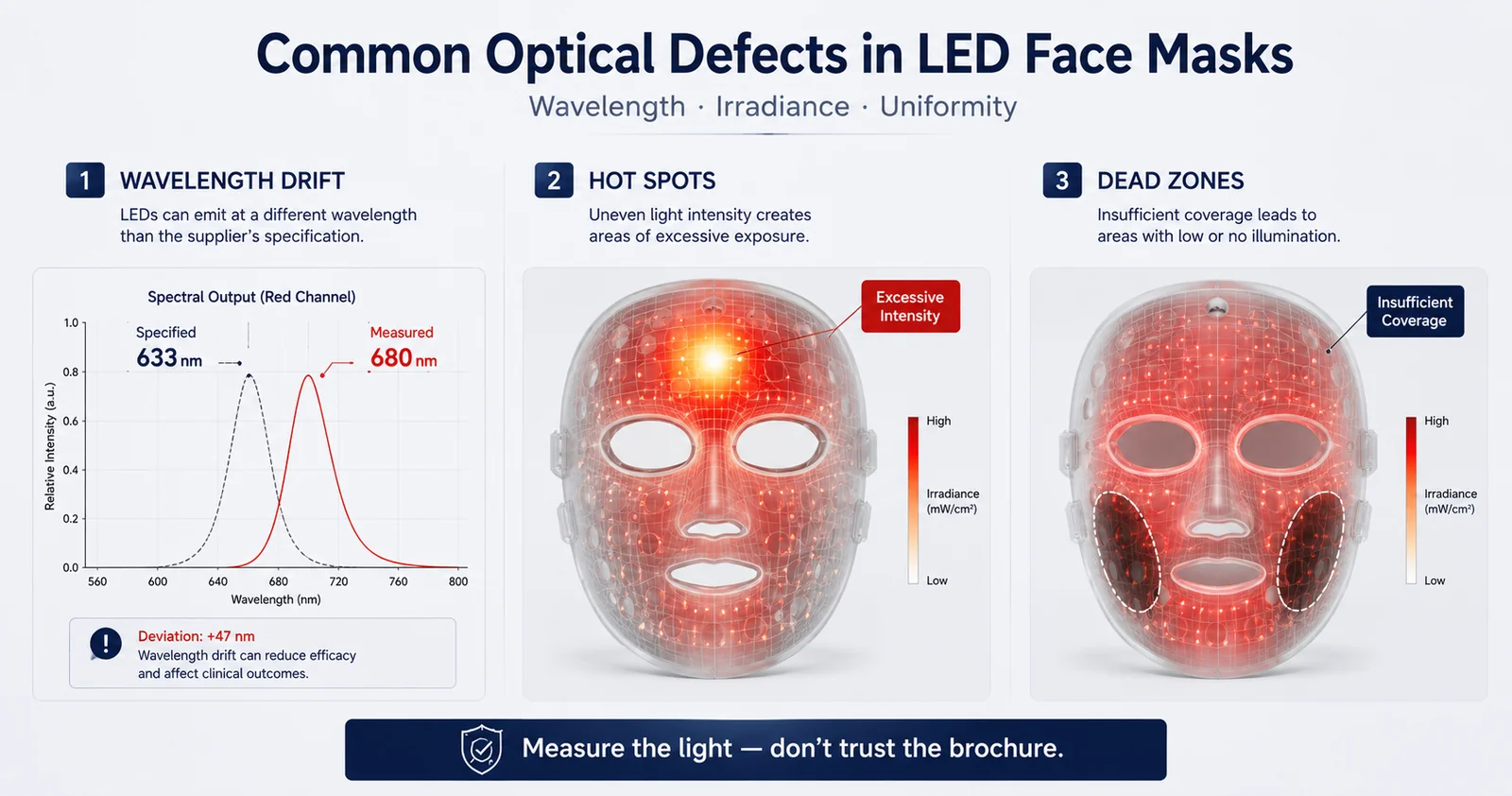
Light is the product, so optical defects are the most damaging and the easiest to miss. LED bins vary, and if a red LED is actually 680 nm instead of 633 nm, it no longer targets the biological response the marketing promises. Uniformity matters as much as peak output. Poor LED density or lensing leaves hot spots on the forehead and dead zones on the cheeks. Require a spectrometer reading on the pilot batch from an independent lab, not the factory's own report, and ask for irradiance in mW/cm² at a stated treatment distance. A supplier who cannot show a wavelength and dose map is asking you to trust a number they have not measured.
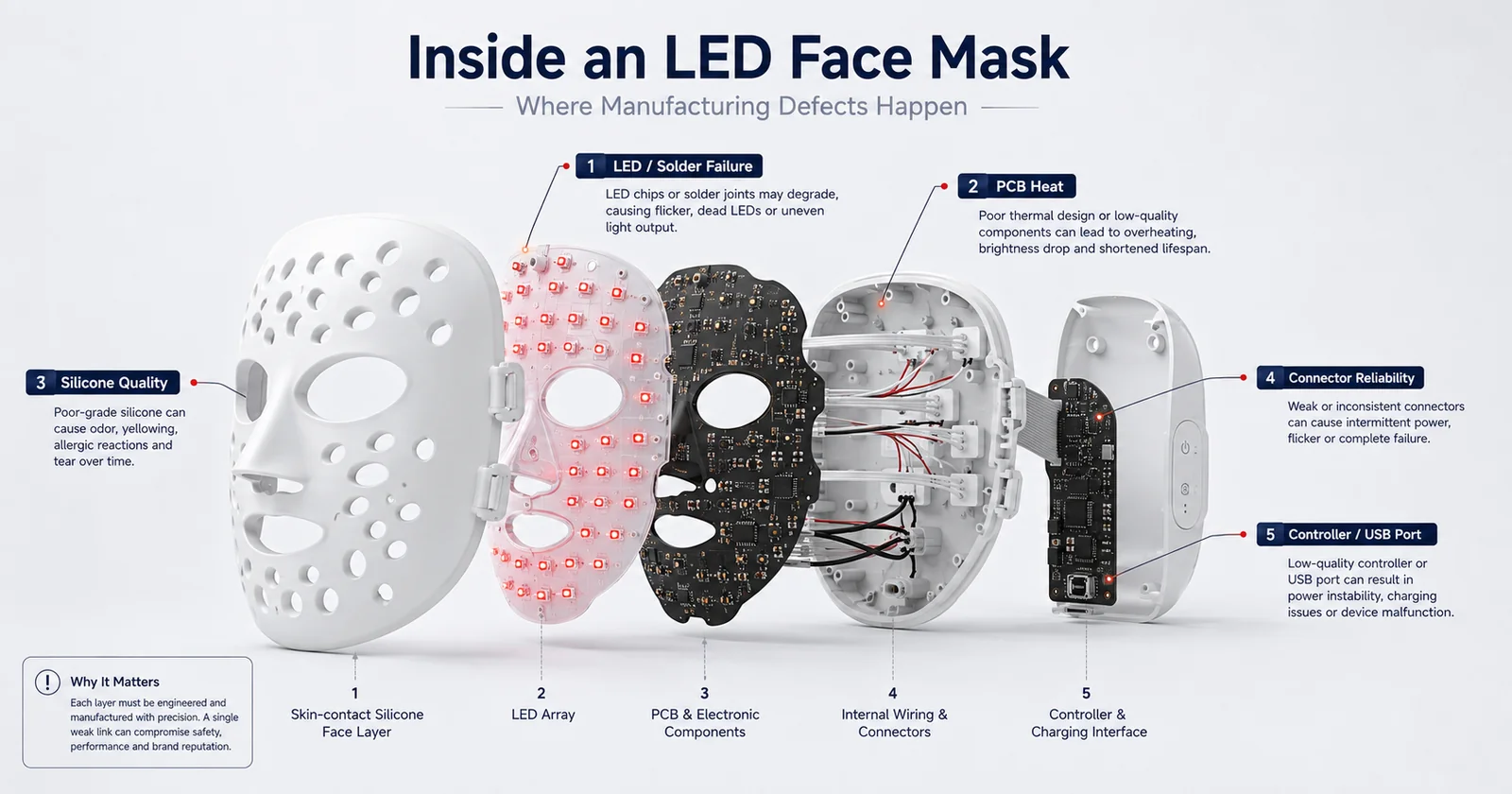
Defects cluster in three less-visible places. Electrical: cold or hand-soldered joints cause premature LED failure and, worse, insulation or leakage problems. Automated pick-and-place and automated optical inspection catch most of these; manual benches do not. Thermal: LEDs shed heat, and a mask that crosses roughly 40 to 42 °C against the skin forces weaker sessions or returns. The safeguard is PCB-level thermal management, not a claim on the box. Material: skin-contact silicone should carry ISO 10993 biocompatibility testing rather than cosmetic-grade wording, and mold finish, strap tension, and connector seating decide whether the device survives real use. Controller and USB-port reliability matter: loose charging ports and inconsistent button response are among the most common failure points reported in user reviews, and a sealed controller that cannot be replaced turns a small fault into a write-off.
Paper often hides what the line cannot. Watch for certificates that cover a different model than your purchase order, "FDA registered" presented as if it were 510(k) clearance, and missing IEC 62471 photobiological reports on masks that use blue light near the eyes. Genuine buyer-side checks: confirm the notified body on a CE mark, verify a 510(k) number in the FDA database if you claim a medical pathway, and ask for an ISO 13485 certificate whose scope covers your product line. For a consumer cosmetic positioning you still need FCC, RoHS, and accurate labeling. None of those substitute for an actual test report with a cross-checkable number. Most LED face mask manufacturer claims about consistency are unverifiable until you see the test report. When you shortlist a certified beauty device manufacturer, the certification row below is the fastest filter.
Use this before you commit to a supplier. Each row is a defect class, the check that catches it, and the red flag that ends the conversation.
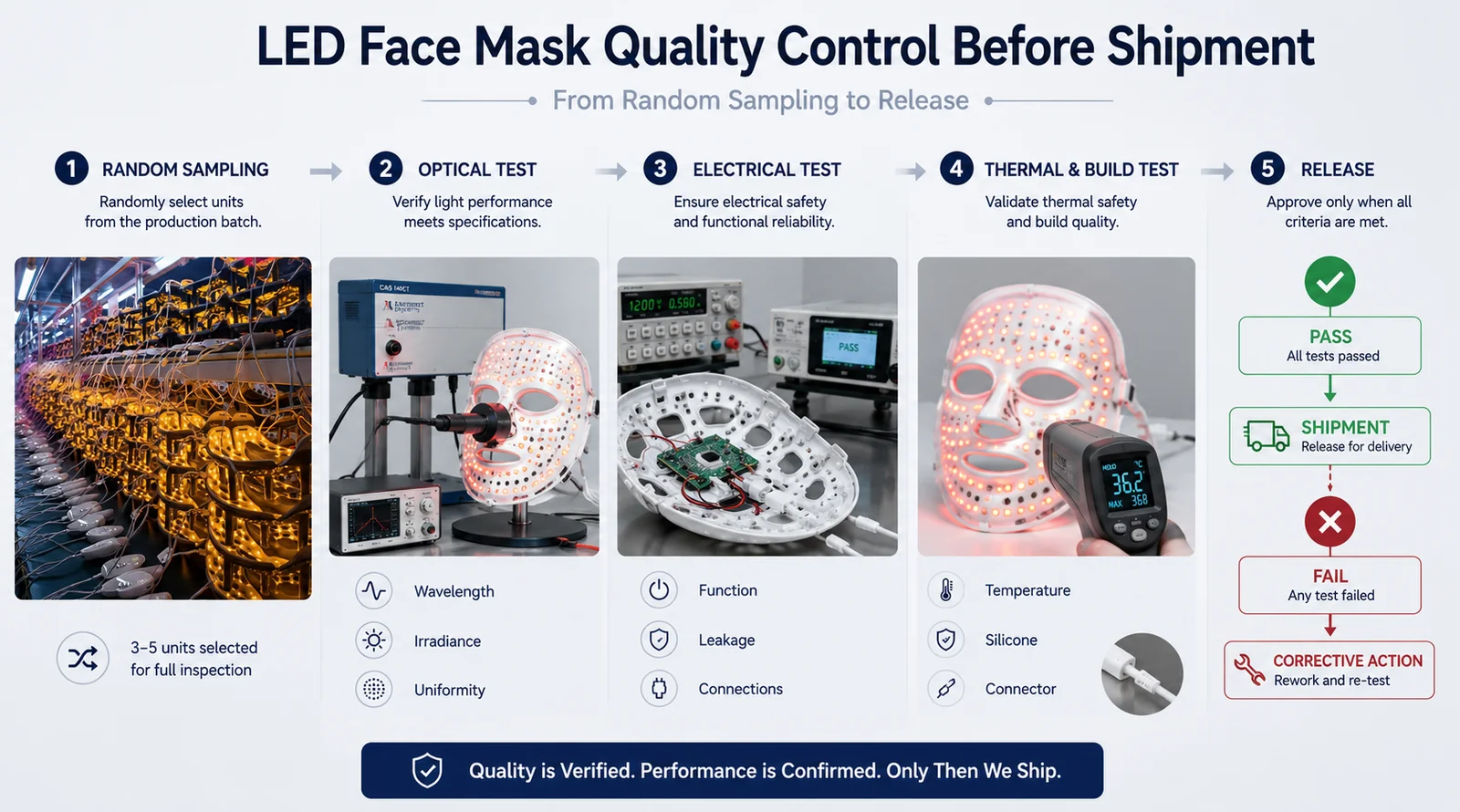
A discussion with a supplier should start from this table, not from a price quote. The suppliers worth talking to can walk through each row with test data. The ones who pivot to price the moment you ask are describing the defect you have not found yet. For a feasibility review mapped to your SKU and target market, start on the contact page, and require the pilot-run data above before you sign.
Whether launching your first product or scaling your next bestseller, LecSnow is here to bring your vision to life faster, smarter, and without compromise.